Katie:
Accountable relationships can feel so clear, so loving, so comfortable, even when and when things get hard, they hold that tension and that conflict so much better than when you don't have accountable relationships.
So, I just want to encourage us to think about accountability not just as this thing that you must do, it is a thing we must do, but also thinking about it as a relationship, and how we want to be in relationship to our community.
Nancy:
From Philanthropy Northwest, this is Can We Talk About? a project to normalize the messiness of leading for racial equity in philanthropy, and reflect on what it takes to create lasting transformation.
In season three, we're sharing stories inspired by our newest guide Toward Transformation on how a cohort of 20 community philanthropy organizations spent over a decade together working to advance racial equity.
We're asking guests to practice vulnerability, explore sticky topics, and look for learning, and what we ask of you is to do the same.
Mares:
Hello, everyone, and welcome to episode seven of our third season of Can We Talk About? Philanthropy Northwest's podcast on leading for racial equity and philanthropy. I'm Mares, and I'm the associate director of programs at Philanthropy Northwest, and I'm excited to be the host for the season where we are diving really deeply into community philanthropy.
And today we are super excited, because we're going to be talking about accountability, and as folks know this season we are focused on our Toward Transformation guide, which if you haven't checked out yet, is on our Philanthropy Northwest website.
Today I'm excited to have Mindie, CEO at Community Foundation of South Puget Sound, and Katie, CEO at Pride Foundation. Welcome to you both. I'm really excited to have the both of you talk about all things accountability today.
Before we dive deeply into the conversation, can we actually have you both share a brief intro to yourselves? And, Katie, I know we had you on the first episode of the season. So, this is your welcome back. So, maybe we'll start with you, and then go to you, Mindie.
Katie:
Yeah. Thanks, Mares. So excited to be back. My name is Katie. I use she and her pronouns. As you mentioned, I'm the CEO at Pride Foundation. And we work across Oregon, Washington, Montana, Idaho, and Alaska, and we serve LGBTQ+ communities.
Mindie:
Hi, everyone. I'm Mindie, president and CEO of the Community Foundation of South Puget Sound. I use she/her pronouns. We're based in Olympia, Washington. As you hopefully know, that's Washington's state capital. And we serve three counties, Thurston, Mason, and Lewis County, and four tribal nations. And it's an area that stretches from Hood Canal all the way to the Cascade Mountains.
Mares:
Thank you, both. We are going to start with a quote, as we usually do with these episodes. And this is the quote, "Foundations don't really have that built-in accountability like a for-profit entity does with their shareholders." So, you have to create your own system of accountability.
So, I would love to get your initial reactions, how this is coming up in your work, and also, of course, how accountability is showing up, or not showing up in today's context. Maybe we can start with you, Katie, and then go to Mindie.
Katie:
Yeah. Sure. Thanks. First I want to say, yes, this quote is correct. Foundations don't really have a built-in accountability mechanism. And I think that we need to build our own. One of the things that philanthropy has been very good at is we love to make rules for ourselves, whether or not they're actual rules that we have to follow, and I think this could be something that we could really spend a lot more time figuring out how we build in these accountability mechanisms to make sure that we are accountable to the communities that we serve.
I think right now, especially, we have seen this year in 2025 a lot of foundations stepping back from supporting organizations that they had committed to serve through their racial justice commitments. We've seen a lot of foundations stepping back from the racial justice commitments more broadly, and from their commitments to DEI in this political atmosphere that we are working through.
And the only reason that this can happen is because we don't have accountability structures. Right? Like, where you can say, "We're going to do this thing," and then when it gets a little uncomfortable, or when it gets a little challenging, you can just pack up shop and leave.
And I think this context of this year, in particular, I think really shows what happens when we don't have these accountability mechanisms built-in. And not only stepping back from DEI commitments, but we just haven't seen philanthropy show up this year in a way that the nonprofit organizations and communities we serve need us to when we're facing all sorts of different kinds of crises. We have seen foundations step back, stay quiet. Not all foundations. There's a lot out there who are doing really amazing work, and I want to shout them out for continuing to do that.
Mares:
Right.
Katie:
But philanthropy, as a whole, has been pretty quiet this year during a year when I think we have a lot of opportunity to be louder.
Mares:
Thanks, Katie. Mindie, what comes up for you?
Mindie:
Yeah. I know Maya. She's so wise. I also agree with this quote, in that there are very few accountability mechanisms built-in for philanthropy as a sector. Maybe we have a little bit more in community philanthropy, but still very few.
I actually believe that it can be a strength, and, obviously, to the points that Katie made, a weakness. And just on the strengths side, and I know we're going to talk all kinds of ways about the weaknesses, but it can mean that we have the freedom to fund things that are potentially ahead of any moment in time, or fun things that are very polarizing at any moment in time. Right now that might be funding immigrant rights and justice.
But I don't think we use that enough in philanthropy, that strength side to be bold, and fund things ahead of our time. And, of course, on the weakness side, I think Katie already said it really well, but the absence of accountability can lead to lots of activity without any real impact or feedback on how we're doing, on lack of feedback mechanisms to know that the work we're doing is actually what the communities we serve is saying that they need.
Mares:
And Mindie, just so folks who are listening know, the quote is from Maya Thornell-Sandifor. She's a consultant I think currently working at Borealis Philanthropy. She's just a really great philanthropy person in the world. So, that's who the quote came from. And one thing we talked about in our prep call was when we're talking about accountability, who are we accountable to within the community philanthropy space and the community foundation space, and community is in the name of the type of organization, but how does that show up in accountability?
So, can you all talk a little bit about ... One of the ideas we had talked about is actually really clearly defining community, because that can be lost when we talk about accountability. So, Mindie, maybe we can start with you on that question.
Mindie:
Yeah. I think for decades in the community foundation and community philanthropy space there's been this maybe old conversation about who do you serve? Do you serve donors? Do you serve nonprofits? And when we were updating our mission, vision, values a couple of years ago, this actually would come up in board conversations. Some board members might think that our primary customer was our donors. Others thought it was our nonprofits.
And in order to address that, our board adopted a statement that says, "Our ultimate responsibility is to the people of this region, the people that we serve, our community." And we define that really as everyone who lives in that geography that I already talked about. What we said is, "Our vision is that everyone have the opportunity to thrive in communities that are equitable and resilient," and both donors and nonprofits might be partners in that work, but, ultimately, we're accountable to our community.
Mares:
Mindie, I love that for a couple of reasons and one of the reasons we'll dive into more, which is you didn't only have the conversation, but you put it on paper written down somewhere. So, this wasn't something that you had to keep revisiting over and over again. So, we'll talk more about codifying things, because we don't want to keep revisiting the same conversations all the time. That's also part of accountability.
Katie, would love to hear from your perspective, because I know you've had really interesting conversations on your board about defining community, and what happens when you have, or maybe think you have community on your board, and it can get very nuanced and messy.
Katie:
Yeah. Mindie, I love that you wrote it down. Always a good opportunity to just be like, "Let's not rehash this and come back to it."
Mares:
Right.
Katie:
And this is such a complex question. Right? Both as a community foundation, but also when we talk about community at Pride Foundation, we're often talking about LGBTQ+ communities. Right? And folks who are on our board, who are on our staff, our donors, are a part of the community. So, when we're thinking about who we serve, and when we say we're serving LGBTQ+ communities, we do mean everyone.
And there's nuance there. Right? Like, when we think about this distinction between do we serve donors or the community? I do want to emphasize our donors are our community. And that accountability is different. And it feels more like a responsibility of how we steward the resources that have been entrusted to us by donors and by our funders, we take that really seriously. We think about that as an accountable relationship, because we need to be thoughtful stewards of those resources.
But when we're thinking about how we know whether we're doing our work, or having the impact that we intend to make, it's the grantee partners, the scholars, the movement leaders that we're actually set up to serve who we need to be in accountable relationship with, and who we need to be looking to to say, "Are we doing this well? Are we doing this right?" And in some instances, we have grantee partners who are donors. We have donors who used to be scholars. So, these are enmeshed communities, and I don't want to draw these hard lines.
But I want to think about nuance, accountability here, and think about the nature of that accountability. Right? And when I think about our donors and our funders, it's really thinking more about how we're being thoughtful stewards of those resources, but how we become thoughtful stewards of those resources is by having the impact that our community needs.
And we really need to look to the recipients of our resources to say, "Is this right? Is this the right process? Are we doing what you all need us to do?" And because often times donors aren't positioned to understand what our communities who are doing the work of our grantee partners on the ground are actually up to.
And I also want to emphasize that even within that, like, we've done grantee surveys before, for example, and we've asked grantees to identify who they are, so, that we can understand and hold the feedback that we're getting differently based on, "Are you a multi-million dollar really large organization versus a grassroots organization in a rural community? Are you a BIPOC, queer and trans-led and serving organization doing a particular kind of work in your community?"
Because we hold that feedback differently based on who it's coming from. And so, I just want to recognize our communities are not monoliths, and also continue to think about how we prioritize relational accountability in this too, and allow there to be different kinds.
Mares:
Yeah. I really love that nuance, Katie, because I think right now we've all been stuck in the same conversation around accountability. But accountability for the past 10, 15 years. And so, I think bringing up that there's more nuanced accountability, relational accountability that we can lean into is a great point to make, especially, right now.
Mindie:
Thank you for saying that, Katie. And that was something that came up in those conversations about who we serve as well. And we actually in that statement about, "We served the whole community, but we did have to define that there are nuances to that." Right? Different populations we serve, like, scholarship students, for example, have different needs, experience systems differently. And so, we did spell out some of those nuances too when we were working on that definition, because even if we serve the whole community, people aren't necessarily starting from the same place.
Katie:
Right.
Mindie:
We know they're not.
Mares:
Right. Right. Exactly. Thanks, Mindie. I want to go into ... Because accountability, again, is just such a broad umbrella term. And I think it's really difficult for folks to figure out what do structures of accountability in our organization actually look like, because a lot of organizations, and no shade on any organizations, haven't been built that way at all. So, we are having to build these thing a lot of times from scratch.
So, would love to hear from you all about what structures around accountability have you built within your organizations? Whether that is at the board level, the staff level. I know that there is work done with DEI committees that you've all done, and other structures of accountability as well.
So, maybe we'll start with DEI committees actually, because that has been the go-to. "Okay. We want to do equity work. Our DEI committee is going to help us move it forward, and going to help keep us accountable." But everyone has a DEI committee and look where we are now. I'm sorry. I'm being dramatic, but I don't think I'm being that dramatic.
Mindie:
You're great. You're not being dramatic.
Mares:
You both have approached equity committees in really different ways for good reason. I would love for you to share a little bit on how your equity committees have worked, and where you are now. And this time we'll start with you, Mindie, and then go to you, Katie.
Mindie:
We did create a diversity, equity, and inclusion committee in 2019. And that committee was really important at that time for our organization. The DEI committee helped us educate our board on why, what equity meant, why it was important to our organization, and we did develop things that helped us articulate that better. So, we did develop an equity statement led by our diversity, equity, and inclusion committee, and that took a long time and was a really important activity in bringing our board along on what we mean by equity and how it shows up for our community foundation.
The committee did other things like develop an equity filter for other committees to use when making decisions. There was a little bit of pushback on that one, because board members said things like, "Of course, equity is important in decisions, but so is finance and risk and these other things that we think about as board members," and the equity committee was able to say, "Yes, and we're doing this, because we don't believe we're holding equity at the same level as we're holding those other considerations when we're making decisions."
For several years for us it was a very important governance, peer leadership, peer accountability tool for us to embed equity into our work. Now just this year we restructured our committees and we ended our diversity, equity, and inclusion committee. It was always set up to be a time-limited committee, but we started to see that the committee's work being siloed, or people leaving it to that committee to do our equity work when we knew that we wanted that diversity, equity, and inclusion work to be included in all of our committees.
And actually when we did that restructure written into that action by the board was where that work went, and, specifically, articulating that the governance committee is accountable for our internal equity, things like board composition, board culture, how we're holding ourselves accountable to that value of equity that we've stated. Our community engagement committee will be focused externally on how we're doing in terms of engaging with communities that-
Mares:
Right.
Mindie:
... we need to do a better job engaging with. So, it wasn't about ending that work, but it was about making sure it was embedded into the organization more broadly.
Mares:
Exactly. One thing that I want to point out from what you've said is we weren't holding equity to the same level of priority as other factors, and I think that is what usually happens where people care about equity, but you don't care enough about equity to consider it at the same level as finance or some of those other factors. I think that's a great point.
Katie, would love to hear about how you have managed your equity and DEI committee work.
Katie:
Yeah. So, thanks. I think this is such an interesting question, because how this structurally shows up really is so different for every organization. And we did it really differently than having a committee focused on this. One of the realities is we're an LGBTQ community foundation. So, equity and justice is at the core of our mission, and who we are, and what we do.
And back in 2015, 2016, we, as an organization, made an explicit commitment to centering racial justice and racial equity in everything that we do. So, really wanting to lean into the intersections of how we should be thinking about equity and justice as an organization.
And the way that we did that was we created what we called a racial equity action plan, and it, basically, was this in-depth analysis of every single aspect of our organization from the vendors that we use to the way we do our budgeting to the priorities that we have for our grant-making to our board composition. Just, like, really soup to nuts, every aspect of our organization, thinking about how we could embed racial equity in those different areas.
And it was an endeavor that the entire staff and board undertook, and it took us ... That was a long time ago. I can't quite remember how long it was, but I want to say six months, nine months. It was a long process that was much like a strategic planning process, but really thinking more about how we could do our work differently, but it was also a really important learning experience for our board and staff to actually be building in what I think a lot of folks call a racial equity lens. Right? So, literally, looking at everything that you do, and saying, "How would I think about this differently if we were really centering racial equity in this?"
And it just created both a literal accountability mechanism, because we had this plan that had goals, outcomes, measurable impacts. Right? Every single thing just like you would with a strategic plan to help us understand how we needed to actually shift the structures within our organization, but it also created this really explicit organization-wide dialog around what we were trying to do, and how we were trying to live this every day.
And it really quickly normalized those conversations in a way that only looking back on it now do I see how impactful that was, that it no longer became this thing that was either siloed with work of one committee responsible for all of this, but it was literally built into everybody's job descriptions, it's built into our board roles, and responsibilities. It is part of what we are committed to as an organization, and it allowed people to be continually thinking about how to nuance that, and how to continue to build on what we did in addition to setting our grant-making priorities, how do we then also think about our grant-making practices, and make those more thoughtful, accessible?
It really laid the foundation to continue to build on that, and then I think just as we're talking about accountability, I think it really is also saying, "What are you doing? When are you doing it? What will look different as a result of it?" And how to create that internal accountability.
And so many pieces of that, like I just mentioned, it's literally in our job descriptions. Right?
Mares:
Yes.
Katie:
As you break down-
Mares:
Can you say, "It's in the job descriptions"?
Katie:
It is in everyone's job description that a percentage of your expected prioritization for staff members is to be thinking about racial justice and organizational culture-building.
Mares:
Right.
Katie:
Because after we did this really rigorous planning process, and thought about all the mechanisms and the structures and continue to build on those, we, as an organization, started spending a lot of time thinking about the culture that we were trying to build, and how that can hold these commitments, and how that could hold the commitments differently as we continued to build first our staff culture, and now in the past couple of years we focused a lot on our board culture and how to shift and change those, so, that it's not just the structures and the documentation, and those sorts of things, but it's actually the people and the expectations we have of ourselves and of our organization that are holding those commitments, and creating that accountability.
Mares:
And you all said a couple of things that I just want to highlight in bold metaphorically. One, your work, both of you entered phases where this was about making sure your equity work was organization-wide, not siloed. You did work to make sure that these were explicit equity commitments. They weren't implicit. They weren't hidden. And they were written down somewhere, because I think what we're finding also is that when folks leave an organization, whether it's a CEO or a board chair or a board member or a program director, it just takes sometimes one person to leave for all your work to end, or now you're starting over.
And Mindie, I know one of the things we had talked about on our prep call, which I love, was you were talking about the importance of artifacts, and that gets into some of the codification piece. So, I wondered if you could share a little bit about how you've approached creating those equity artifacts for your equity work.
Mindie:
Yeah. It's actually a term that one of our board members introduced us to. And so, yeah. That commitment to who we serve, or that statement defining who we serve is our community, we would consider that an artifact or just a documentation of a conversation we've had, a value, but it's in writing and it's something that we can come back to. If a conversation starts to come up again, we can say, "Look, we had this conversation. This is where we landed on this."
Actually, even just notes from some of our retreats have helped document some of those conversations, so, we don't have to start over again. And other artifacts we've put in place, I would say, are similar to some of the things that Katie already talked about, it's in the board member job description. Right? There are things like attendance and committee service, and also that you agree to uphold the board's norms and agreements, and to communicate with respect and honor the diverse opinions of others, that you commit to ongoing learning about equity and inclusion in our community.
So, we're putting that in the board job description. We're putting it in staff evaluations. So, we have a section on our annual evaluations about goals and performance, and we have a section about values, and how people are upholding the values of our organization.
And I'll just say on that, the management center has a really good example of how to build that into your staff evaluations. I'm sure I could think of lots of other examples too, but those are a few.
Mares:
These are great. And I think the performance evaluation piece was another piece to get to, because, to Katie's point earlier, sometimes you can hire for equity. Okay. Now they're here in your organization, but if you are not consistently evaluating on that, not only your staff but your board members, your CEO, then you're losing a major tool for accountability.
Katie, can you share a little bit about how that's looked for your organization as well?
Katie:
Yeah. We actually just did ... Literally, just got discussed at our board meeting this week. We finished our CEO evaluation, and we did a really different process than we've done in the past with the intention of spending a little more time figuring this one out, so, that we could use it as an important ... Not a template, but an input into how we then update our staff performance evaluations, and also think about board assessments and evaluations in terms of how things work.
And a lot of this stemmed from the work ... I know that I've talked about in other spaces where our board last year made a commitment to adopt a libratory governance framework. So, thinking about how, as a board, they can do their work as a board really differently, and frame it really differently, and not uphold a lot of the same white supremacist, patriarchal, capitalist ways of thinking about board service, but thinking about their roles in terms ... In this context, in terms of partnership as opposed to oversight is usually how-
Mares:
Right.
Katie:
... it gets framed. And that isn't-
Mares:
And you're not even oversight-ing the right things.
Katie:
Yeah. Exactly. But thinking about the relationship between the CEO and the board is one of partnership versus one that is either punitive or evaluative purely in nature is both a restorative value of like, "How are we thinking about developing leaders? How are we thinking about supporting one another in the work that we're trying to achieve?"
But in this evaluation, it was almost all qualitative, which did take a lot more time for everyone to fill it out and to do the assessment. And it provided a lot of really detailed feedback. For me, I have shared with my board, this was probably one of the most important and helpful pieces of feedback I've ever gotten, you don't often get a lot of detailed feedback when you're in a leadership role-
Mares:
Yeah.
Katie:
... like this, and it really helped me understand things that I wouldn't have otherwise seen in the same way. And it really helps us understand how we can think about ... Like, this is a performance evaluation. It's an evaluation. But it's an accountability tool. Right?
And instead of making it like, "Rate from on a scale of one to 10," it is actually relational. Right? It's actually thinking about how we're engaging with each other by the way that the evaluation, itself, was structured-
Mares:
Katie, can I-
Katie:
... and the way that we ... Oh, sure.
Mares:
Can I ask? Because, again-
Katie:
Yeah.
Mares:
... people are building this from scratch. So, I think it helps-
Katie:
Sure.
Mares:
... to hear what other folks are doing. Can you share maybe an example of one or two questions that you all put into your CEO performance evaluation that you feel like, "This actually really feels aligned with holding myself as a CEO accountable to our equity goals"? Just to give folks an idea of what that can look like.
Katie:
Sure. There were three different sections. One entire section was offering examples of how I lived our values as an organization. We just redid our values, but it was not just, "Does Katie have this value?" But, "Let's actually think about tangible examples." And that was actually the first section on the evaluation by design to really keep our values front and center.
And then later in the evaluation there were questions about our strategic goals that we are moving forward, and the questions around that were worded in such a way that it's clear like, "I am not the only one carrying out our strategic goals," but also how to ask how progress has been made on those, and then a question about what other supports could we put in place to help ensure the strategic gets moved forward better? If that's what's needed.
And I think that, again, emphasizes both this relational piece, but also the mutuality-
Mares:
Right.
Katie:
... that we are in ... It is me and this incredible staff team that I have moving the strategic plan forward. The board is in a position to actually support. So, it's not like, "Oh, you're failing and you didn't make progress on this."
Mares:
Right.
Katie:
But like, "How are we actually holding this as an organization? That this is not just one person's responsibility to make sure this happens," and thinking about that work really in a mutual way.
Mares:
Thanks, Katie. Mares-
Mindie:
Yeah.
Katie:
Can I just draw one small line?
Mares:
Oh, please do.
Katie:
To our first big heady question of like, "Philanthropy doesn't have accountability. How do we"-
Mares:
Yeah. Please do.
Katie:
... "Embed it?" I just want to make it explicit that these structures of accountability that Mindie and I have been talking about internally are part of how we both hold ourselves accountable, but also how philanthropy can build accountability internally? So, that in a year like this, if we have all of these deep commitments to racial justice and racial equity, that we can't just be like, "Oh, we're going to fade into the background"-
Katie:
... "And not do anything." Yeah. It's literally built into the institution. I know you said that people really like the tangible, and as we started with such a big, heady question I just wanted to be like, "These are actually accountability tools"-
Mares:
Yeah. No. Thank you.
Katie:
... "That you can do yourself."
Mares:
No. Yeah. I'm glad you said that, because the other thing that I think comes up sometimes is how can community hold us accountable? There's really only so much when we have these power dynamics. There's only so much community can do to hold you accountable other than being like, "Hey. So, what are you doing? Are you good? Are you doing equity or not?" So, it really is on us. We have to actually take more ownership over that accountability. So, I appreciate that you added that in, Katie.
So, speaking of white supremacy, I am going to do my soapbox snack break. And the topic for today, I have notes, as I always do, because I get a little too excited. Katie will appreciate this. Mindie, this might be the worst four minutes of your life. I don't know.
My topic for today is it's that time of year, Christmas movies, Hallmark time. We're here, people. And I know it's, like, we're talking about equity in this podcast, and now I'm talking about Hallmark Christmas movies. Yes. Yes. Okay?
And I know-
Katie:
I'm so excited.
Mares:
So, this is my little train of thought. Christmas movies, in some capacity, represent the world that we want to build too. I'm not talking about the whiteness that they have. I'm talking about if we can build a world where our biggest worry is, "My Christmas tree ain't growing. I need more Christmas trees. It's not big enough," if we can build a world where, "Are my cookies going to get baked for the party tomorrow? Am I going to be able to have my party at the ..." If we can build a world where those are our biggest worries, we've solved racism, homophobia, transphobia, poverty, all of it.
Okay. I know this is probably ... Just Katie, you look like you want to say something.
Katie:
I love it. No. I just love it. I'm like, "Thank you for justifying how I spend far too much time in the months of November and December," and putting it in a justice lens that, "This is why we like them." Because in these worlds, all of the structures of oppression have been eliminated, and we are so worried about whether the gingerbread houses are going to win the competition.
Mares:
Exactly. I want to worry about gingerbread. I don't want to worry about, "Is there enough money for the public education system?" I want to worry about gingerbread.
Katie:
Yeah.
Mindie:
I'm trying to put my love of Lethal Weapon as a Christmas movie into your analogy, Mares.
Mares:
Wait. Lethal Weapon or Die Hard? Is Lethal Weapon a Christmas movie?
Mindie:
It is. The first one is. Yeah.
Mares:
Okay. I need to add that to my list, Mindie.
Mindie:
I think maybe it's still ... That movie, there's still some evil to be fighting.
Mares:
Some other issues. But that's okay, because they're building toward an aspirational ... I need to watch the movie, clearly, because I don't know what they're doing in it, but I'm sure-
Mindie:
You should watch it again.
Mares:
Yeah. I need to add it to my list. And, obviously, I know Christmas movies are mostly white people, duh, of course, I know that, and I don't know how hard Hallmark is working to change that, and some of the other studios, but, yeah. That was my thing about Christmas movies.
I also have a list of Christmas movies that I wanted to recommend to people who care. The Christmas House and The Christmas House 2. I definitely cried in The Christmas House 2. You're probably wondering what the hell am I talking about? You can Google it and find out.
Christmas Comes Twice, which is starring Tamara of Sister Sister fame. Single All The Way on Netflix with Michael Urie. Ghost of Christmas Always, which is a play on ... Oh, God. What's the crabby rich man?
Katie:
Ebeneezer Scrooge.
Mares:
Yes. A play on A Christmas Carol with Ebeneezer ... Yes. Round and Round, which is Hanukah-focused and a play on Groundhog's Day, which, I'm sorry, I don't like Groundhog's Day. But I do Round and Round. No hate on Bill Murray, though.
And then Double Holiday, which this woman ... So, she's Jewish, but she has to plan the Christmas party for her office, which if I think too deep about it, I feel like that's an HR issue, because why is her job contingent on planning a Christmas party. But in this world-
Katie:
Correct.
Mares:
... inequity does not exist. So, we're just going with it. And then the Nine Lives of Christmas, which is just people ... It's about cats. There's a cat. It's really cute. So, if you like cats, that's ... Yeah. And Jumanji, because at the end of Jumanji, the original one with Robin Hood ... Not Robin Hood. Robin Williams. There's a Christmas party at the end. So, I'm like, "You know what?" Bonnie Hunt and Robin Williams were working hard. Okay? I felt so bad for them in that movie. And there is a Christmas party at the end. So, yeah.
Katie:
Mares, I'm going to need to get this list from you offline, because, as you know, I also have a very long list of movies in a shared note that a lot of us collaborate on.
Mares:
Yes.
Katie:
But there's a new one this year that I haven't seen it, this is not an endorsement, but I read about it on Autostraddle. It's a queer firefighter holiday movie. It's an interracial couple. It's called The Firefighters Christmas Wish.
Mares:
Oh, Katie-
Katie:
I don't know.-
Mares:
... that's already on my list.
Katie:
Did you watch it?
Mares:
No. I need to-
Katie:
Oh, okay.
Mares:
Which is my other thing. A lot of the queer holiday movies, they're not just available on streaming sites. You have to pay additional money for them. And I'm like-
Katie:
It's homophobic.
Mares:
It is homophobic. So, my ask also is even if you don't like Christmas movies, please watch the ones with queer stories and BIPOC stories, because then that will let the networks know we need to make more of these.
Katie:
I like that this is our PSA for this-
Mares:
This is a PSA. Please. We got to build the world that we want to live in. And I want to live in, kind of, a Christmas movie. Okay?
Katie:
You want to go upstate New York, and-
Mares:
Yeah.
Katie:
... to a tiny town.
Mares:
Yeah. I don't want to be cold. But, okay. So, that's the soapbox snack break. That was probably way too long, but it was a really important topic, especially, for these times, people. Okay.
Katie:
I don't know if we're going to come back from that.
Mares:
Speaking of growth areas for the world, we're going to go into growth areas around accountability. Okay. Yeah. No. Seriously, though, I think getting back into accountability, one of the things we had talked about in our prep calls was we don't have it all figured out, which is totally fine, and you all have done some great work around accountability, and what are you thinking about next? What are you still learning about accountability? What haven't you tried that you want to think about doing in the future? Because, again, we're trying to deal with our most current reality, and always trying to build towards something better.
So, maybe I'll start with you, Mindie, and you can take any one of those five questions that I put out there.
Mindie:
The list is long for us in terms of our growth areas, and what we're thinking about doing next, but I'll give you a few examples. One of the conversations we're having with our board is what does accountability to our values look like further building that into our work. The context of the conversation is we spend a lot of resources and time on a financial audit annually. And so, what does it look like to put something similar in place in terms of checking in on how we're doing against our values?
And that's a conversation we're going to be having next year. Is it a one-off full organization equity audit? Like, a financial piece or maybe it's looking at various aspects of our programs and operations at the organization and how we're doing. But just another way to build in that accountability at the governance level.
Mares:
I love that. Sorry. Keep going.
Mindie:
Thank you. No. We're also looking at how do we know how we're showing up in our communities? How do we get feedback on how well we're operating? Are we operating with trust? Are we accessible? Are we responsive to community needs? Are our staff acting with cultural competence?
And so, we don't want to be extractive, but we want to think about how we can keep doing a better job of getting ongoing feedback on how we're doing in how we work with, and build relationships across our community.
There's a whole bunch of others. One other I just want to say is we're actually spending more time on fostering belonging and coming together across differences as a priority in our work. Funding more opportunities for people to come together across differences. And we know there's ways that's done well, and that's not always the only solution, but we believe that we can have a role in fostering more community care-
Mares:
Right.
Mindie:
... across our communities.
Mares:
I love how you put that, fostering more community care. And very quickly I just want to say, I love the comparison to we spend so much time on financial audits, and that time just isn't spent on an equity audit, and where you spend your time that matters, what you spend your time on grows. And so, I think to make that part of your work very explicitly is so important, and feels important, because you're not leaving it up to chance that your equity work is just going to get better. So, that's fantastic, Mindie.
Katie, anything coming up for you on this?
Katie:
Yeah. I just wanted to underscore, Mindie, I love that point too, just recognizing what we're prioritizing and what feels essential. Like, we have to do a financial audit, but understanding how our equity work is moving is like, "We'll see if we have money leftover for that." I really appreciate you elevating that, and that is so important.
We are thinking all about this, and, internally, we have been thinking a lot recently around how we can build more explicit accountability mechanisms on our staff team. So, thinking about what that looks like, not just in individual performance evaluations, but actually thinking about how we are accountable in our work to our community, and how we can make that more explicit, and how we are accountable to each other, and how we make that more explicit outside of these important but limited things like evaluations. So, really thinking about how we are building out this relational accountability, which I keep talking about. Like, how we're actually making sure that as a staff team, we're building that in more explicitly.
And we just scratched the surface on this, but it is literally on our 2026 board work plan is to think about what the board's relationship, accountable relationship to the staff and to our work looks like, which not many organizations that I know of ... If anybody is doing this, I'd love to hear about it, but we don't think about board accountability very often. Right? Like, we don't-
Mares:
No. That's why they're running awry.
Katie:
And shout-out to my board for being open to this conversation, and to be like, "Oh, if we're really going to say we're doing libratory governance, libratory governance without ... Libratory anything without accountability is just not going to work." That is an important, critical part of it. And so, I am really excited to think about what it means to build out accountability within our board, and for our board to the staff, and to our organization's strategic priorities.
And then I think one of the big other things that we're always trying to improve on, and really mirroring a lot of what Mindie said is we're always thinking about the ways in which we can get more meaningful feedback, and be in better relationship to our grantee partners, to the communities that we serve.
We do surveys. We ask for a lot of feedback. We get a lot of feedback from our grantee partners, which helps us know that there is trust there. But we often get conflicting feedback.
Mares:
Right.
Katie:
Groups that want different things for themselves, they want different things of us, and how we hold that conflicting feedback is something that we're really grappling with, as in how it's going to help shape our work.
Mares:
Thank you for naming that, because I think folks all know our communities and the communities that we're serving aren't a monolith, and the feedback isn't a monolith either, and that can make it really difficult for funders to wade through that feedback, and what to do with it when you're hearing such different things. So, thanks for naming that, Katie.
To end our conversation around accountability for today, we wanted to ask you all what do you think community philanthropy needs to start doing, or stop doing when it comes to accountability? I don't know if anyone wants to start us off.
Mindie:
I'll start. I thought a lot about this question, and I feel like I have so many ways I could answer it, but I think what I would love community philanthropy to do is to start spending as much or more time on self-accountability as we do talking about grantee accountability.
Mares:
Oh my God.
Mindie:
And, for me, that includes all the things we've talked about today, but serving our communities with humility, doing what we say we're going to do, and really focusing on community outcomes as our North Star.
Mares:
That is a great start, Mindie. Oh my God. That was a great start. Katie, how about you?
Katie:
I love it. Plus one to Mindie. Yes. Accountability feels scary. I'm like, "I wonder how many people are listening to this podcast, and if the numbers are going to be lower than your other podcasts?" Because accountability can sometimes feel like, "Are you in trouble?"
Mares:
Right.
Katie:
"Did you do something bad?" And so, what I want to encourage philanthropy to do, and community philanthropy, in particular, is to start thinking about accountability as a way of being in relationship, and a way that we can be held and hold others.
And so, not thinking about it as this, "You're in trouble" scary thing, but actually as a way that we get to be in honest, open, transparent, trusting relationship with each other. We get to be open, honest, transparent, trusting. We get to receive that. It's actually, like, accountable relationships can feel so clear, so loving, so comfortable, even when ... And when things get hard, they hold that tension and that conflict so much better than when you don't have accountable relationships.
So, I just want to encourage us to think about accountability, not just as this thing that you must do. It is a thing we must do. But also thinking about it as a relationship, and how we want to be in relationship to our community.
Mares:
And one of the things we have in the guide is around peer accountability with other funders. And, to your point, Katie, it is so much easier to do this work when you are in accountable relationships with other funders, because you feel like you have other funders who can hold you, who can support you, who you can bounce ideas off of, and plus one to your comment again. When we think about accountability, punishment is mostly the thing that comes to mind, and that can really scare folks away.
And according to Katie, you haven't done anything wrong. In my eyes, you have done something wrong, people, because why-
Katie:
I didn't say you didn't do anything wrong. It's not only-
Mares:
But, no.
Katie:
I'm not going on record as saying philanthropy hasn't done anything wrong. That is not how I feel.
Mares:
Let me take that back then.
Mindie:
I do just want to say spaces like Philanthropy Northwest are so important for that learning and holding each other accountable as well.
Mares:
Yeah. A neutral ground to hold people in that for sure. Thanks for the shout-out, Mindie. Thank you both so much for spending an hour talking about accountability. I really appreciate it. And I hope that what folks take away from this conversation is some mindset shifts around accountability, feeling more comfortable about what it can look like in your orgs, and some tangible steps, no matter how big those steps are toward implementing some of what Mindie and Katie talked about today. So, thank you both again very much.
Katie:
Thank you. Thanks for holding this conversation.
Mindie:
Yeah. Thanks for having us.
Nancy:
Can We Talk About? is a podcast by Philanthropy Northwest written and produced by Aya Tsuruta and Emily Daman with production support by Podfly, and graphic design by Asha Hossein.
Our episodes this season are hosted by Philanthropy Northwest's associate director of programs Mares. You can find more information on this episode, including guest bios and show notes, at www.PhilanthropyNW.org.
A special thank you to Philanthropy Northwest Building Community Philanthropy Cohort for their partnership on this project. I'm Nancy, and we'll see you next time.
Season 3 episodes are inspired by our guide, Toward Transformation: A collection of lessons from 20 community philanthropies working to advance equitable philanthropy
Overview
Katie Carter, President of Pride Foundation, and Mindie Reule, President & CEO, Community Foundation of South Puget Sound, sit down with Mares to discuss tangible ways that philanthropy can be more accountable to the community it serves. They begin the conversation by naming how the structures that currently exist do not hold philanthropy accountable to the communities they serve, and discuss ways in which funders can develop accountability mechanisms that lead to greater transparency across the sector.
Together, they share insights into the nuances of accountability, such as how to receive grantee feedback without burdening communities, as well as considerations for feedback given that communities are made up of diverse partners.
Finally, they offer examples of the importance of developing internal accountability, with both the board and staff. Katie and Mindie share the various ways in which their foundations have embedded accountability mechanisms through their racial equity work.
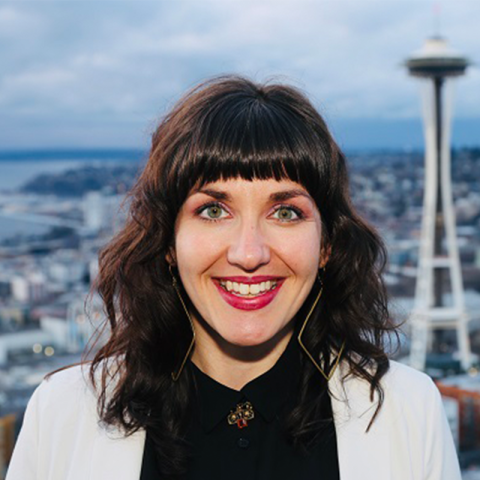
Katie Carter
Katie Carter has been working for social justice as a nonprofit professional for the past 10 years, with a particular focus on LGBTQ+ and gender justice. Originally from the Midwest, she moved to Portland, Oregon in 2008 to contribute her passion for social change with her skills in organizational development, fundraising, communications, and strategy.
In 2019, she relocated to Seattle to become the CEO of Pride Foundation after being on staff for 5 years. In her role as CEO, Katie supports the foundation’s efforts by building community and institutional partnerships, developing creative communications strategies, and mobilizing resources to affect change in the Northwest. Prior to her current role, Katie was the Director of Strategic Priorities and before that the Regional Philanthropy Officer in Oregon. Katie believes deeply in community involvement and the importance of volunteering. She currently serves on the Board of Directors for Grantmakers of Oregon and SW Washington. She also was a co-founder of a restorative justice group that facilitates a gender and sexuality seminar for people who are incarcerated.
Katie earned a Master of Arts in Philosophy of Science from Indiana University and a Bachelor of Science in Psychology and Philosophy from DePaul University. In addition to her professional and volunteer commitments, Katie is an avid reader of feminist and political writing, philosophy, poetry, and memoir, and has had a lifelong interest in science and the natural world, particularly animal cognition and behavior. She also enjoys crafting, watercolor, writing, everything having to do with cats, and all bodies of water, especially the Oregon coast.

Mindie Reule
Mindie Reule became the President & CEO of the Community Foundation of South Puget Sound in 2019, bringing more than two decades of leadership in the nonprofit and philanthropic sectors. She joined the Foundation in 2016 as Director of Philanthropic Services and Programs, where she guided philanthropic services and community programs.
Before joining the Community Foundation, Mindie served as Public Policy Program Manager at Philanthropy Northwest. In that role, she supported foundations in strengthening their public policy and civic engagement efforts and led the organization’s Community Foundation Initiative—a regional effort to connect and strengthen community foundations across the Northwest. Earlier in her career, she spent a decade running grassroots fundraising, public affairs, and community engagement programs.
Her leadership at the Community Foundation focuses on strengthening community relationships, mobilizing resources for local needs and opportunities, and advancing well-being through locally led solutions. She also serves as President-Elect of the South Sound Planned Giving Council.
Mindie grew up in Montesano, WA, and now lives in Olympia with her husband, Brock, and their two children. Outside of work, she enjoys running, reading, cheering on her kids in all of their activities, and enjoying the beauty of Washington State.
Key Lessons & Insights
- Holding Philanthropy Accountable
Mindie and Katie begin the episode responding to a quote that highlights how philanthropy lacks built-in accountability mechanisms, and funders need to create ways to hold themselves accountable. As Mindie shares, “The absence of accountability can lead to lots of activity without any real impact or feedback on how we're doing.”
- Creating Feedback Mechanisms that Center Community
Because philanthropy doesn’t have built-in accountability structures, there is an opportunity to create feedback mechanisms that center and support the communities foundations serve. Katie also reminds us that as we develop these feedback mechanisms, we should consider the nuances across multiple partners, noting that community is not a monolith. She goes on to share how at Pride, there is an overlap of donors and grantee partners in their community, and that this nuance has led Pride to be especially intentional around impact and accountability across these nuances.
- Write It Down! Codifying Accountability Within Organizations
As foundations work to create accountability mechanisms, codifying this work will ensure that, as foundations evolve and as staff and board change, these conversations on accountability won’t start from scratch each time. Mindie shares that foundations shouldn’t “only have the conversation, but you put it on paper, written down somewhere, so this [isn’t] something that you [have] to keep revisiting over and over again.“
Internal Accountability: Being Accountable to Our Values
Both Katie and Mindie discuss the various ways their foundations have worked to embed equity throughout their organizations, and how this has led to deeper accountability to the organizations’ mission and values. Mindie shares how the Community Foundation of South Puget Sound developed a time-bound and outcome-specific equity committee. The foundation eventually dissolved the committee and embedded equity goals and outcomes throughout the organization, leading to greater accountability across teams.Katie shared how, at Pride, the organization used a racial equity action plan to learn together and embed a racial equity lens throughout the organization. Similar to a strategic plan, this plan included goals, outcomes and action steps, and acted as an internal accountability mechanism that the foundation could use to track its progress.
References & Resources
- Mares mentions Maya Thornell Sandifor, who previously worked at Borealis Philanthropy, but is now the Managing Director at the Kataly Foundation.
- Mindie shares that The Management Center is a good resource to learn about how to conduct staff evaluations that include values alignment goals.
Starts & Stops
This season, we’re asking all guests what philanthropy ought to stop doing and what philanthropy needs to start doing. Here’s what Mindie and Katie shared:
Start:
- Mindie: Community foundations should start spending as much or more time on self accountability as we do talking about grantee accountability.
- Katie: Start thinking about accountability as a way of being in relationships and a way that we can be held and hold others. Don’t think about it like you are in trouble, but as a way to be in honest, open, transparent and trusting relationships with each other.
Credits
This episode of Can we talk about…? was produced by Aya Tsuruta, Emily Daman, Mares Asfaha, and our audio engineer Josh Suhy, with editing support from Karalyn Jenkins. Special thanks to Asha Hossain (Graphic Design), Nancy Sanabria (Intro/Outro Host), Komiku (Music) and to our Building Community Philanthropy partners for their thought partnership and support.