Matt:
I am surrounded by people who are so good at their work and so committed to the community that they're serving, that if I can clear the path for them to do that, that I feel like I'm contributing to the overall success of the work.
Nancy:
From Philanthropy Northwest, this is Can We Talk About...? A project to normalize the messiness of leading for racial equity, and philanthropy, and reflect on what it takes to create lasting transformation. In season three, we're sharing stories inspired by our newest guide toward transformation, on how a cohort of 20 community philanthropy organizations spent over a decade together, working to advance racial equity. We're asking guests to practice vulnerability, explore sticky topics, and look for learning. And what we ask of you is to do the same.
Mares:
Hello, everyone. And welcome to episode two of our third season of Can we talk about...? Philanthropy Northwest Podcast on leading for racial equity in philanthropy. I'm Mares Asfaha. And I'm an Associate Director of Programs at Philanthropy Northwest. I'm excited to be the host for this season where we'll be digging deep into community philanthropy specifically. Season three's stories and themes come from a group of 20 community foundations, identity funds, and United Way organizations that came together for 12 years to work on advancing community centered and equity centered philanthropy.
We captured lessons from these 12 years in our recently published guide, which is called Toward Transformation. And that's also on the PNW website. But as we all know, this work is super incredibly nuanced, which is why we're excited to explore these nuances with community foundation leaders on the podcast. We have two incredible guests with us today. Matt Morton from the Community Foundation for Southwest Washington, and we're welcoming Karri Matau back from the Community Foundation of Snohomish County. Could the both of you just share a quick intro to yourselves, your name, your role, a little bit about your communities? Karri, I know that you shared a little bit with us on the first episode, so any additional context that you want to add for this episode would be great. Matt, let's start with you.
Matt:
Okay. Thank you. Great to be here, Mares. I really appreciate the opportunity. And Karri, great to see you again and have a chance to visit. Matt Morton, he/him pronouns. I'm the President of the Community Foundation for Southwest Washington, as you mentioned. Our footprint is Clark, Cowlitz, and Skamania Counties, which not unlike a lot of different regions across the State of Washington. We have both an urban center, mostly in Clark County, surrounded by a lot of rural communities. And in times what happens in that urban center, trends out, ripples out into those more rural communities and impacts them just the same. So, we do our best to really fill that full footprint, and work with, and engage communities wherever they're at.
Mares:
Thanks, Matt. Karri?
Karri:
And I'm Karri Matau. I am the CEO at the Community Foundation of Snohomish County. My pronouns are she/her. Our community foundation serves the entire county, so our county is a large geographic land, space, north of Seattle and King County. We have rural small communities. We have some urban communities in the south of our county. And then we have a lot of bedroom communities of Seattle, suburban communities. We are traditional in some of our community foundation work, in terms of working with families and donors on their charitable giving. And then we have prioritized a lot of community coalition work, community work with nonprofits, and strategizing around advocacy, and focus on community-led action.
Mares:
Okay. Thank you both for being here today. And we are really excited to do part two of this conversation around leadership. Our first conversation was really focused on CEOs, and boards, and governance. This conversation, we're shifting to focus on CEOs, and EDs, and how they work with their staff. On our first episode, we did a starts and stops for what community philanthropy should start and stop. And one of the things that Katie ended by saying is that we need to start incorporating equity and justice into our staff cultures. So, we didn't plan for her to say that, but it's the perfect segue into this conversation. And to start us off, want to share a quote and then get some reactions from you both.
So, this quote, which is also in our guide, "It took a CEO who was ready to talk about racism, and racial equity, and really challenge people on a bigger vision for what's possible in a community." So, just want to get your reactions for you with regards to community philanthropy, what comes up for you, questions, reflections on how you show up as a CEO in your organization. Maybe Karri, we'll start with you this time and then go to Matt.
Karri:
I mean, I think that's an incredible quote. I think it's accurate. When I started working in our organization with our staff and board, one of the things I would talk about is we are privileged to be called a community foundation, but we need to behave in a way that serves and works with the entire community, otherwise we should change our name. I think doing racial equity and racial justice work immediately strengthens your organization. So, I think it's just a critical foundational piece, whether throughout the entire organization, and specifically with staff. And in the internal part of the organization, staff are often coming to community foundation work ready for that work. And many with lived experiences doing racial justice work throughout their lives.
Mares:
Thanks, Karri. Matt, what comes up for you?
Matt:
Yeah. I think if I were to pull out the topic particularly of racial justice, and equity, and just talk about the role that a leader plays within an organization or the role that a community foundation in this case plays in as a convener in their community, it does require leadership. It requires the individual or the individuals who are leading that organization to take on that role. I think one of the things I immediately think of is organizations that I've been a part of who the leaders have assigned specifically equity work to another person within the organization. And that person really is necessary for them to have agency in that work. And if they don't or if they're not supported by the leadership, either the CEO or president, or the board, there's only so much that can happen.
So, having the person who is the face or the leader within the organization, that's I think incredibly important and also is for the entire community. And to piggyback on what Karri was saying, it is a privilege and to be a community facing organization. And I think we take that very seriously in Southwest Washington and know that we have a responsibility to lead first by example, but also challenge the other institutions in our region to do the same. So, I think that those are the things that I think about when I hear that quote.
Mares:
Thank you both. And as you were speaking, a couple things came to mind for me. Well, one big thing that I'm hearing from you all is that there has to be some kind of prioritization coming from the CEO, like the CEO and leadership signaling this is important work in order for others to feel empowered to move it forward. The other thing that I heard from you, Matt, is the challenge piece. The quote talks about this also really takes the CEO willing to challenge people on a bigger vision for racial equity. Which in 2025, that might look different than what it did three or four, or 10 years ago.
Karri:
Yeah, for sure.
Mares:
Could you each maybe share a little bit about what that looks like for you within our current context, what it looks like for you to be challenging community on a bigger vision for this work? Especially in the context of things seem so especially bleak right now with all the pushback that we're getting around DEI work.
Matt:
Yeah. Right now, the language that we've been using over the last five years, really, or more than that in terms of the building community philanthropy work, this is language that's been going on for well over a decade. I don't know if we necessarily thought or really cared over that time that was so charged or creating such an environment would build a resistance. And that's not to say that our role is to always worry about the hurt feelings that we might be creating in the process. But from a community philanthropy standpoint, and how I see my role within this organization and within this community, I don't think we have the opportunity or the privilege of leaving people behind. I think it's important for us if we're going to be good at the work and make a convincing argument.
It isn't just singing to the choir. It's being able to convince the community as a whole that when those that have been the furthest away from opportunity thrive, we all thrive. And that I don't think we've used over the last many years, a lot of language, and jargon that we all get and understand are comfortable with. And I think what we've seen, not just this year, but it's been much more prevalent this year. We've seen a significant pushback to that. And that's harming those communities that are... regardless of how we want to break them up demographically, it's harming the communities that have been historically and are habitually the furthest away from opportunity or experience those greatest disparities.
So, if we break it down in that way and we want our community regardless to thrive, it means that we have to start telling the story in a way that resonates with a larger group. I think that's a hard thing about the progressive side of things anyway, but I think it's where the real work is, too.
Mares:
So, not adjusting our values or where we want to go, but trying to use multiple strategies, finding different ways to talk about the work so that it can land with folks?
Matt:
Oh, yeah. And thank you for adding that. I think the really important piece in this is you don't shift your values in the process. It's important for us to find ways to communicate our message in ways that, though, others can hear it. And that's where we make real lasting long-term change in communities.
Mares:
Yeah, thanks Matt. Karri?
Karri:
That was the first thing that came to mind for me is when you put in the work to have shared values with your staff, and your board, and your community, it's really grounding, and it tells you where you should be showing up and where to go. As Matt said, you don't compromise your values when you're really clear on the work of your organization. And everyone is at a different place in how they're being asked to show up for their community. I would say, in Snohomish County, our role really will tend more toward being really clear about our boundaries and where we won't cross the line. Sometimes folks really see us as a disruptor, and that's an intentional strategy that our board has chosen to advance. We talk a lot about how we're showing up in our communities of color, where our communities of color have asked to show up, in our queer communities, our trans community, immigrant and refugee communities.
And we're really clear that that's... we're sort of coming to the table with our community in the ways that they've asked us to come forward. And so, sometimes that can be really disruptive. And not necessarily aligned with a lot of other folks in our community, whether it be donors or government officials, or other nonprofits. And I think, for us, and I don't hear Matt say anything differently, but I think for us it's like still willing to listen and to work with people who are willing to move forward. But sometimes we say, no, we're not aligned there. No, that's not a fit for us. No, we wouldn't provide consulting to you. No, you don't fit our grants. No, we don't want your donor funds. And that is something that we've really seen emerge in Snohomish County for us, in terms of our strategies over the last five years.
And I would say that focus, that sort of North Star around... I always talk about collective liberation as the North Star for me, where everyone has what they need to thrive and excel. That really helps us make decisions about what we won't do, and where we will put more resources, and more of our staff time.
Mares:
Karri, I just want to make sure, because I'm realizing that folks listening to the podcast might not all know what collective liberation is. So, could you define that for folks?
Karri:
Probably not. So, Karri's version of collective liberation is where everyone has all of their needs met just because they're human, really. So, where it is, there are no disadvantages because of your identity, because of who you are, where you were born, the color of your skin, your gender. Where you don't have less access, less opportunity because of how you navigate the world. And where everyone has equal access, equal opportunity, truly equal thriving in the world. That's how I define it. Actually, Mares, I'd love to hear how you define it.
Mares:
So, my introduction to collective liberation was when I did a giving project with Social Justice Fund Northwest here. And they introduced it to us. And the thing that stuck with me is around how we talked about it, was the idea that my liberation is wrapped up in everyone else's liberation. So, when I think about-
Karri:
Exactly.
Mares:
... I'm like, even if I hate you as a person, even if I think you are the worst person in the world, I want you to have a great job. I want you to have access to school, to great schools for your kids. I want you to be able to have time off and wellness, because ultimately if you come back around to be helpful to me. So, in some ways it's like a "selfish" way of looking at liberation, but with the understanding that sometimes when we're selfish about something, that makes us want to even more. Versus thinking, liberation is for you. I'm already liberated. Liberation is for you. So, I'm doing this as charity for you, but when you're doing it as this is for me too, it gives you a little bit more energy.
Karri:
As I am a white woman doing this work in philanthropy, and I recognize all the places where white women, and where I have been problematic. And there is healing on my part. There's healing for folks of color. We all are doing this work and we all need to also do healing work. And we all are harmed specifically around racism. When we talk about racism, we are all tremendously harmed by racism, white folks also.
Matt:
If I can jump in. I think about how antithetical that idea is to the culture in this country. And that the zero-sum gain, if I'm going to win and someone needs to lose. And being able to apply this idea of interconnectedness and interconnected liberation onto that framing, I think is really powerful. And I think it's also very difficult, because we tend to snap back into that training that we've all had. And that, you know what? I'm liberated because I achieved it by my own self. And we don't understand that interconnectedness of all of us and our shared success. And that it isn't zero-sum. That each of us being successful is not mutually exclusive from one another. Barack Obama had a wonderful quote about, "I'm here because one person stood up, and another person stood up, and then 100, and then a million stood up."
And that recognition that it wasn't just him, that it was these people behind him, that really put him in the position to serve in the way he was able to. It's humbling and I think it's really important for us to pay more attention to. And if that's the message that we deliver in our communities, I think that can be a real living by example moment.
Mares:
I don't think we planned on talking about collective liberation, but thank you for bringing it into the convo. And thank you, Matt, for expanding on it. I think this is integral to how when you have this kind of lens or this kind of thinking, even if you're not of it as collective liberation per se, but when you have this mindset, it can really show up in how you lead as a CEO in your org. This was actually a great little thing to add into our convo. And the one thing that I wanted to say earlier to your points that I heard as we were talking about how to tell our stories, how to tell the story of this work to more folks so that it resonates with them.
The two things I wrote down actually were you don't change your values. You don't adjust your values and that you have some kind of boundaries. Which I think those are two really important points, because sometimes I'm noticing folks are tempted to adjust their boundaries or have no boundaries, or adjust their values, water down their values as they're doing this work. So, appreciate that you all brought those two points into that, too. I want to move into the next part of our conversation, which is supporting staff culture and practices. On episode one, Karri, one of the things you said was that when we change culture in our orgs, that's when we can get real sustained change, so that we don't have to keep recreating the wheel when it comes to this work.
It's not dependent on just Karri or Matt, or one individual in an org. It'll last beyond the staff transitions that we have. So, I want to ask you all what things have you done in your organizations to shift dynamics between how you as a CEO are working with your staff to push equity work forward. Do you have any examples that you could share with us? Karri, how about you start and then we'll go to Matt?
Karri:
I think initially one of the things that we did is... So, first, I started challenging the nonprofit structure, so the governance structure. And in talking with board members who came on board, I would say things like we want to right size the decision-making and the power balance in our organization. So, for example, a full-time staff member works 2,080 hours a year. And you as a board member will work at most about 80. And then I would say our staff knows more than you. Our staff is more connected to community. They will surely know more about the community work than board members. So, the old structure of board oversees a CEO who oversees staff, we want to shift that. We want to bring different roles to our community foundation, but equal and parallel within the same place. And so, some of the ways that we lived that is in our really high level work.
So, whether it's our strategic framework, whether it's our equity priorities, whether it's our values creation, we had structures to where there was equal voice at the table with staff, board and community. And then we take our time. For example, our strategic framework committee, I think it was four board, four community, and four staff. And then the framework team consulted directly with the board, consulted directly with the staff, and rolled up those suggestions equally, so that we would come out with real consensus, real strong consensus. And so, working together in those specific ways where staff has equal power and voice in big, what would be governance or strategic decisions, has really help shift the power in our organization. I think the other thing is we have spent five years working on compensation and benefits work. And what I asked the board to do is to follow the staff lead on how those are prioritized.
The board and staff had different ideas about compensation and benefits. That was okay. Those were surfaced. And then I asked the board to consider letting staff voice, and opinion, and desires be the lead on the prioritization of those. And they agreed and it's been fabulous. So, those are that power balance, the power dynamic. Also bringing staff members to board meetings, where the staff member really is the expert in the work. The staff member is making the recommendations. The staff member is challenging some of our old ways of doing things. The board listens, has great conversations, but where the staff is really overtly leading more than maybe historically we have done in nonprofits.
Mares:
Yeah. Thanks, Karri. And we are going to come back around to the compensation piece. Matt, would love to hear what this is looking like for your org.
Matt:
Yeah. I want to put a pin in that relationship between staff and board. Karri, I really liked what you said there and have probably some comments about that, too. I think when it comes down to it, staff that are empowered and have agency in their work, they just do much better work. And so, if your structures, formal and informal, are in support of that, you're going to get a much better outcome. There's lots of stuff that goes into that, like hiring people where their position really matches both their desire and their skillset. And shifting people towards ways of work that are complementary to the talents that they bring. Knowing that for me, it's really critical to say, here's the goal, the shared goal that we have. How we get there is really dependent on who that person is leading the work. So, leaning into that I think has gotten us to a place in the organization where people have more joy in their work, and who they're working with, and how they're doing their jobs.
And there's been transition within our organization since I've been here. And I would say all of it has been positive transition, because people have moved on to other organizations where they're thriving. They've retired. They've shifted within the organization into areas that fit better with what they want to do and their own career trajectory. So, having the flexibility to be able to do that. Investing in the individual as an individual, as a professional, and thereby their role within the organization is going to be stronger and more impactful. And being able to, as an organization, codify how we do that. Make sure that the benefits that we offer, the compensation, which I know we'll get to, is a reflection of that care of our team.
How we offer flexibility. When I came in, it was April 2022. And we were closing in on the end. We didn't know it at the time, but we were closing on the end of the urgent COVID period. And people were still wondering were we going to come back to work, and what was that going to look like, and how often. And we took an attitude of we're going to be hybrid. We know how to do it. We're going to use maximum flexibility. So, if there's someone in your household who's sick, if you're not feeling well, you can be flexible, and take that remote opportunity to still do your work, and take care of family members or what have you. And then at the end of the calendar year, prior to budgeting for our next year, we identified the PTO that we were going to be moving forward with, the holidays, the flexibility of the schedule, the hybrid schedule. And it was all a net gain for the team.
And I say that because I felt like we didn't have to fit within a particular structure as an organization. We didn't have to have some sort of corporate model that we were emulating. We could see what was best for us, and the 12 people under this roof, and make a decision based on that. And I'd look at what has happened over the last few years of organizations really struggling to bring people back and cultural challenges, because everyone is remote all the time and relationships struggle because of that. And we've been able to avoid a lot of those things while maintaining this maximum flexibility attitude.
Mares:
Yeah. Matt, you said so much stuff, so I'm like, okay, let me just star and maybe ask some questions about a couple things you said. One thing that you mentioned at the end was this was about figuring out what worked best for your staff and not trying to use some other organizations, some other corporate organizations as a model. I think that's so important, because a lot of times I think when it comes to internal practices, policies, any kind of HR, anything under the umbrella of HR, folks are like, "What are other people doing, and then I'll decide what is best for us." But I think what you said there is so important, because a lot of times staff do have ideas for what can be improved. It's just about having those conversations internally and working towards those.
The other thing you mentioned earlier on was you used the words empowerment and agency, in terms of giving staff agency to do equity work. I kind of want to ask, and Karri, you can chime in on this. One of the things that I've heard from a past consultant that we worked with is that a lot of times a CEO is authorizing the diversity work of DEI, but not authorizing the equity, and inclusion, and deeper... what can be seen as disruptive, but deeper practice and system changes that are more sustaining. So, would love to hear from you all, how do you go about making sure you are giving that empowerment, and agency to staff to do that equity, and inclusion, and deeper work, versus staying very surface level? I do think there's probably some CEOs thinking, "Empowering my staff. Yeah, they got full rein." So, this may be opportunity for folks to reflect on how they're showing up with their staff.
Matt Morton:
Yeah. It's easy for me, because I have no belief that I am the smartest person in the room. I am surrounded by people who are so good at their work and so committed to the community that they're serving, that if I can clear the path for them to do that, that I feel like I'm contributing to the overall success of the work. And that makes a difference. And I can tell you over a 25 or so year career, it becomes a little easier to see who are the folks that don't need so much the direction and don't really want it, but want to co-create the goal and have the path ahead of them that they can forge themselves. And I think my experience is that when that isn't the case, and coaching is necessary, and offering some direction or just offering a story of experience is helpful to those individuals, where you can help them get to that place.
But the question about how do you create an environment where people feel that they can go deeper, I think it's not instructive and prescriptive, you need to go deeper. It's really the environment that you create. If we develop an environment internally... and I would say this is the larger community as well. If we create and contribute to the environment where people are really committed to that learning, and investigating, and understanding better what is the need that's not being addressed. What is the thing that we could be doing, that could be supportive of the individual or of the organization, or the community they're hoping to serve? That kind of inquiry, really, you end up finding your way closer to that more meaningful opportunity for change.
And when we're looking at it regardless of the type of position, when we have people asking questions like that, the next step is, what does that mean to my work? And what does that mean to my work, as in the accountant at a community foundation? What does that mean for my job when I answer phones and greet people at the front desk? It really starts to transform the position, the people, and the organization towards that deeper equity and inclusion work.
Mares:
Thank you, Matt. And I appreciate that you said you think about your role also as clearing the path for folks. I'm just going to say, there's some CEOs out there think about, are you clearing the path for your staff to be able to do this work? I was talking to another consultant. They mentioned sometimes the CEO creates blockers, actually, and they don't realize they're creating blockers. So, your role really is to figure out how to clear that path for folks.
Karri:
I think CEOs, usually, we think we are clearing the path, because we don't come into this role thinking that we're holding onto power or that we're creating barriers for our staff. And if you're not really testing that, and you don't have a culture where you're getting good feedback about that, and in conversation about it, that might be your first indicator, your first sort of way forward. I do want to just say I know when we started doing deep organizational equity work, I specifically chose not to do it in one way or focusing on let's say hiring practices or policy work. What we talked about is that we are going to do everything, every moment, every chance, and every time we notice. And we're going to do it 100 different ways and we're going to try things and pilot them. Because what I wanted to build is that culture that had equity and justice embedded in every thought and that wasn't reliant on me to assign things.
And at first, that required a lot of trust building, especially with my staff of color, because they've heard that before and haven't been supported in it. But it required pretty consistent feedback loops of, okay, what did we do? What worked? What didn't? In this one little piece, let's say, it's one thing we didn't even consider how equity would be embedded in a piece of our work. But other staff would come forward and say, "Oh, this happened or this happened." And so, I think, today, fast-forward several years, we don't even have let's do these things anymore. It's like how our whole staff, and our board, and our committees live, and breathe equity and justice as part of our work. There's lots of places where we can do better and we can know we can go further, in terms especially at centering community voices. But organizationally, it is that organization where it's really not dependent on me any longer.
Mares:
Thanks, Karri. And one of the things I heard you mention was feedback loops. And I think when we talk about staff culture and practices, it's hard because so much of this is abstract work. Like, what does it mean to create a culture? But there are some structures that can support in creating that culture. And I think bringing up feedback loops, I feel like in the Pacific Northwest, we're known for being passive or passive-aggressive. And feedback loops, I think even in other parts of the country and other community foundations or other foundations in general might not be a structure that folks have. So, I just wanted to pinpoint that piece that you mentioned, in terms of building this culture.
Matt:
I think there's a relationship to accountability as well in those feedback loops. And one thing that we have, I think philanthropy generally, particularly those of us who have taken a more trust-based approach, have been accused of is not really having those accountability structures in place, because those are often defined as a more traditional definition of what that looks like. Report out on how many people you served or how many dollars per person, which doesn't really tell you anything about impact, just about how many people were served. I think the theme behind this is the shifting culture in a way that it prioritizes and values different things over what we've traditionally considered to be things that hold to each other accountable.
And I can tell you it's much more effective when you have a strong relationship both internally in the organization and I think externally with grantee partners, or in our case donors as well. The values have shifted in a way for us, that we get much better and different outcomes with our investments, because we prioritized the relationships, and that trust with our grantee partners. And our donors have appreciated that, too. The story is the impact that they're hoping to see out of their investment.
Mares:
Thank you, Matt. And we're going to have... one of the episodes later on in this season will be dedicated to accountability, because it is such a big topic in philanthropy. I wanted to circle back to the compensation and wellness pieces of this. I don't know that folks even see internal compensation and taking care of your staff as being necessary for equity work. But one thing that we've talked about is the equity work that you're doing externally needs to also be reflected internally. So, would love to hear, I know, Matt and Karri, you both have done work around this, so maybe any kind of mindset shifts that you all have made as an organization or as people around how you approach benefits and compensation. And then also, maybe some practical, concrete things you've changed in your org to also give folks ideas for what this can actually look like, because we're living in a world where that has not historically been a thing.
I'm watching The Gilded Age on HBO right now. And it's turn of the century and you have the workers fighting for eight hours. And I'm like, oh, my God, that's the world we're coming from, where even having little eight hour days was a big deal. So, Matt, maybe we can start with you this time and then Karri, we'll go to you.
Matt:
So, for us, I think when it just comes down to it, we have to recognize that we want to be competitive. And not just in our sector, but in those other sectors around us that would attract quality people that are interested and engaged. Interested in serving and engaged in their communities. And that's really important to us. So, that means we have to have competitive salary. And I mean, I say have to, but it really is an important piece. It's what we want to do. We want to be able to pay living wages and support, pay what our team members are worth. But it also is we need to be competitive in a market that cost of living is increasing and everything costs more. So, what we do in that case is we measure ourselves within both our region and against similar positions across philanthropy. And that has been really informative to us over the last few years.
We did a more formal compensation analysis with the support of a consultant over the last year, which was really helpful to us. And it helped also us formalize and identify what are some of the things within each position that make it unique, and where we should be valuing the real skill sets in each of the positions. We also looked at the non-salary or non-pay benefits associated with the total compensation, including time off, holidays, things like that. After we did that first year of maximum flexibility, there are a couple of things that we added. We did a full federal holiday, federal holidays off. We increased our actual PTO significantly, because we added a week off during that Thanksgiving week that is paid for all staff, just to recharge, reboot, and bring staff back to finish the year strong, because for us the end of the year is a busy time.
Those things I think helped and have continued to help to retain. We also are generous with our 403(b) contributions and our matching with that, which is another thing that we know that it isn't just about what's happening right now, but it's about how you're planning for your future, too. And I feel pretty fortunate leading this organization that we're able to do things like that and that we've prioritized it in our budgeting every year.
Mares:
Thanks, Matt. Karri, anything you would add? Anything that y'all have been implementing?
Karri:
I would say first is mindset. I mean our staff are really the magic sauce. They're the pieces of our work that advance our work the most. And we have an incredibly talented, diverse, dynamic staff, really exceptional leadership amongst our staff. And so, understanding first as a board that it's very hard to have equitable salary and compensation systems within inequitable systems, where we are caring for people and holding people. Those often have a lot of inequities built into the salary and compensation system. So, we acknowledge that exists when we make decisions about our salary and compensation policies. So, we have selected to be lead, to really lead in compensation and benefits. And we also have a living wage of everyone of a minimum $70,000 salary for every employee in our organization, regardless of where they're at. So, they either receive where they end up on the salary scale or a minimum of 70,000.
Similar to Matt, we have the third week in November off about, 50 days between holidays and PTO of paid leave. We have a six-week sabbatical policy. And we're starting a new wellness culture conversation amongst our staff about what does wellness mean, and what does rest mean, and what are the things that you need to be able to take care of you and your family. Because our staff are from our community, and they have very complex and complicated lives outside of working at the community foundation, which is more important than this job that they show up to. And they bring their best.
So, how do we make sure and take care of them as best we can, because they're taking care of our community and their community, our community foundation community and their own communities? Our board is at a place of really just fully understanding, and acknowledging the staff are the center, and the core of how we do our work, and how we show up in community. And they are willing to support that, fund it, and continue to really lead in compensation and benefits.
Mares:
I really appreciate that frame around leading, because again, if we're trying to focus on just what other folks are doing, we're all inequitable. So, following other inequitable orgs is not going to get us very far. And I also appreciate you bringing in the piece around the staff and their lived identities. And especially when we have for the last several years been pushing more foundations to hire more folks of color, more folks with marginalized identities. We don't want to hire folks just so that we can underpay, and not give them healthcare, and have them be stressed out. And that's not really what equity is going to look like either. So, appreciate you for saying that. So, Karri and Matt, you can participate or you can just shake your head at me. But this season I'm hosting Mars's Soapbox Snack Break segment. So, this will give you all a couple minutes to just chill while I hop on my soapbox about nothing of importance.
Again, you're welcome to join. And I gave you a preview of what my rant was for today. And I have notes on my phone. Lately, I've been seeing so much hate against Gen Z. Like, a lot. I saw something say, "Oh, most people who manage Gen Z feel like they have to babysit them." And I'm like, "Whoa, this is a lot of hate towards Gen Z, y'all." And I said, "Okay." The theme for this episode is leadership matters and part of leadership is self-awareness. So, I want to encourage some self-awareness by making everyone aware of the stupid things other generations have done. We can't just hate on Gen Z, okay? Matt is looking at me like, where am I going with this? I have a point. My first point, Exhibit A. At one point people were selling and buying pet rocks. Pet rocks. And you want to sit here and complain about Gen Z.
I'm like, you guys, no, we can't. I wasn't there for this, but pet rocks. Exhibit B, the reality TV shows that we had in the early 2000s, which those things were being greenlit by Boomers, I'm sure silent generations. I'm going to put this on Boomers and Silent Generation. What TV shows am I talking about? One, The Swan. Do y'all know The Swan? The Swan was a TV show where they took a bunch of women. They said, "We know you're ugly, we're going to fix it." They gave all of them plastic surgery and then they had them do a pageant. And it was a pageant competition. So, again, I don't think we can talk too badly about Gen Z. I'm a Millennial, so I also have to bring in what have Millennials done.
The word adulting, that is the worst word that's been introduced into the English language over the last 50 years. The worst one. We have to stop. That is absolutely ridiculous. I hate it. Every time I hear it, I'm like, we had a fully funded PBS, we had Sesame Street, we had LeVar Burton teaching us how to read, and we're using that knowledge to create a word like this? Absolutely not. Absolutely not. So, that's my soapbox snack break.
Matt:
I didn't know where you were going with it, but I have no notes. I think you are right on.
Mares:
Thank you.
Karri:
And the data shows this is the first time in history we've had the most number of generations in the workforce, so that's where the tension's coming from. And people, get right about it. Are you kidding me? Like you said, ridiculous doesn't happen. Also, acknowledging brilliance is happening in every generation.
Mares:
Exactly. Exactly.
Matt:
And I tend to notice that brilliance more when it looks like Gen X. That's when I really recognize it and appreciate it is that it's mostly... that must be a Gen X characteristic, squeaked its way into a Millennial or a Gen Z.
Karri:
I'm raising Z's, so I have to say they're quite inspiring. The pet rock is brilliant.
Matt:
I think taking a deficit mentality in this snack break was really the way to go.
Mares:
Getting back into the conversation you mentioned, codifying practices and policies, Matt. And I do want to spend a couple minutes just talking about transition. Not CEO and leadership transitions, but also staff transitions. Because one thing we've heard from folks is that you get somewhere in your racial equity work and then you have to hire a new person. And you're starting from scratch. Or you have to hire a new CEO and it's starting from scratch. I would love to hear just a couple of words of advice or things that you all have done in terms of how do you keep your momentum going when it comes to the transition part of things and what are you codifying. Because I'm like, I don't know if people even realize what should they be codifying, what should they be putting down on paper. Maybe the answer is just everything.
Matt:
Yeah. I mean it helps. And it's certainly if you have policies directing the organization, that's really helpful. One of the things that... I think it was at the end of my... closing in on the end of my first year, definitely within the first eight months, I presented to our board and our full board approved an anti-hate policy. And this was sort of not a third rail, but it was something that we hadn't done before. We had talked about it, we had red flagged organizations that donors were wanting to support, but we didn't have any process in place to actually review and discuss. And so, we created that process. And probably, definitely because of the work that had been done in the organization with my predecessor, but also because I was still in my honeymoon period as the new president. We got it approved unanimously.
And that's been something we continue to revisit as needs arise, but at least we have a process in place that allows us to no longer be associated with the organizations that are doing harm to the communities that we're hoping to serve. That's an example of, it's not a legacy, but it is definitely leaving something that... a structure for the next person. But I think what Karri said earlier about really embedding things within everything you do is a cultural codification that is really hard to extract. And as we were preparing for 2025 as an organization, we were very clear with our board that the work that we had been doing is so deeply embedded in the strategic plan, and our values. To extract it now would be to unravel everything we've done. And there's not a lot of interest in doing that. And not just because of the work, but because this is who we are and it's a reflection of the values of the community we serve.
Mares:
Yeah. Thanks, Matt. We don't want the work that we're doing to be undone by any future folks. Karri?
Karri:
And you want to advance. Do you want people to come who have even more experience than the folks who left? Two really simple things we did in terms of hiring, and then I'll share a little bit about our succession planning work. And I think a lot of folks are doing this. We had in our job descriptions when we were doing some hiring a few years ago, we had a really clear statement about where we are in our racial justice journey and our equity work. And it was really truthful about the areas where we were not as skilled, areas where we were really strongly aligned with our board, areas where we wanted to advance. We had this really great statement about where we were that I know and I got a lot of feedback, especially in communities of color, that there was interest because of that statement. Not the job. "Oh, I'm not qualified for this job. I just want to say the statement is really interesting and it really gives me an idea of where you're going."
The other thing that we've done that has been absolutely phenomenal for me, I just have loved it so much, is we do two interviews. But the very first interview we do has nothing to do with the technical aspects of the job. It has to do with the values alignment and the fit with our justice work. We do that first. So, we take all the candidates that we feel are qualified or have even parallel qualifications. And we do that culture values fit and we do an interview. And then only the people who our values align go onto the technical interview. And we have different folks. We have some thread throughs, then we have different folks doing that. So, we're not put in the position of interviewing somebody with incredibly talented experience, 20 years of experience doing ABC technical thing.
We're not interviewing them unless they're already a values fit. And that has changed some of the dynamics of who we hire and who gets "through the process," in a way that has been really fabulous for our organization. The other thing is, and I don't know if everyone wants to do this. I really don't know what works for every committee foundation. So, I'm toward the end of my career. I have retirement. I'm closer to retirement than not. And so, in looking at CEO and leadership succession planning for our organization, we are absolutely looking internally. We hired with succession planning in mind into director roles, talking and inviting conversations with directors early on about long-term interests in leadership in this organization. And then we are building supports, experiences. We're building job descriptions, around building those folks toward leadership in our organization and eventually CEO-ing in our organization. That's adulting word. Sorry.
Mares:
No. That sounds way better, though.
Karri:
CEO-ing, and I don't know that that works in every place, but our board is extremely excited about it. And so, they are interacting with our succession planning leaders in ways that they know, and understand, and is transparently being discussed. They are being succession planned into CEO, co-CEO-ing possibilities. Maybe even with me at some point before I leave. We don't really know. And that's giving me life at the sort of tail end of my career.
Mares:
I love that. So, a couple things I want to pinpoint from what you said, and then I want to move on to our very last couple points. What you said around hiring for values alignment first and then the tech skills, I think is so important. Tech skills, you can teach. The technical skills, you can teach. Values alignment, that's not really something you can teach. Something someone can grow in, but if they don't have it, why are we having them come into the org?
Karri:
That's exactly right. Yeah. And that's our choice. That's exactly right, because I will even say we've removed all education requirements from all our job descriptions, even our CPA. We wanted our accountant, our director of finance, we're not even asking for this stuff. We're just like, you have transferable skills in lots of people, in lots of different industries, in lots of parts of the world. You don't need to have a BA in finance to do this work.
Mares:
Yeah. Okay. Very last prompt, starts and stops. One thing you would like to see community philanthropy start or stop doing.
Matt:
Hopefully this is self-explanatory, but start really authentically listening to the community. And we all think we do. We all think we do. But that means you have to be in community to do that. And not just one part of the community, but many parts of the community. Attending events, connecting with them at their organizations, and at the spaces where they gather. Listening to them, and seeing the need, and the activity within those communities, that's going to be really informative to the work that you're doing. And from my standpoint, it's going to be incredibly informative to building that connection between community and the donor group that we work with. So, start doing that in real authentic ways.
It's also, by the way, something that we've gotten our board to a place where that's what they want to do. They want to be in. And that's something that we didn't always have, is we want to sit in a board meeting and we want to then leave the board meeting. But to bring opportunities in front of them so they can actually be present in a space, and see what is happening, and hear what is necessary, is a game changer.
Mares:
Thank you, Matt. Karri?
Karri:
My start is an internal. It is start talking about rest and wellness with your staff. Start talking about what does a wellness culture look like. And I'm just going to say it. Everybody should read Tricia Hersey's book, Rest Is Resistance. That's my start. Read it. Read the book.
Mares:
Thank you. I think these are great starts to end the episode on. Thank you both so much. One thing I'll add, which I think really came through the whole conversation, is do not leave your culture work to chance. Don't leave it to hopefully we get there, but if not... There are real intentional steps that you all took to grow your culture into one that supports equity work, so wanted to leave the conversation there. And thank you both so much again for sharing all of this with us.
Matt:
Thank you, Mares.
Karri:
Thanks, Mares.
Matt:
Great to be here.
Karri:
Good to see you, Matt.
Matt:
Good to see you too.
Nancy:
Can we talk about is a podcast by Philanthropy Northwest, written and produced by Aya Tsuruta and Emily Daman, with production support by Podfly and graphic design by Asha Hossain. Our episodes this season are hosted by Philanthropy Northwest's Associate Director of Programs, Mares Asfaha. You can find more information on this episode, including guest bios and show notes, at philanthropynw.org. A special thank you to Philanthropy Northwest Building Community Philanthropy Cohort for their partnership on this project. I'm Nancy Sanabria and we'll see you next time.
Season 3 episodes are inspired by our guide, Toward Transformation: A collection of lessons from 20 community philanthropies working to advance equitable philanthropy
Overview
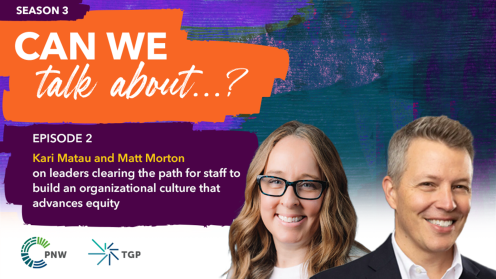
Karri Matau (CEO, Community Foundation of Snohomish County) returns to the podcast alongside Matt Morton (President, Community Foundation for Southwest Washington) to explore what it looks like to lead for racial equity at the staff level.
They offer insights into how they are taking an interconnected approach that allows them to stay rooted in their values while adjusting to the changing context. They discuss the importance of continually showing up in their communities and supporting staff to do the same.
Furthermore, both Matt and Karri offer tangible practices and policies that their foundations have worked on to best support their staff, and how these shifts can ripple out to building stronger communities.
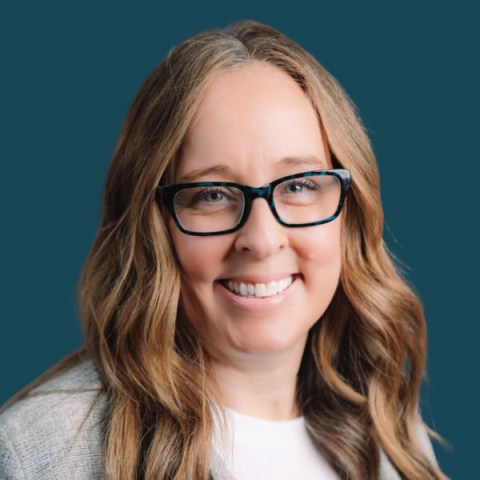
Karri Matau
Karri has worked in the nonprofit and public sector for more than 30 years. While she grew up in Grays Harbor, most of her career has been in Snohomish County. In addition to nonprofits, she has worked in K-12 education systems and public libraries.
Karri joined the Community Foundation of Snohomish County in 2000 to lead the Wiggums Park Renewal Project in north Everett. It was a career highlight and helped her see the power of community decision making. While Karri never intended to stay long, she was named CEO in 2019. The board and staff focus on transforming and disrupting systems, and the organization’s commitment to community drives their daily work.
Karri has a degree in public relations. She lives in Lake Stevens with her husband, sons and dogs. In her free time, she likes to read, hike, boat, kayak and cook.

Matt Morton
Matt Morton became the fifth president of the community foundation in 2022, bringing more than two decades of leadership in the nonprofit and philanthropic sectors. Previously, Morton was the equitable education portfolio director at Meyer Memorial Trust, where he managed a team that steered the state’s largest private grantmaking strategy focused on K-12 public education.
Morton earned his master's from Oregon State University and cultivated his deep passion for nonprofit work while volunteering as a board member. In 2005, he joined the National Indian Child Welfare Association, eventually becoming its deputy director before moving on to serve as executive director at the Native American Youth and Family Center.
Outside the office, Morton volunteers regularly to support the communities and causes he cares deeply about. He and his wife Courtaney are avid soccer fans because they love cheering on their son, Marcus. When they’re not at the pitch, you might catch them up skiing, enjoying live music or taking walks with their dog, Penny.
Key Lessons & Insights
- Interconnected Lens and Collective Liberation
In a nation steeped in individualistic culture, Karri and Matt offer alternative ways of being that take a more interconnected and community-based approach. Matt reminds us of the need to recognize that our journeys, accomplishments, and experiences are inextricably intertwined. He shares that all of us and our shared success aren’t a zero-sum game; each of our successes is not mutually exclusive from one another. Karri and Mares also discuss how our liberation is wrapped up in everyone else's liberation.
- Staff Agency and Empowerment
Advancing equity and inclusion within an organization requires more than leadership commitment; it also means empowering staff to actively participate in and lead these efforts. Matt describes his role as “clearing the path for staff,” while Karri highlights challenging traditional nonprofit structures by allowing staff to take the lead on projects and have an equal voice with the board, recognizing the valuable expertise and experience they contribute.
- Codifying Policies and Practices to Support Staff
Karri and Matt share tangible practices and tactics that organizations can take to help codify a culture that supports staff. Whether it is through competitive salaries, compensation benefits, or hybrid work arrangements, creating effective policies will help ensure that the efforts made to build a supportive culture don’t unravel or become undone. As Karri notes, it’s very hard to have equitable salary and compensation systems within inequitable systems.
References & Resources
- Collective Liberation: “Karri's version of collective liberation is where everyone has all of their needs met just because they're human. There are no disadvantages because of your identity, because of who you are, where you were born, the color of your skin, your gender; where you don't have less access, less opportunity because of how you navigate the world, and where everyone has equal access, equal opportunity, truly equal thriving in the world.” Mares shares that she first encountered collective liberation in her work with Social Justice Fund NW. The New Breath Foundation, a previous Can we talk about…? guest has a blog post on collective liberation.
- Karri recommends reading Rest is Resistance by Tricia Hersey
Starts & Stops
This season, we’re asking all guests what philanthropy ought to stop doing and what philanthropy needs to start doing. Here’s what Karri and Matt shared:
Start:
- Matt: Philanthropy needs to really authentically listen to the community. We all think we do it, but you have to be in community to do it - not just one part, but many parts of the community. Show up in their spaces, listen, see the need.
- Karri: Start talking about rest and wellness with your staff. What does a wellness culture look like? Read Rest is Resistance.
Credits
This episode of Can we talk about…? was produced by Aya Tsuruta, Emily Daman, Mares Asfaha, and our audio engineer Josh Suhy, with editing support from Karalyn Jenkins. Special thanks to Asha Hossain (Graphic Design), Nancy Sanabria (Intro/Outro Host), Komiku (Music) and to our Building Community Philanthropy partners for their thought partnership and support.