Mares:
I feel like there's so many CEOs out here who are nice to their board members, but y'all are suffering, and I hate to see it. People are just suffering every day with their boards. And they're so nice, they have a nice culture, I hear people say all the time, "We're all really nice people on the board," and yet there's not movement happening towards racial equity, there's not movement happening toward becoming more community-centered, and it's because of that conflict avoidance.
Nancy:
From Philanthropy Northwest, this is Can We Talk About...? A project to normalize the messiness of leading for racial equity and philanthropy, and reflect on what it takes to create lasting transformation. In season 3, we're sharing stories inspired by our newest guide toward transformation on how a cohort of 20 community philanthropy organizations spend over a decade together working to advance racial equity. We're asking guests to practice vulnerability, explore sticky topics, and look for learning, and what we ask of you is to do the same.
Mares:
Hello, everyone, and welcome to the very first episode of our third season of Can We Talk About...? Philanthropy Northwest Podcast on Leading for Racial Equity and Philanthropy. I'm Mares Asfaha, and I'm an associate director of programs at Philanthropy Northwest, and I'm really excited to be your host for the season where we are doing a deep dive into community philanthropy. Season 3 stories and themes come from a group of 20 community foundations, identity funds, and United Way organizations that came together for 12 years to work on advancing community-centered and equity-centered philanthropy. We captured lessons from these 12 years in our recently published guide titled, Toward Transformation. You all can find that guide on our website. But as we all know, this work is so incredibly nuanced, and that's why we were excited to explore these nuances with organizational leaders on the podcast.
Given the recent rise in attempted threats to DEI, we're seeing so many folks back away from this work, and we're really hoping that this season of the podcast will encourage folks to stay the course and feel like there is a community out there that is pushing this work forward despite the backlash and retrenchment. We know that progress happens in community, and so we're really hoping that you find a little sense of community throughout the season. And we have two amazing leaders with us on this episode, Katie Carter and Karri Matau, who are here with me today to help kick us off for the season. Katie and Karri, could you share a quick intro, a little bit about your roles, and a little bit about your communities? Maybe we can start with Katie, and then Karri, you can share.
Katie:
Sure. Thanks so much, Mares. My name is Katie Carter, I use she and her pronouns. I'm the CEO of the Pride Foundation, and I've been in this role for six years, but at Pride Foundation, for 11. So it's been a long time. And the Pride Foundation serves LGBTQ+ communities in Oregon, Washington, Montana, Idaho, and Alaska.
Karri:
Great. Thanks, Katie. And I'm Karri Matau, I am the CEO at the Community Foundation of Snohomish County. My pronouns are she/her. Our community foundation serves the entire county. So our county is a large geographic land, space north of Seattle and King County. We have rural small communities, we have some urban communities in the south of our county, and then we have a lot of sort of bedroom communities of Seattle suburban communities. We are traditional in some of our community foundation work in terms of working with families and donors on their charitable giving. And then we have prioritized a lot of community coalition work, community work with nonprofits, and strategizing around advocacy and focus on community-led action.
Mares:
Great. Thank you, both. So today, the plan is really to zoom into how leadership at the CEO and board level plays a critical role in community philanthropy orgs advancing racial equity. But since this is our first episode of the season, we want to take a little bit of a step back. First, I'm going to read the very first quote that we share in the guide and would love to hear your thoughts on it. Okay, so here's the quote, "Can a community thrive if we don't do equity work? No. For us to be successful as an organization, we need to tackle race and racism and the role it plays in everything." Would love to hear your reactions to the quote and what comes up for you as community philanthropy.
Karri:
I think that as an organization that has community in our name, that we must think about equity and justice foundationally in everything we do, in every space, in every idea, and tactic, and conversation. That's how we increase and strengthen our community. We get our biggest impact when we do foundationally include justice and equity. And one example I always use with folks is if we're talking to food banks about food scarcity, we really need to be including the conversation about food justice and environmental justice with our tribal communities and with our whole community. But in addition to foundationally every single day including that conversation, I think that it is also our North Star, it's where we ground our values, it's how we make decisions, it's how we choose to use our power and our privilege in our community work.
Mares:
Thanks, Karri. Katie, do you want to add anything to that?
Katie:
Yeah. I think my initial reaction to the quote is, yes, that's true. And at Pride Foundation, equity and justice are core to who we are. We think of justice intersectionally, including both LGBTQ+ justice, racial justice, gender justice, economic justice across the spectrum, understanding that these things are deeply, deeply interconnected. And so if we're not thinking about equity and justice in our work, we're not serving the breadth of our community, we're not serving everybody in a meaningful and thoughtful way. And I think for philanthropy, when so many of the conversations that we have are around how to impact particular issues or particular problems that are coming up, if we're not thinking about equity, we're not thinking systemically, and that means we're not getting at the root causes of the issues that we're trying to address, we're just operating at a surface level. And so we're never actually thinking about what caused the issues that we're trying to address in the first place or thinking about things from a deeper level that will actually be the thing that enables us to help solve all of the problems that we're facing.
Mares:
I love that. I love that, Katie. I want to pose this other question because I feel like it's something that we three have talked a lot about, which is, what are some of the challenges or perceived challenges, myths, that come up in the community philanthropy experience? Again, still related to this quote, because I think it even started to come up in your answers.
Katie:
There's so many. I think one of the challenges, or maybe it's a perceived challenge, is that for community philanthropy to be effective, it has to be for everybody, this big tent idea. And while in some ways I fundamentally agree with that, I also think we need to have very intentional and thoughtful strategies about what we're doing that actually look at the root causes and the systemic inequities that we're trying to address with our work. And so I think there's a tendency in community philanthropy in particular to try to be a space where their big, bold things aren't said, where challenges to the status quo aren't made because there is an assumption that we need to be here for every person and every component ideologically.
And I think that a lot of that comes from the fact that, I don't know if it's a challenge or a myth, or both, but that the donor's interest should be the primary focus of community philanthropy instead of the broader needs of the community, and that what our goal primarily is to be a steward of those resources versus to understand those resources to be communities resources, and our job is to be responsive to what our communities need, not just the people with the resources. And so I really like to reframe that as we are partners in helping people with resources, give them back to community, and share them with community, and be able to really focus on playing that bridge role.
Mares:
Yeah. Thanks, Katie.
Karri:
That's right on who is being centered. And I do know philanthropy has a long history, as Katie mentioned, of centering donors or the folks who are bringing that particular resource to the work. And when you center community, the conversation will change. You can maybe sometimes have alignment with donors, or a strong alignment, maybe somewhat of an alignment, but when community is centered, you're making very different decisions. I do think one of the challenges, and we hear about this culturally all through the country... and I am a Washington state girl, I've been born and raised here, so I really can't speak to this from experience, but in the Pacific Northwest, our discomfort with conflict, and I know when we aren't comfortable with having conversations where there's disagreement, or sometimes, in our organization, we talk a lot about disruption, and our discomfort with disruption in philanthropy is pretty rampant.
And one of the things I just always say is, emphatically, at our community foundation, once we started a strong focus and an external focus on racial justice, we have received more resources, we have received more aligned employees, our employee pool has increased and has strengthened, and we've received stronger partnerships as a result of aligning and focusing on racial justice. We have said no in other places that have not been aligned, which has been really good for our organization. So disruption doesn't necessarily equate to loss, in our case, it's really has increased our organization's ability to make stronger impact.
Katie:
Can I just jump on that too? Because I think... I'm from the Midwest, and in the Midwest, they also have a Midwest nice and there's a Northwest nice, and there is this idea that we're conflict averse so that we can be in better relationship with one another. But that's not actually how you get to relationship. Relationships that are meaningful and can actually withstand hard times are those in which you can have challenging conversations, you can disagree with each other and still get work done, you can be willing to be in a conversation where something is challenged and you can hear that, receive that, and be engaged in that conversation. And so I just want to agree with you that whether we call it disruption or whether we call it having good conflict skills, I often just think about it as relationship, because if we're in relationships where we're not having disagreements or conflicts, then we're probably not going to the depth that we actually need to be.
And I think that there could be something really incredible when we think about community philanthropy if we really focus on the relational and relationship component of that and all of the things that are necessary to have strong relationships, which isn't just being nice to each other. Please don't get me wrong, we should be kind and loving to one another, I hope that we have that. And then I hope we also have the kind of relationships that can hold the kinds of disagreements and challenges that help us actually get stronger and think more robustly about particular things and fundamentally have stronger relationships with one another.
Mares:
Oh, my God, I love what you all are... I look like a little bobblehead right now because I've just been nodding my head for 10 minutes straight. But I love what you all are sharing, I think, Karri, your point around disruption doesn't equate to loss. There's so much fear around disruption, and I don't think that maybe we recognize how useful, helpful disruption is, how many wins that we have, it's hard to see the wins we have right now, but in general, how many wins we have gotten because of disruption? It wasn't because people were nice to other people, it was because there was some disruption happening alongside the deep relationship building that you're talking about, Katie.
Karri:
I think, Mares, I'll just add... I mean, this reminds me riffing off Katie, disagreeing... a lot of folks feel like a disagreement is unkind, the very nature of disagreement is unkind. I was working with a community group, we just do a ton of consulting, free consulting for our local partners, and they did not want to remove some folks who had been... within their organization and board, who had clearly violated not only conflict of interest, but code of conduct, to such a point of harming, really significant harm in the organization, but they didn't want to remove them. And as we were talking to them, we talked about a pathway for moving those folks into a new space. And it was a really sort of kind, but it was so much for them, they kept saying, "Well, I'm too nice for that. I'm too nice." And finally, I said, "Are you saying that I'm not nice because I'm suggesting that they're harming the organization and that the boundary needs to be held? And even saying that, are you suggesting I'm not nice?"
It helped them shift a little bit and say, "No, but I equate niceness with no conflict." And I think we talk about barriers, it's like this does transition to then how are we working with our boards? How are we working with our groups and our community? And I know that is one of the things that we often talk about in philanthropy, in our places, about the challenges with our boards around disruption, or conflict, or robust conversations of disagreement.
Mares:
This is a perfect segue into the next question that we wanted to dive into, which is, what happens on a board when you do have board members who are unaligned? And I think your point around niceness and how niceness can show up, and how board members show up with each other, or how A CEO shows up with their board, I feel like there's so many CEOs out here who are nice to their board members, but y'all are suffering, and I hate to see it. People are just suffering every day with their boards. And they're so nice, they have a nice culture, I hear people say all the time, "We're all really nice people on the board," and yet there's not movement happening towards racial equity, there's not movement happening toward becoming more community-centered and it's because of that conflict avoidance.
But to get me back into the question, what impact do you all see happening on boards where you do have board members who are not aligned with equity? Because we do see that a lot, most community philanthropy orgs, I would say, have at least one board member, likely, multiple board members, who are not excited, I would say, about the equity work that an organization is trying to push forward and would love to hear, what should folks do if they find themselves in that situation? Kind of a big question.
Katie:
I think the reality... and Mares, your experience is the same as mine, I have talked to so many of my colleagues who are suffering because they are in these challenging relationships with their board, because there are very obviously power dynamics between boards and CEOs and the staff. There's very clearly an unusual structure that we have in this field where we have a group of people that may or may not be representative of the communities that we're centering and serving who are in major leadership decision-making roles. And so it's over the people who are engaged in this, on the staff doing it day in and day out. It's a funny structure, you all have been in many conversations about how it is a funny structure, and I'm always interested in understanding how we can build the structures that actually serve us versus the ones that we have inherited, but I think that's a different podcast and not what we are here to talk about today.
But I think the reality is that an entire, not just a board, but a whole organization's trajectory can stall if one person isn't comfortable with the conversation. And that's just explicitly not okay. It is important that we try to... the phrase that we often hear is, "Bring people along," but the way that I like to think about it is are we clear about our values? Are we clear as an organization about our direction, and our strategy, and our focus, and our goals, and our purpose? If those things are clear, board members need to be aligned with those values, and that focus, and those priorities, otherwise, they should not be in leadership on the board. And oftentimes, I've seen situations where someone doesn't want to be brought along, they want things to stay as they are. They don't necessarily join the board to help bring about transformational change within an organization, they join the board because they like the organization as it was or as it is, and the work shouldn't stop because one or a couple of people aren't comfortable with it moving forward.
And I think that... I don't know if it's popular or unpopular thing to say, but I have seen the entire organizations just grind to a halt because board members weren't comfortable with racial equity work, racial justice work, or other pieces of what the organization is trying to do. And there's this freezing that happens where other board members don't want to... I actually feel like we're going to end up having a whole conversation about relationship building skills and managing conflict, managing this idea that there is a person who is misaligned. And I think we often try to tiptoe around that by thinking about how we can get them to step off long-term through term limits and through these other kinds of things.
But I really want us encourage us to, if there is a person who is not aligned with our strategies or not aligned with our values or with our priorities, to have a direct conversation about whether this is the right leadership role for them, and to encourage our board leadership to actually not lead that as a decision point, but to make it a necessity that we have board members who are aligned with the vision of the organization and don't see their role as questioning, or as trying to make sure it's the correct role if a decision has been made around it. I'm curious, Karri, too, on how disruption plays into this, because I've often seen people who are uncomfortable with moving forward into more equity and justice-focused work and see themselves as disruptors to stop that from moving forward. So I'm curious how that has played out.
Karri:
That's a great question. We also... I mean, same as Pride... So we're at the place now where after doing this work for a lot of years, we've gotten really clear. We've gotten clear about what are the values and the pieces of alignment that need to happen for folks to be able to be in... like we talked about that power position of decision-making in our organization. Before that point, we had folks that were all over the board. So I think one of the things to me that helped me make the shift of our board... no, and I also want to say, segue or step back, I want to say it is so much easier when everyone's aligned. It is exponentially a thousand times easier. So if you can get there, your job becomes almost golden, in a way, because so much is aligned with staff and your org... So anyway, getting there while it can be difficult if you're in transition is so worth it.
So I think about where we were when we had folks at all levels. The first simple thing we did is we clarified what our values were or what our priorities were, and everyone equally agree that equity and justice work was a number one priority in our organization, was what we were going to focus on, and was going to be embedded everywhere. Where the tension came, we agreed with it in concept, but then the tension comes when you do the work, it's the actual living the talk. Moving beyond performative, it's living the talk. Honestly, the simple thing I did is I held us accountable to our agreement, and I would remind folks, "We've already agreed on this, this is not up for discussion. If the full board would like to have this up for discussion again, then we can do that. But the full board doesn't want this, this is not up for discussion. We've already made this agreement, we are already doing this work. Yes, it feels time-consuming right now, that's because we haven't made the shift to embedding this work.
It will feel time-consuming until we've made the full shift to being able to do this work." So I think it's the holding us accountable. If your whole board agrees and your organization agrees this is a priority, it's holding your self accountable. And I think you can still have people... Katie, I love... you and I have talked about before that, but shouldn't we hear from other people who don't just agree with us? I'd love for you to talk about that a little bit. Sorry, Mares. Oh, wait, Mares, am I doing your job?
Mares:
A little, but I love it because-
Karri:
I'd like a badge.
Mares:
Yeah, no, but I think that's great because we have talked about... there's this idea in people's head, we live in a community where not everyone is on board with equity, shouldn't we have those folks represented on our board if we're going to be a true community foundation? Karri, you did do my job for me. Yeah. Katie, do you want to dive into that question?
Katie:
It is hard for me to imagine saying... working at Pride Foundation, an organization explicitly and intentionally focused on LGBTQ justice, the idea of bringing someone on our board who doesn't believe in that would be absurd. And I think it's because-
Mares:
And it should be... I want to point out, it's not just absurd for y'all, people should also feel that's equally absurd for us, even if we're not Pride Foundation.
Katie:
Exactly. It's not just because we're an LGBTQ organization, but because it is explicit in our mission and our vision that we are focused on equity and justice. And so this comes back to the alignment piece. This is not meant to be a town square where we're all just shouting at each other. Our organizations have specific missions, we have values that we have defined, we have strategies that we've outlined, and the rule of the board is to help assure those along. If they look at those and say, "I don't agree with this mission and I don't agree with this strategy," or, "These are not my values," that person should not be in a leadership role on the board. And I guess I don't know how to say it any more explicitly than that, but it is not necessarily a place where we have to contort ourselves to be a place for everybody's ideological belief system, because then if you believe anything, then what do you believe? Nothing, right? There's some much better quote about that.
Mares:
If you don't stand for something you'll fall for... I learned that quote from America's Next Top Model. Thank you.
Katie:
Excellent, that is how I would be citing it in the future. But I want to I guess dispel this idea that we can't have rigorous and thoughtful debate if we don't have people with a lot of different viewpoints. And also, the reality is you can be fully committed to equity and justice, the mission of the organization on our board and in our organization. We don't all 100% agree on every single thing, we don't have the exact same political analysis, and I think that's good because it helps push us and to have more of these rigorous discussions and analyze our strategies. But there's a difference between being in fundamental alignment and using that as a starting place to grow and change and refine your work versus having someone who is, in some way, opposed or unaligned with what... misaligned, excuse me, with what you're doing, and inviting them in to just be sand in the gears, because that isn't actually a way of creating rigorous strategy either.
I just disagree with that as the fundamental way, that we have to have dissenters in order to do better work. If we are all using critical analysis as we're moving through our work to say, "What could we be doing more of? How could we be doing this better?" "Oh, we learned a new thing in this world," how do we change and modify things as a result of it?
Karri:
Yeah. Also, I want to add, I think it doesn't mean that you're not in relationship... again, this comes back to relationship, really authentic relationships, and that you're not out listening in other parts of your community, it doesn't mean you don't talk to folks who might disagree with your foundation, who might disagree with your strategies. Our communities are diverse in all different kinds of ways in our thinking. And one of the things that I do, Mares, and we've talked about this a lot, is I meet with community leaders all throughout our county and I try to meet with new folks. And my goal is always... and I'm accountable to my board to meet with 100 folks a year where I'm literally just, "What do you love in your community? What is concerning you? What do you think our community foundation should be doing a better job?"
And I use that information to follow trends, or follow what's on people's hearts and minds, and to learn more, and those can include people with all different kinds of viewpoints. And then I have an opportunity to say too, and hold the line on why our organization, again, prioritizes racial justice, for example. Why would we prioritize that? What is the reason? And if they're talking to me in those one-on-one conversations, especially as a white woman, as a white CEO, I try to do that work with other white women. I really try to be in conversation about racial justice with other white women, ways that we've harmed, and ways that we need to do better.
And I think you can get all different kinds of viewpoints, but as Katie mentioned, I think giving a power position to someone who does not agree with your organizational values, the foundation of your organization, we would never do that at the community foundation, at least right now, under our leadership. We just would not do that. That would not be... we would never even consider it, but we stay in community and we stay in relationship with folks, especially if folks are willing to move forward and continue to learn and continue to grapple with all the things happening in community.
Katie:
Can I just add too, I feel like it's interesting to me that when people say, "We need to make sure we have this diversity of viewpoints on it," they always mean people who are opposed to equity and justice work. And they don't mean people who are perhaps much more, however you want to phrase it further along, deeper in their analysis, more progressive, or thinking more radically about the way that we're doing our work. And I just want to elevate that to notice that is actually a mechanism that is being built into how we're moving this change that keeps us from moving forward, it's a drag on the work because we're asking, "Are we making sure that these dissenting voices in our communities are being brought along," versus, "Are we going far enough?"
We could be asking these questions of, "Is equity work far enough? Should we be thinking about justice and liberation work? What is it that our communities are telling us that they need and that we're trying to show up for?" And so I just want to notice that even the way we're thinking about this is often a way that is pulling us from moving further along-
Mares:
Yeah, so good. That's so good. Thank you, Katie-
Katie:
And can I... Sorry, this will be my... I just want to give a tip in here because I feel like when we were talking before about what happens if you have these one board members who are not interested in moving along, I wanted to share from both my own experience, but other conversations I've had, is to just notice if it's the same questions coming up over and over. Is it the same person who just feels uncomfortable but can't articulate what's wrong? This is where deep conversation with somebody can actually help either elicit what's actually underlying the discomfort, the questioning, or whatever, or it can help you notice this person that just doesn't agree, no matter what we do, they fundamentally don't agree with what we're doing.
And when you realize that there's no more ways to ask the questions or you keep coming back to the same point in the conversation, that's when you have to actually have a deeper conversation with them about whether they are aligned with where the organization is moving forward. So I just wanted to offer that as a tangible way that if you find yourself in this cycle, pick a point and call it, and say, "Actually, I think this isn't working anymore. We don't have to be in this forever."
Karri:
That's like the real... just having the real conversation that feels uncomfortable to folks. Every year in the summer, I do accountability calls with my board so I can have that one-on-one time. And early on, a lot of the conversation... I call it accountability for me and accountability to them. So early on, a lot of my conversations were around, "I'm noticing you're really talking about this X, Y, Z issue a lot, and that seems really important to you. It's not really aligned with our work because of these things, how are you feeling about that? Are you feeling... how are you feeling aligned with that?" Or whatever it is. Or, "I've noticed that you've been stepping into these conversations, is that something you'd like more information about? Would you like a little bit of support and training about that? Is this still feeling like a good fit for you?"
And just those one-on-one calls, as Katie said, I scheduled them, especially early on when I was making all these board transitions, and then I would ask for feedback too, "Where are you seeing me pushing? Where are you seeing my leadership? Where do you see I need more skill set or development in these areas?" And then it gave me that chance to really dive deep with the folks... like Katie said, because sometimes, people don't know what they're doing, sometimes, they do, but sometimes, they don't realize their impact on other people.
Mares:
Karri, I love that because one of the things, Katie, you had said earlier was, a lot of times, we're just inheriting structures versus building what we feel like we need. And I think, Karri, your example of building in time and the structure of doing accountability calls with your board is a great one, and it feels needed in terms of, again, thinking about where our boards are at. I want to make sure that y'all have some time to talk about a couple of different structure things y'all are doing on your boards. Karri, you've talked a lot in our past conversations about some of the things that you all did to shift your board, the term limits you implemented, your recruitment process, talking about disruption in terms of how you're identifying who should be on your board. Would love to give you a little bit of time to talk about that piece.
Karri:
Okay, so I'll just go down the list. We did make a lot of structural changes to support making leadership transitions with our board of directors. So we went from folks who are mostly serving like nine years, multiple terms, three years, three years, three years. And then... yeah. And that is a traditional model in our sector. I think a lot of folks still have that model three years, and then you can re-up for three years, and then sometimes, people say, "You can go off the board and come back." So one of the things I always say... so we have one... mostly recruit folks, who are one four year term. And so the reason we do that is we want folks to come on to be deeply engaged and then move off and be ambassadors in our organization. But the thing that just clicks for me is I always say, "Think about four years ago what you needed on your board. It is just mind-boggling, but what are we going to need four years from now?"
So four years feels short until you think about it in that way, what did we need four years ago is not at all what we need today, nor will it be what we need in four more years. So that was the impetus to get us into those terms. And then we structured our terms to reduce the workload on staff. We don't recruit every year, we recruit every other year. So we literally do it in sort of classes. So about half of our board will come on in year one, and then we spend two years together... so maybe five or six folks, we'll spend two years together, we'll do a lot of storming, and norming, and forming, a lot of team building. And then we're together the very next year, everyone's the same, no one goes off, no one comes on. And then those are usually the years I do a lot of robust strategy planning, movement, organizational movement, because everybody is already formed and normed, everyone's up to speed.
And then that next year, half the class will go off, another half will come on. And that's how we have done it because we do extremely intensive orientation and education and onboarding people. The other thing that I do though is we've just created an emeritus position, but not the traditional emeritus role, which is fine, no shade, people do it whatever way they want. So our emeritus positions, we can have up to three on our board, and they can only be past board chairs, and they are recommended by the CEO, and they are on in a not a figurehead role, they have to still attend board meetings and they have voting powers. So that's where we get our leadership longevity, with a past chair who is instrumental in something about our organization, our history of something. And so they are on with an unlimited term. So it's a really deep dive into leadership piece.
So I have folks going on and off every four years, but then I'll have a few folks who are in this emeritus. Then the only other thing that we do that's different is any leadership role can extend a term. If somebody is the vice president, or the chair-elect, or the chair or the past chair, their term gets extended to accommodate that leadership position. So I will have, in any given time, I have 16 board members right now, have four or five sort of chair positions, and all those chairs, our past chair, our current chair, and our chair-elect share leadership. So the three of them do the planning with me, the three run the board meetings with me, the three of them do share leadership model organization at the board level. I think... was that... Mares, did I cover our point? Okay.
Mares:
Yes. One last point that I'd love for you to speak on, because you mentioned disruption earlier and how important that is. And I know in the past, you've talked about recruiting a courageous board, and you said that you actually include a question around disruption when you recruit.
Karri:
Yeah. Great. I forgot about that. Yeah. So a few things we recruit for, we require the community... So first of all, I have a board committee with a few community people on it that do interviews of folks that we're interested in. The community members who are being considered read our equity statement, our value statement, and our beyond land acknowledgement, our work with Indigenous, and they need to make a commitment to those documents, those concepts in order to be a fit for our board. And so I share those, and then after my committee has interviewed them, I have a discussion specifically with them about those documents and where are they seeing as challenge, where are they really adept at it, those sorts of things. But then the one question I ask them is, what is their comfort level with disruption?
And I share with them that our board has voted and actually approved that we will be a disruptor, and that it's okay to be... we have a continuum of disruption, we have the folks who are out and really going... and then we have folks who are just dipping their toes in disruption. But that in order to be a fit on our board right now, you have to be willing to be a disruptor because those are the decisions that we're making as an organization, and that is the support that the staff needs at this time to do our work. And so then the conversation is, "I'm not really... or I'm uncomfortable with it," and then it's maybe, "You're not a good fit for our board right now."
Mares:
And one last question, and then Katie, I'm going to go to you, what does disruption mean... when you talk about disruption, what does that mean to you? Because realizing that can mean a lot of different things to folks, and so maybe a more clear idea to share with people.
Karri:
So usually, what I'll do is I'll walk them through a few scenarios of what our recent work is. So I'll talk about, it's really aligning with especially our BIPOC partners, our core partners in our community, and when they ask us to step up, so that might be stepping up and having conversations... joining them in a conversation with, let's say, a county or a government agency where we're sharing things that have not gone more harm that has been done. It might mean we had an experience with our local newspaper where we convened folks because of some things that had happened. So I'll give them some really specific examples of where we have stepped into work aligned with our community partners when our community partners have asked us to come forward.
Last week, I had an experience with another sort of funder that had done some things that were... so it's also holding our colleagues and our funders accountable, and calling folks when things have happened in community that are wonky, or wrong, or harmful. And so we had one just last week where this wonky thing happened, and we had a lot of calls from our community like, "Hey, did you know this happened?" And so I called the CEO and was like, "Why did this happen?" And asked for transparency and asked for the things that our community members were requesting, our partners. Yeah.
Mares:
Yeah. Thank you, Karri.
Karri:
Is that clear as mud?
Mares:
Yeah. Yeah. And Katie, I know you've been working towards more of a liberatory governance model with your board. Could you share maybe a definition of what liberatory governance is, and then talk about what that work has looked like on your board?
Katie:
Yeah. It's a big phrase. We spent more time talking about liberatory governance as a phrase than I think we really needed to as we embarked on this. But part of why we did it is, what I was sharing earlier, is just thinking about this structure that we have that is endemic to most nonprofit organizations and the way our boards function that can be really limiting and even harmful to the organization and don't actually... we had just gotten done with our strategic framework and we didn't know that this structure was the thing that is going to help us achieve these bold plans that we have put into place. And so for us, there isn't a definition of liberatory governance. It is this, we think of it as a framework. So it's a way of thinking about our governance structure that helps us be the most supportive of our broader mission and commitment to justice as an organization.
So there's elements to it that I think could amount to a definition. So things like holding a systemic oppression lens and really committing to continually growing and developing a shared political analysis, and understanding both... that within the context of the board within philanthropy and within our broader movements for justice, it's also really about understanding power, and how power is playing out both in our sector, but also specifically, how it's playing out on the board and between board and staff in terms of how we're sharing power, how we're making decisions, and then really, what it amounts to in terms of application is practicing liberatory governance. So no matter what we're doing, whether we're looking at policies, whether we're looking at practices, or decision makings, or how we're engaging as a board, continually applying this framework to ask a series of questions when we're doing whatever we're doing.
So is this... the main questions that we ask are is this support sharing of power? So is it transparent? Is it accountable decision making? Are we grounding the people who are most impacted by this decision in those seats of power? Are we supporting, and establishing, and maintaining authentic relationships internally and externally? So there's a lot of work around culture here that we're committing to when we're thinking about it. Are we centering community needs? And when we say community, what do we mean by that community, and defining that. And are we demonstrating leadership and followership appropriately? So are we really... again, it's really deeply thinking about how power is playing out in this structure that we have.
And so we've spent a lot of time trying to figure out... it took us a long time to develop this framework, and I am grateful that my board went on this journey with me, because I wanted us to think differently about how both the relationship between the board and the staff could function differently as a full organization and as a full team, but also, how could we actually not keep recreating some of the problems that we've been talking about here today? How could we create a different type of structure that precluded those from keeping emerging over and over by basically having this lens, or this framework, or this series of screens and questions that we ask ourselves when we're going about our day-to-day work. And then we have a two-page explanation of what liberatory governance framework means to Pride Foundation. And that is an accountability mechanism too.
We use it now really regularly as we're making major decisions and minor decisions, like how does liberatory governance... our framework, how does that inform what we're doing here? How do our values inform what we're doing here? How are we centering those in our practices? So there's been a number of examples that we utilize this within recently that have really helped us figure out what it means in practice, because again, I think, Karri, you said this earlier, it's great on paper, and then what does it actually look like in practice, and how is it changing the way the organization not only functions, but how it feels? And we're in our second year of this experiment, and feels really different.
Mares:
Could you share an example if you feel comfortable?
Katie:
Yeah. Sure. I think it's picking up steam now, and I have lots of different examples, but I think just to share one that I'm especially excited about was really also about how we recruit for our board. So we had done a pretty traditional way of recruitment where we talked to our community, we figured out who would be a good fit, what we were looking for, we had a good rigorous process. And we just said, "Is there a different kind of way where we could create more space and more inroads for people to get into these leadership positions within our organization? And is there a different way we can engage with folks?" And so we did an open recruitment process, which, I will admit, was a little nerve wracking at first both because we're like, "Who's going to apply? What if nobody applies?" And also, what happens when we have to say no? Or if we need to say no, is that going to damage things?
And two years in, it has been an incredible process that might not be for every organization. And I'm not saying this is the one stop solution, but for us, it really created not only an opportunity to bring more people into leadership in our organization from different lived experiences, from different parts of our region, from different areas of expertise and interest, but it helped broaden our table in a really important way. And the process itself enabled us to do a different kind of vetting and onboarding for the culture that we're trying to create. Because we could just say, "Here's our liberatory governance framework." One of our questions on our application is like, "How does this speak to you? Are you interested in this? Is this what you want to do?"
And we can ask explicit questions of people who are joining our board to make sure that they share our commitment to justice and liberation, and that they are committed to having a learning stance and developing their political analysis, and that they're thinking about power in these really rigorous ways. And that really changes where the starting point is for our board members. I think oftentimes, when you have board turnover... Karri, I so appreciate the onboarding process, and I will say we also have a comically rigorous onboarding process, because it's part of how you make sure that you don't keep doing the same thing and recreating the wheel over, and over, and over every time you get new board members, is how do you get everybody to start from where we're at at this moment and keep moving forward?
And I think this is really helping us to make sure that we're bringing on people who are both where we're at now, and many folks who are like, "Yes, liberatory governance 20 years ago, that's what we should have been doing, and here's some other things that we're thinking about." It's helping us continue to move forward in our transformational change process by bringing folks on who are excited about being part of an organization that is focused on transformational change, which is really the foundation of liberatory governance in many ways, is that we're not just going to stay the same, it's not just going to be a stagnant governance model.
Mares:
Yeah. I appreciate so much what you all shared because, again, just going back to what structures do we need to build, and I think one of the things that we talk about in the guide is that people take the processes they have, they take the policies that have been with the organization for however many years and they feel locked in with them. But I appreciate so much of what y'all are sharing because you're sharing that you don't have to stay locked up behind bars with processes and all of these structures that aren't supporting you. There's ways to create new structures in big and small ways to push your work forward.
Karri:
Our community is calling to us for that. We are undergoing a transformation in our sector too, and maybe not everyone agrees with that. I think the nonprofit sector will look very different, and the philanthropic sector, in a decade, and in two decades. So how do we future us? People who do the futurist work, they look at extreme future first, they think of extreme future and then they look backwards from there, whereas a lot of times, people think about future by looking back. And if you're thinking about our work and how do we transform our organizations and how do we do better, don't even think about backwards. That's why I think Katie and I are like, "Oh," whatever's back there, we're really trying to look forward as our North Star. What's this going to look like? What do our communities need from us? And I feel like we're hearing a call for change to revolutionize how we work in the philanthropic sector and it's not being good enough. So let's reinvent a better.
Katie:
And can I just add to that into what you were saying, Mares, is that changing the structures isn't just for fun, just to be explicit about it, it isn't just to be like, "Ooh, what would this art deco structure be like?" It is because those structures were created to keep the status quo in place, they were created under the guise of white supremacy, and capitalism, and concentrating the power in the hands of the people who have wealth and not thinking in centering community. So changing our structures isn't just for fun, it is because actually the structures that we have inherited are not going to get us the outcomes that we want, they're not going to get us equity, they're certainly not going to get us justice, they're not going to get us any further along in this work if we keep using the things that were given to us and wondering why we're having the same conversation about the single board member who's, "Really not sure if we should do racial equity work." And we need to be so far beyond that conversation at this moment in 2025.
If we keep using the same structures that mean that that's where our focus and our energy need to be, that's not going to enable us to make big, bold changes, that's not going to enable us to do something fundamentally different for our community. So we need to actually build structures that allow for a different kind of future to come into a place like you were saying, Karri. So I just wanted to be clear about why those structures need to change, and it's not actually... I don't see that as being optional as part of this work, I see it as foundational to how we do equity and justice work as changing the structures that we're working within.
Mares:
Absolutely. Okay. Okay. I think it's time to give you to a very quick break. So this season, we're trying to just incorporate some levity into these dark days. So I'm hosting what we're calling Mares's Soapbox Snack Break segment to enjoy some optional snacks, while I hope on my soapbox about nothing of importance to philanthropy. Katie and Karri, you're more than welcome to join in on this, this will be really quick, or you can just chill and enjoy sitting back and watching me argue with myself. Okay. The topic for today, because this has been bothering me a lot lately, I think it's been bothering a lot of folks, because again, we're experiencing dark times. Okay, I know a lot of people have been complaining about ads on streaming services, because we used to be in a world, you open up your Hulu, you open up your Netflix, you're free, that was the whole point of streaming. And now, we have ads.
I know people have already complained about the ads. What I want to complain about is I'm seeing ads for shows that I'm currently... I'm watching Poker Face and then I'm getting an ad, and the ad is for Poker Face. I'm already here. I'm already here, I'm already watching what you want me to watch. I'm already paying... someone else is paying, someone else is paying for me to watch this. So I felt like, "What?" You know that scene in Mad Men when Don Draper's, "That's what the money's for." That's what I'm thinking in my head, I'm like, "I thought this was what the money was for." I thought the exchange was, "Here's the money, now, I don't need ads." But I'm here watching... you tell me to watch Love Island, I'm already here, it's 40 episodes in, I don't know what else to give you.
Katie:
I like the takeaway from this is do better advertising.
Mares:
Yeah. Do better... because I'm like, "You know what? I know we're not going back, I know they're going to keep giving us ads, but at least give it something else." Or when they're giving me... go on.
Katie:
If you're going to collect all this information, if you're going to just like... the cookies and everything that you're doing, every single thing we're doing online, integrate it better.
Mares:
Exactly. Exactly. Also-
Katie:
Build better systems.
Mares:
... the person who decided we needed ads on streaming services, you're not a good person. You're not a good person. You have no compassion for your fellow man. Oh, okay. That was my soapbox.
Katie:
I actually feel like you just did a deep rail against capitalism, Mares, even though I know you were... the whole reason we have ads is how can we make more money? We know we have literally captive audience right here.
Mares:
That's true. That's true. It's just it's been on my heart. It's been on my heart. So thought I would use this opportunity to go into that. So now that we have talked about that, speaking of things that need to stop, let's talk about what should community philanthropy stop or start doing when it comes to, again, this topic of board and CEO leadership, how we can keep moving racial equity forward. Yeah. So maybe we can start with, what should community philanthropy start doing? We'll start with that question first.
Katie:
I have so many things, I feel like my starts and stops are fundamentally interconnected too, so maybe they're the same. And one of the things that we didn't have time to talk about, but maybe I'll just incorporate it into my start here, is we need to start also thinking about our internal culture as organizations. If you're not already doing that, if you're not thinking about equity and justice work in terms of how you're building out the culture at your organization, or how you're focusing on the people who work there or the people who are on your board, how we're developing leaders, how we're creating cultures of care, we're not going to actually achieve what we're trying to achieve. And it'll also be way more fun if we do it that way, it'll feel a whole lot better if we do that focus work. But that's also part of the change, that's part of the structural change.
And oftentimes, when we're talking about racial equity and justice work, there's this interesting focus on metrics and how we're shifting priorities in these different kinds of ways, and we're not talking about how we're actually changing our own institutions. And so I just want to encourage community philanthropy and all organizations and companies to think a lot more about what building internal culture actually looks like and how we can put time and energy into doing that.
Mares:
Oftentimes, I think people forget about that work or dismiss it as being important and then skip over it and then run into all these barriers. And it's like, it's because you didn't do the foundational culture-building work. And having nice people is not enough to be like, "We have nice people, so we don't need to do the culture work."
Katie:
Literally, everything we've been talking about, I think, is also denigrated as soft skills, which we can talk about the gender and racial dynamics of that in a different call. But building in conflict literacy as part of your organizational culture makes all of this easier, makes all of this much better, and helps us also develop better kinds of relationships and leaderships, as leadership as people. I couldn't agree... and it's going to get in your way if you don't do it, like you said, Mares, it's absolutely true, and it won't last.
Karri:
Then Katie leaves, or I leave, and things shift if we just do tactical strategy... tactic... when you change culture, you get lasting in deep change beyond an individual, beyond your board chair, beyond your treasurer, beyond your CEO. You want it to be... it's truly living with it in an integrated way. I agree... I mean, we really... that's mostly what I talk about in our organization, is culture. And right now, we're talking about a culture, what does a cultural wellness look like? What does it feel like for folks? So I love that piece. I think also for me, this is more tactical, but if we could do one thing where every conversation then would be analyzed with thinking through and maybe talking to impacted communities with a justice frame. So anything, like look at your calendar and see, are you meeting with a youth coalition this week? And then are you doing affordable housing work? And then are you doing some work with your cities? But how could every one of those conversations or meetings be framed with a justice lens?
And then, okay, if I'm trying to frame it in a justice lens, who have I not heard from that are being most impacted by this that I do need to hear from in order to listen to this, make decisions on behalf of the community foundation. So once you start just living and breathing it in every single moment, again, that really gets embedded in the culture of your organization, and it can't be undone by a decision or where you give money. Because none of this is really about money. It is, and it isn't money, if you don't have funds and money, it changes your dynamic. But this is really about really also where you just give your attention and resource time, your staff time, your focus, your advocacy.
Mares:
I love that, Karri. And I think sometimes, I remember I'll have conversations with folks about, "Oh, what are your conversations about equity like with so-and-so, or with this community?" And they're like, "Oh, it doesn't really come up." So I think this advice of going through and thinking about how you can incorporate it into your conversations is great. Any last things you would say around what should community philanthropy stop doing?
Karri:
I'll just carry on the theme about money because I think that we need to stop focusing on the pot of money, our pot of money. And I think we need to really challenge where our money comes from. Not all money is good, not all money is medicine. Edgar Villanueva talks about money as medicine. So where are the places where we just need to say, "No, it doesn't make sense," and maybe our pot doesn't grow, or maybe it grows more slowly, and maybe we're giving out more money. And so just not being focused on our asset size. And in our field, we identify ourselves by our asset size as one of our... usually, our first indicators. And that's interesting in our intros, Katie, neither one of us did that, but I'll tell you what, it's so weird if we had done that. Katie Carter-
Katie:
In other-
Karri:
Now, I want him. No, but in other places where philanthropy is in conversation, almost always, if you ask for an intro, almost, all the time, asset size is included in your introduction. The stop of that, the weirdness around the money and the size... because it's not about the money.
Mares:
Not only about the money, yeah.
Karri:
Not only about the money. Thank you.
Mares:
Yeah. Katie?
Katie:
This is the wrong way to, I don't know if you listened to the podcast Las Culturistas? I don't think so, honey, one minute. Thing they do at the end, that's how I've been thinking about this question, but I promise not to rail and go on for too long. But thinking about the broader theme of this season of the podcast, I think the thing that community philanthropy, and all philanthropy, needs to stop doing right now in my mind is acting and moving from a place of fear and not from a place of boldness. Our community needs us to be showing up hard right now, our democracy needs us to be showing up hard right now-
Mares:
What's left of it. Yeah.
Katie:
Whatever we have left, this is not the moment to be like, "Let's get caught up in this conversation about whether or not we should be doing racial equity work," we should have been doing racial equity work for decades and generations in this entire time. That is not the conversation that we need to be having right now. And I think in our organizations, we need to be pushing for change all the time, it can't stop, we can't pause right now because things are messy, we can't put things on hold, we can't wait and see if it's going to get worse. This is the moment... I think if we're thinking about this from a place of leadership, this is the moment for boldness, this is the moment to be doing all the things that we can, and leaning into those, that disruption, like you're talking about, Karri, and these potentially uncomfortable situations, but mostly, we just need to be doing every single thing that we can to be preserving what we have and to be supporting our communities.
Because having this conversation, it's sort of ironic as we're getting into the minutia of how to manage your boards while things are literally in crisis all around us. We need to redirect our energy to make sure that we're being attentive to those and not letting ourselves get caught up in these small things that are preventing us from really bringing about that deeper transformational change and thinking about what we're building while everything is crumbling around us, because that's the kind of vision we're going to need to build things back up as we move forward from this really terrifying and really horrendous moment that we're in right now. Sorry to leave it on a bad note, but I'm like, "We need to be pushing ourselves and our sector, otherwise, nothing is going to change."
Mares:
I don't think you're leaving it on a bad note, I think that's a realistic note, that's where we are now... that's where we have been, but especially now, that's where we are. So I love that you're sharing that. Well, I want to thank you both, Katie and Karri, for sharing all of this. We could have had this conversation for like five more hours, but I really do hope that folks come away with this conversation thinking about all of the different ways that y'all have approached your board work, your role as a CEO to push this work forward. So thank you very much.
Katie:
Thanks, Mares.
Karri:
Thank you so much.
Nancy:
Can we talk about...? is a podcast by Philanthropy Northwest, written and produced by Aya Tsuruta and Emily Daman, with production support by PodFly, and Graphic Design by Asha Hossain. Our episodes this season are hosted by Philanthropy Northwest's Associate Director of Programs, Mares Asfaha. You can find more information on this episode, including guest bios and show notes @philanthropynw.org. A special thank you to Philanthropy Northwest's Building Community Philanthropy cohort for their partnership on this project. I'm Nancy Sanabria, and we'll see you next time.
Season 3 episodes are inspired by our guide, Toward Transformation: A collection of lessons from 20 community philanthropies working to advance equitable philanthropy
Overview
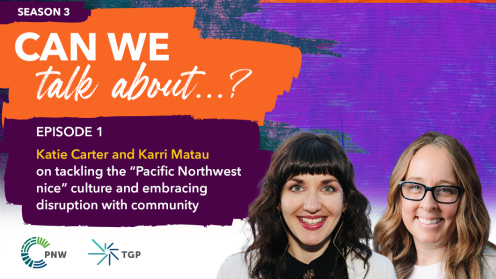
Katie Carter (CEO, Pride Foundation) and Karri Matau (CEO, Community Foundation of Snohomish County) join us to kick off Season 3, where we’re uplifting reflections and strategies on advancing racial equity in community philanthropy.
Together, Katie and Karri share what it means to center community and how equity shows up in their work – starting with their boards. They cover topics from recruiting values-aligned directors to managing misaligned board members and holding their boards accountable.
Throughout the episode, they weave in stories that highlight the need to transform structures and systems in philanthropy and act boldly for racial equity in this current climate.
Katie Carter
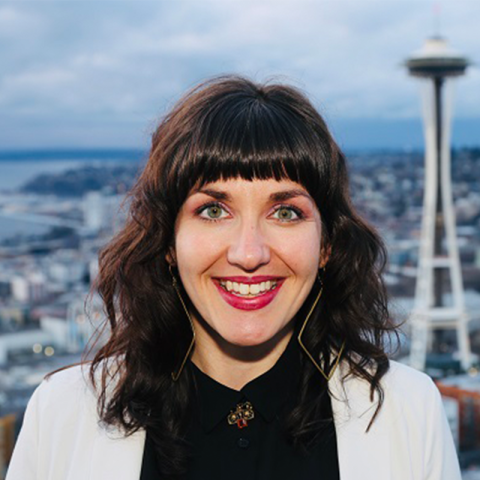
Katie Carter has been working for social justice as a nonprofit professional for the past 10 years, with a particular focus on LGBTQ+ and gender justice. Originally from the Midwest, she moved to Portland, Oregon in 2008 to contribute her passion for social change with her skills in organizational development, fundraising, communications, and strategy.
In 2019, she relocated to Seattle to become the CEO of Pride Foundation after being on staff for 5 years. In her role as CEO, Katie supports the foundation’s efforts by building community and institutional partnerships, developing creative communications strategies, and mobilizing resources to affect change in the Northwest. Prior to her current role, Katie was the Director of Strategic Priorities and before that the Regional Philanthropy Officer in Oregon. Katie believes deeply in community involvement and the importance of volunteering. She currently serves on the Board of Directors for Grantmakers of Oregon and SW Washington. She also was a co-founder of a restorative justice group that facilitates a gender and sexuality seminar for people who are incarcerated.
Katie earned a Master of Arts in Philosophy of Science from Indiana University and a Bachelor of Science in Psychology and Philosophy from DePaul University. In addition to her professional and volunteer commitments, Katie is an avid reader of feminist and political writing, philosophy, poetry, and memoir, and has had a lifelong interest in science and the natural world, particularly animal cognition and behavior. She also enjoys crafting, watercolor, writing, everything having to do with cats, and all bodies of water, especially the Oregon coast.
Karri Matau
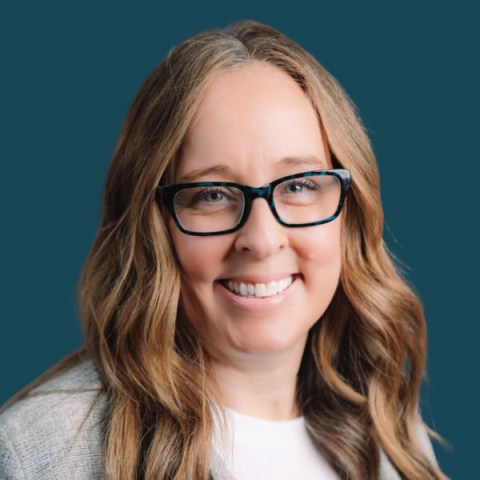
Karri has worked in the nonprofit and public sector for more than 30 years. While she grew up in Grays Harbor, most of her career has been in Snohomish County. In addition to nonprofits, she has worked in K-12 education systems and public libraries.
Karri joined the Community Foundation of Snohomish County in 2000 to lead the Wiggums Park Renewal Project in north Everett. It was a career highlight and helped her see the power of community decision making. While Karri never intended to stay long, she was named CEO in 2019. The board and staff focus on transforming and disrupting systems, and the organization’s commitment to community drives their daily work.
Karri has a degree in public relations. She lives in Lake Stevens with her husband, sons and dogs. In her free time, she likes to read, hike, boat, kayak and cook.
Key Lessons & Insights
- Who is Centered in Philanthropy?
Katie and Karri examine who is typically centered in philanthropy, whether it is donors or the community, and how this emphasis influences funding decisions. Philanthropy has a long history of centering donors, often at the expense of the community. However, as Karri reminds us, when you center community, the conversation will change…and when community is centered, you're making very different decisions. When the community is prioritized, philanthropy becomes more responsive to its needs, fostering deeper trust and stronger relationships with grantees and community partners.
- Welcoming Disruption for Deeper Impact
Many individuals in the Pacific Northwest have expressed discomfort with conflict, often referred to as the "PNW nice." Katie and Karri remind us that disagreement and conflict are essential for building stronger relationships and better organizations. Katie points out that if we are in relationships where disagreements don't occur, we are likely not exploring the depth we truly need. She shares, whether we call it disruption or whether we call it having good conflict skills. I often just think about it as a relationship, because if we're in relationships where we're not having disagreements or conflicts, then we're probably not going to the depth that we actually need to be.
- Bringing in Values-Aligned Board Members
As we explored in Season 1, the power dynamics that exist between board members, the CEO and staff can lead to conflicts and challenges within the organization. Katie emphasizes that an organization's racial equity progress can come to a standstill if even one person gets in the way. She points out that a whole organization's trajectory can stall if one person isn't comfortable with the conversation. To address this potential misalignment and prevent stagnation, Karri shares a practical solution: she regularly holds accountability calls with her board members. This approach helps foster alignment with the organization's values and ensures time is dedicated to accountability.
References & Resources
- Katie shares Liberatory Governance, and how the Pride Foundation has looked at its policies, practices and decision making using this framework. She also shared that Pride updated their board roles.
- Karri discusses how their community is calling philanthropy to transform the sector and using a futurist mindset and approach, can work toward that transformation. Hilda Vega with Hispanics in Philanthropy, wrote an article on the need for philanthropy to adopt a futurist mindset.
Starts & Stops
This season, we’re asking all guests what philanthropy ought to stop doing and what philanthropy needs to start doing. Here’s what Katie and Karri shared:
Stop:
- Katie: Stop acting and moving from a place of fear, and not from a place of boldness. Our communities and democracy need us to show up hard right now. We need to be pushing for change all the time. We can’t put things on hold.
- Karri: We need to stop focusing on the pot of money – our asset size.
Start: We need to start challenging where money comes from. Where do we need to say no? Maybe our pot doesn’t grow, or it grows slowly.
Credits
This episode of Can we talk about…? was produced by Aya Tsuruta, Emily Daman, Mares Asfaha, and our audio engineer Josh Suhy, with editing support from Karalyn Jenkins. Special thanks to Asha Hossain (Graphic Design), Nancy Sanabria (Intro/Outro Host), Komiku (Music) and to our Building Community Philanthropy partners for their thought partnership and support.