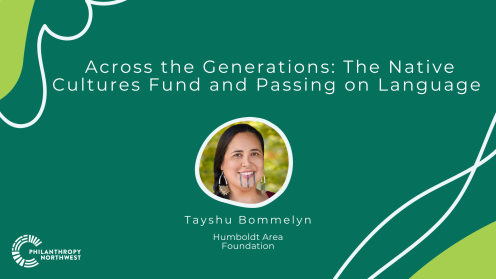

Preserving and fostering Native cultures, the Native Cultures Fund (NCF) is a partnership project between Native Nations, the Humboldt Area Foundation, the William & Flora Hewlett Foundation and donors. As a Native-led program, NCF reflects the communities they serve, not only in appearance but in language, Indigenous lineage and lived experiences.
Tayshu Bommelyn (Tolowa Dee-ni’, Karuk and Wintu tribe member), the senior program officer with the NCF at the Humboldt Area Foundation, explains what it means to be Native-led for the fund. “For us, being Native-led is about that perspective, that understanding. It is really about being part of a community. I come from a family committed to cultural revitalization and so I understand that this work is also very multi-generational,” says Tayshu.
Lived experience really guides the work, and the experience of being guided by someone from the community can make a difference. We bring that lived experience into our work and it helps define how we show up and what we prioritize.
“Lived experience really guides the work, and the experience of being guided by someone from the community can make a difference. We bring that lived experience into our work and it helps define how we show up and what we prioritize. Using a decolonized lens to think about the work is part of that. Even our service area is centered around ancestral territories first and foremost. This way of thinking is something we value and try to bring into our everyday work.”
Tayshu has worked with the NCF for years and has seen the result of the fund’s work in real time. She reflects on some of the most significant accomplishments she’s witnessed, though what she sees as an accomplishment isn’t only data.
“We’re celebrating our 25th anniversary, and we’ve been really reflective about the shift in reclamation and healing over that time. One example is Indigenous language revitalization. When we first started, the number of those working in Indigenous language revitalization was so small, but you have organizations like Living Your Language Alliance and they’ve brought many language revitalization efforts together,” says Tayshu. “They have a biennial conference where groups working in language revitalization come together to share resources and tell their stories. It’s like a ripple effect, you know? Now we can look and see how they have impacted others; we can see growth across the field. And language is so important because it’s with our languages that we’ve been able to heal, to have difficult conversations around colonialism and to tell both the hard truths and, more importantly, the joyful parts of our stories.”
Community is complex and what I can hope for is more resources to address these ever-changing needs.
NCF’s impact has been deeply felt in these towns and neighborhoods. In response to their work, there has been an outpouring of gratitude and a single question: What can we give back?
“The work we do exists because of relationships. My job is about stewarding relationships and acting as a conduit of resources. That’s what I do. And we never ask organizations to advertise or tell people who supported them, we never ask for that because the work isn’t about us, it’s about them,” says Tayshu. “But gratitude and reciprocity are so important to Native cultures. We have grantees asking us what they can do to help us, how they can give back and provide gifts of gratitude. We’re also aware that we operate within the confines of philanthropy, so gift-giving lives in a weird space sometimes. This is why we have worked to build in ways that honor the reciprocal nature of trusted relationships.”
Tayshu is looking forward to meeting the changing needs of her communities as they continue their journey of cultural revitalization and healing. “You know, telling you one specific thing I’m looking forward to is difficult because the needs of the communities NCF serves are always changing. Community is complex and what I can hope for is more resources to address these ever-changing needs. As we address these needs and watch these communities do this work for themselves and for their own people and communities, that’s really healing. And, personally, I believe the healing of one is the healing of all.”
Want to see more news like this? Subscribe to the Community Philanthropy Exchange, our quarterly newsletter tailored for community philanthropies in the Northwest.