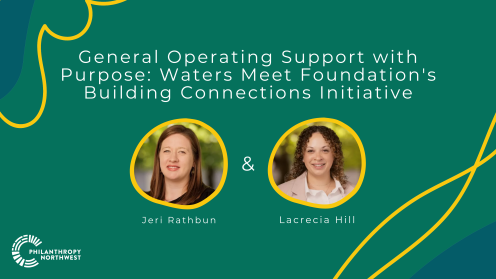
General Operating Support with Purpose: Waters Meet Foundation's Building Connections Initiative

Being community-led means funders leaving their egos at the door. This is exactly what the Waters Meet Foundation – formerly known as Empire Health Foundation – did when developing their Building Connections Initiative (BCI), a cohort program that provides multi-year, general operating support to grassroots organizations in eastern Washington.
Jeri Rathbun, program director at Waters Meet Foundation, gave us insight into the role BCI will play in the foundation's ten-year strategy. “The Building Connections Initiative is our grantmaking strategy as part of our ten-year plan. It’s where we’re going to assist leaders from grassroots, by-and-for organizations in continuing the work they’re already doing — fostering collective action and building community power — versus responding to a funder-driven agenda," says Jeri. “Our theory of change is that by partnering to help people, leaders, communities and grassroots organizations, we can support their mission and work toward systemic change. That’s how we’re going to make a difference.”
Lacrecia Hill, community engagement and strategy director at Waters Meet Foundation, told us more about how cohort members will benefit from the initiative. “The cohort will consist of 20 organizations that will not only receive the $50K a year, but they also have the opportunity to receive additional funding for technical assistance and capacity building support.”
Unlike their past programs, Waters Meet is taking a backseat with this initiative and letting participants lead themselves, including deciding the cohort’s structure and what the outcomes will look like. Waters Meet is interested in using their resources and capacity to support whichever collective direction the members decide to take.
“This initiative is a long-term plan. Our first year is about getting grounded together and creating belonging with each other. With relationship and trust established, the cohort can decide, what’s the work we want to do together?” says Jeri. “Throughout these next five years, we’re going to walk side-by-side with the cohort. We’re going to co-create with them, we’re going to adapt and learn from one another guided by a shared vision. None of us knows everything, but we can work together to be responsive to immediate and long-term needs.”
And the feedback we’ve received from participants is that they want to take this time to get to know one another, understand how they relate to one another and build these relationships, so when the time comes, we’ll know what work we want to do.
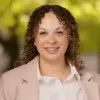
Lacrecia
“What we’re doing is more hands off and I understand people want more context, but we’re building as we go" Lacrecia adds. "Of course, we’re open to feedback. We don’t get defensive. We share the feedback as a group internally and go from there."
In their ten-year strategy, Waters Meet prioritizes their region’s communities that are under-resourced, including Black and Indigenous folks, and people living in rural areas.
Lacrecia explains how their region’s unique philanthropic landscape has spurred Waters Meet to dig into their rural communities. “We've had rural representation on all our past community action committees and currently with our Building Connection cohort. Spokane is a metro area, but if you grew up here, you’re not that far removed from rural, including Black, Brown and Indigenous communities who live in these areas,” she says.
We, people in philanthropy, have to get out of the way to support communities serving themselves. To do that, we have to step back, listen, stay open to feedback and be willing to learn.

Jeri
“Actually, we started this listening deeply space for our rural partners to think more about our rural strategies and how we must be more thoughtful around political dynamics in those spaces and different ways of living. At some point, we’d like to do a rural listening tour to continue building connections.”
Jeri gives some advice to funders interested in rethinking their approach to community: “The folks who are really active in their communities, they know what their people need. We, people in philanthropy, have to get out of the way to support communities serving themselves. To do that, we have to step back, listen, stay open to feedback and be willing to learn. That looks like building relationships and assessing if your behavior matches your intentions. Because ultimately, it’s not about us, it’s about the people we serve.”