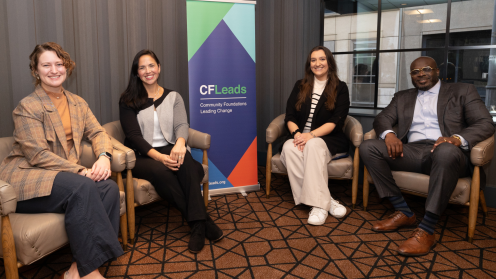

We recently attended CFLeads’ Regional Economic Mobility Convening, a gathering dedicated to exploring how community foundations can foster economic prosperity and upward mobility. The convening provided a wealth of practical tools, insights and inspiration for community foundations eager to embark on this work. Discover our four key takeaways from the event below:
1. To get started, learn from frameworks and case studies on economic mobility.
- Urban Institute shared their framework and the five pillars that support upward mobility. This is a great framework for any community foundation looking to learn more about what factors play into economic mobility and where they can have influence in their communities.
Results for America introduced their Economic Mobility Catalog with case studies on place-based strategies communities are using to support economic mobility and inspire local action.
2. Let’s move beyond data limitations.
Despite our best intentions, organizations continue to use data in ways that exclude communities, with the excuse that "data on this community doesn’t exist." Hummingbird Indigenous Family Services, an Indigenous-led organization shared that Native communities continue to be told their communities are too small to be "statistically significant," resulting in a lack of resources to support their work. They urged community foundations to not allow lack of data, or a perceived lack of data (stories are data too!) to prevent them from finding ways to support Indigenous communities. Hummingbird’s Nest program provides a guaranteed income to pregnant individuals and a $5,000 contribution to a child’s 529 savings plan upon program graduation. "When you give communities funding and culturally congruent supports that's where the magic happens," they shared.
3. Understand that "it is our economy rather than the economy."
Whatcom Community Foundation shared this powerful quote from Chris Benner and Manuel Pastor during our gathering. We have a lot of power if we decide to use it. Community foundations have many leverage points they can use to support economic prosperity. Whatcom Community Foundation is using several strategies to support economic mobility work including child savings accounts, impact investing, microfinancing to support small businesses and employee ownership.
4. If we want to create an inclusive economy we need to act with intentionality.
- Craft3, a CDFI, is leading by example, focusing their work on systemic racism, the climate crisis and rural and tribal economies. In recent years one of their goals has been to increase lending to entrepreneurs of color. They aimed to interrupt racially biased credit underwriting, so they launched new underwriting criteria, putting more emphasis on the character of borrowers over traditional underwriting requirements. As a result, about 70% of their lending has been trending to entrepreneurs of color since 2021.
Similarly, Black Home Initiative is working to increase homeownership amongst Black households, directing funding to Black communities historically excluded from capital access due to redlining. They stressed the importance of addressing specific past harms in order to build economic prosperity for black communities.
Creating a more equitable economy requires collaboration, trust and intentionality. Community foundations must ask: Who in their communities is already doing this work? How can they partner, learn from and support these efforts to build a more equitable economy?
If we trust people, we should focus on giving them more agency in their lives so they can define what economic mobility looks like for them.
This mindset shift is essential for creating systems that support lasting, inclusive change. The convening served as a powerful reminder that community foundations hold immense potential to drive equitable economic mobility. By learning from practical tools, challenging data norms, leveraging power and building trust, we can help shape a future where everyone has the opportunity to thrive.
Want to see more news like this? Subscribe to the Community Philanthropy Exchange, our quarterly newsletter tailored for community philanthropies in the Northwest.