Hope, Purpose and Community: Insights from Our Regional Community Philanthropy Convening



These are challenging times (to say the least!). Today, community philanthropy leaders are navigating how to bring donors along on equity journeys, how to tackle tough local political issues without alienating partners, how to sustain and motivate staff in uncertain times, and how to best support organizations facing shrinking resources. These challenges can feel isolating and overwhelming — until you realize how many others are wrestling with the same things, which is why we hosted an in-person Regional Community Philanthropy Convening earlier this month to bring folks in the sector together.
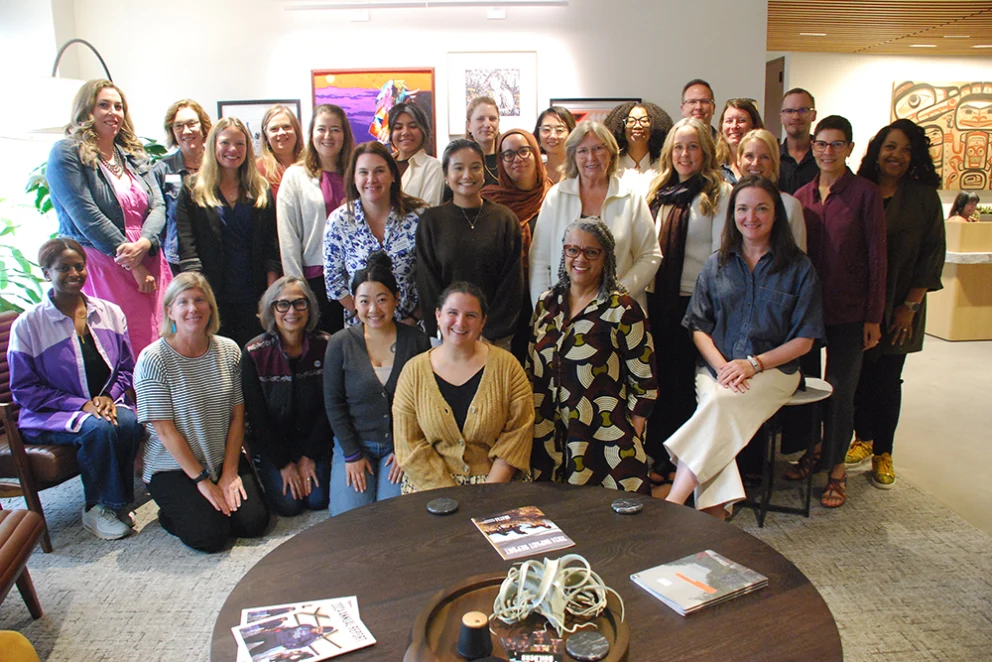
From getting inspired about ways to support a fair and accurate census count for the 2030 Census, to hearing from leaders from the Washington state Press Forward chapter on how reliable local news and information is an essential part of our philanthropic strategy, these two days gave leaders the opportunity to grapple with the realities of our work, and left us with inspiring insights to take back to our organizations. We pulled out four powerful takeaways from this convening to help our network rise to meet the moment and shape what comes next — check them out below.
1. Transformed people transform systems.
Bethany Johnson-Javois, president and CEO of Deaconess Foundation, helped us in explore the teachings of futurism and challenged us to tap into imagination as a strategy to build a better future. “Hope is not naïveté," Bethany says. "It is the catalytic force that keeps us from settling for the world as it is." From this conversation, she also spoke about how transformed people transform systems. People are the first step to transformation, not the other way around. She reminded us that change starts at the individual level and when we change as individuals, we are better equipped to change unjust systems around us.
Hope is not naïveté. It is the catalytic force that keeps us from settling for the world as it is.

Bethany
However, oftentimes we hold ourselves back from these changes, telling ourselves no before anyone else tells us no, and shying away from the power we do have. It’s easy to allow the political context of our time to make us feel confused and overwhelmed. But confusion and overwhelm is a choice. How do we make a different one? Identify the things we have around us that are within our control and reclaim our power.
2. Purpose is what you can’t help be.
We often lose sight of or question our purpose in our work. Many of us are showing up as questions marks (uncertain and second guessing) instead of exclamation points (confident and courageous in our leadership). Leaning into authentic leadership requires us to be crystal clear about what our purpose is, who we serve and our values.
Outside of your titles, our accomplishments, and what others think of us, what is it that you can’t help being? What is core to who you are?
Bethany
3. The landscape of news is changing, and we have the opportunity to support by building new models of local news and information.
Press Forward is a national coalition working to strengthen local newsrooms, close longstanding gaps in journalism coverage and advance public policy that expands access to local news. Leaders from the Washington state Press Forward chapter, Mauri Ingram from Whatcom Community Foundation, Megan Sukys from Greater Tacoma Community Foundation and Mindie Reule from Community Foundation of South Puget Sound shared about the deep importance of local news. Local news has the ability to empower our communities with the information we need to be civically engaged, to hold our institutions accountable and to stay connected with others. This isn’t separate to the work we do but intertwined with the issues we’re already working on, like education, health and economic prosperity. We have a clear opportunity to not just replicate old models of what the news has always been, but to build a new type of news. One that is representative of our communities and strengthens our civic infrastructure in the face of rising threats.
4. Practice constructive listening to help move the work forward.
We also made time to slow down and practice constructive listening, asking each other: “What is it like to be you right now? What story helps explain why you do this work? What values or experiences shape your commitment?” These conversations surfaced honesty, vulnerability and trust — which are the foundation of community.
Leaders used a tool from The Giving Practice, called Hangups, Hunches and Hacks to explore their toughest challenges and imagine small experiments that might move them forward. Practical ideas emerged: building and supporting equity learning groups, using language from organizing and movement building to appeal to a broader group of people, asking staff “what does wellness culture look like for you?” and then supporting their ideas, and leveraging funders’ “beyond the check” capacities like introductions, trainings and advocacy.
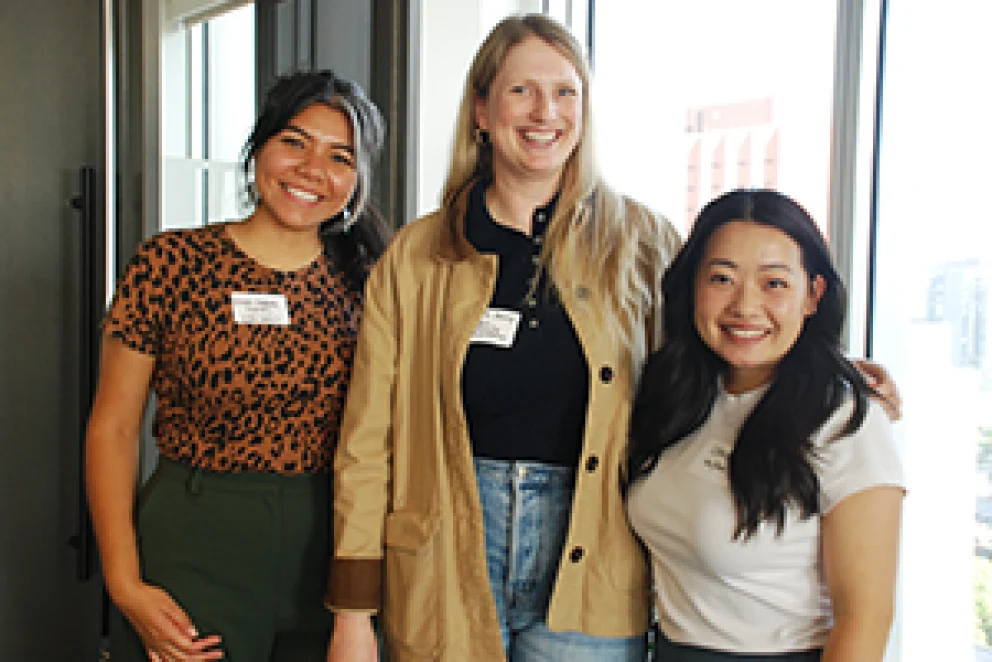
The convening underscored that building community — through listening, sharing and experimenting together — is not just nice to have. It’s how we grow resilient and how we move the work of equitable philanthropy forward. What resonated most wasn’t just the solutions but the shared recognition that no one is alone in these struggles. As bell hooks reminds us: “Our survival is not an individual matter — it has always depended on community.”
Want to see more news like this? Subscribe to the Community Philanthropy Exchange, our quarterly newsletter tailored for community philanthropies in the Northwest.