What do skilled philanthropy practitioners have in common? They are active learners about the fields, issues and places they support. That is their first discipline.
They also work at creating meaningful connections with grantees and others, especially when power imbalances, difficult conversations or differing viewpoints are at play. This is their second discipline.
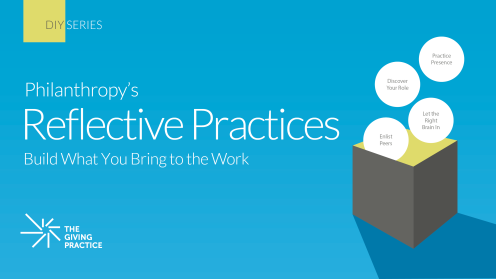
In this guide, you will find their stories about using four methods of reflective practice that can help you build what you bring to advancing change inside your foundation, with your grantees and other partners.
Reflective Practices n. pl.:
Tools and techniques that can help you navigate challenging situations in your work.
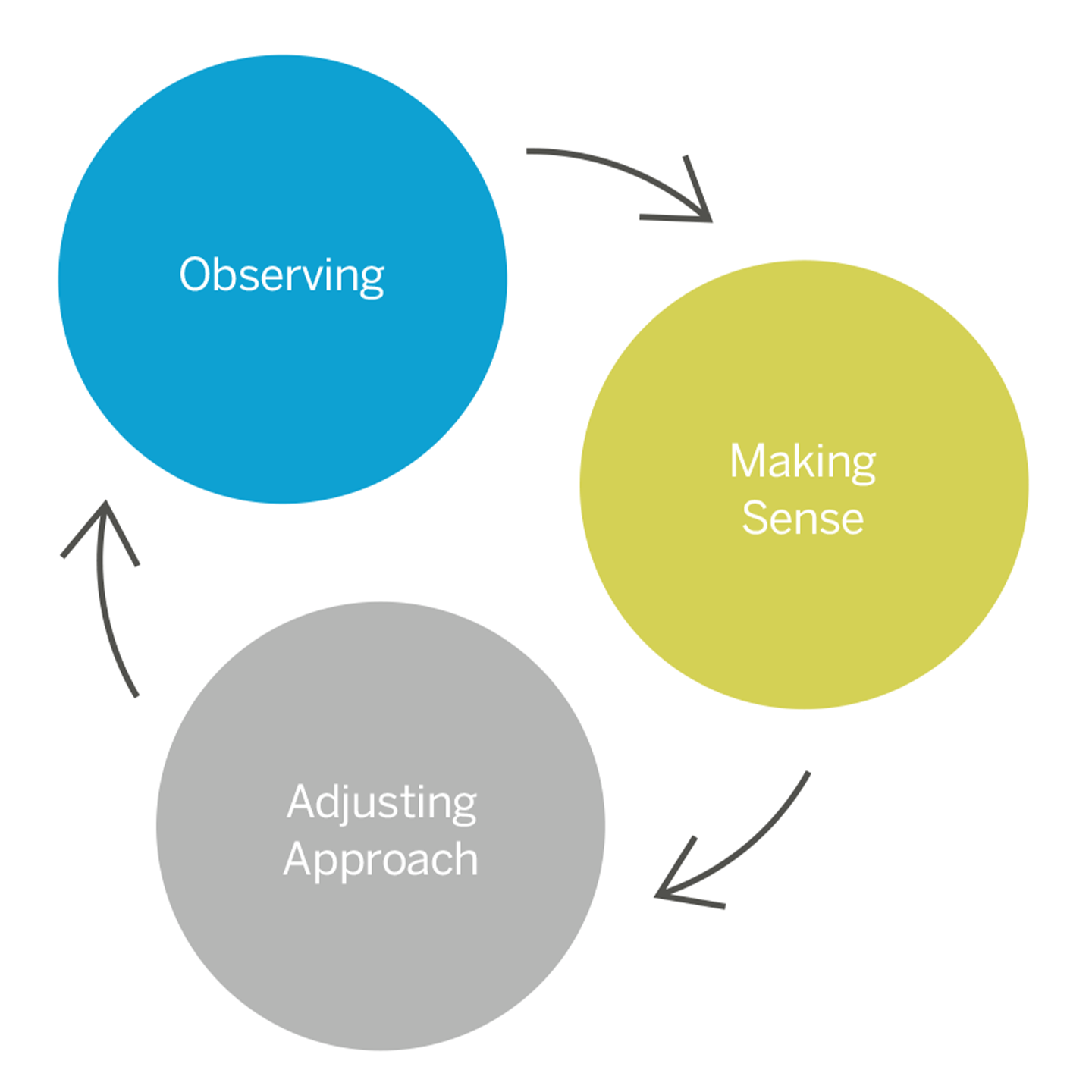
Every reflective practice involves three steps: observing what is happening within and around you, making sense of what you see, and adjusting your approach to get to a better outcome.