Sharon:
10 years ago, our organization used to evaluate programs and investments in terms of what's the return on investment? What's the risk? What if the program doesn't work? What kind of money have we lost? How long did we invest in it? And it's exactly the opposite now. What we look at is what if we don't do this? What if this is what the communities asked us for and we don't do it? It means wasted investments. It means time and energy spent doing things that aren't needed or wanted and that aren't making a difference in community. So you're wasting years of valuable, precious resources doing things that aren't necessarily working the best for the community. So we look at it almost exactly the opposite, what's not going to happen here if we don't do this?
Nancy:
From Philanthropy Northwest, this is, Can we talk about...? A project to normalize the messiness of leading for racial equity in philanthropy and reflect on what it takes to create lasting transformation. In season three, we're sharing stories inspired by our newest guide toward transformation on how a cohort of 20 community philanthropy organizations spend over a decade together working to advance racial equity. We're asking guests to practice vulnerability, explore sticky topics, and look for learning. And what we ask of you is to do the same.
Mares:
Hello everyone, and welcome to episode three of our third season of Can we talk about...? Philanthropy Northwest Podcast on leading for racial equity and philanthropy. I'm Mares Asfaha and I am the Associate Director of Programs at Philanthropy Northwest. I'm really excited to be your host for the season where we are doing a deep dive into community philanthropy. Season three's topics are based on our guide toward transformation. If you haven't checked it out yet, you can head to our website, PhilanthropyNW.org, and it's packed with a bunch of data and lessons learned from 12 years to support you in your racial equity work.
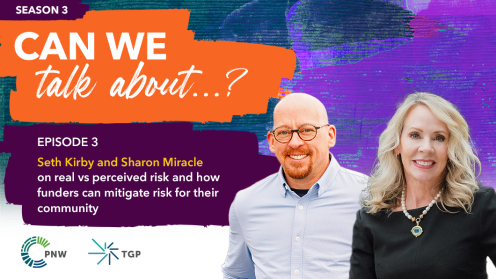
I am really excited today because we have Seth Kirby, the Chief Impact Officer at Greater Tacoma Community Foundation and Sharon Miracle, the CEO and President of Yakima Valley Community Foundation. Welcome to you both. Can you each give a little quick intro to who you are, your organization, the context that you're working in before we get into the meat of our conversation, maybe we can start with you, Seth first, and then we can go to Sharon?
Seth:
Well, thanks so much for having me join today. And Sharon, I'm excited to have this conversation with you. A little bit about Greater Tacoma Community Foundation, or GTCF, we connect people knowledge and funding to build our racially equitable, accessible and inclusive Pierce County now and for generations to come. And our strategic framework calls us to be a catalyst connector and knowledge facilitator. Our focus is in Pierce County, Washington with a population of about 1 million, with urban, suburban, and rural areas. And part of our is really aligning funding and action through strategic philanthropic investments as well as stewardship of over 600 individual family agency funds.
My role as chief impact officer is to support and steward cross-sector relationships that catalyze community efforts for equitable and thriving Pierce County.
Mares:
Thanks, Seth.
Sharon:
Thanks. I'm really honored to be here as well. This is Sharon Miracle, CEO of the Yakima Valley Community Foundation. We are a community that serves several surrounding counties in Central Washington, dead center of the state. We're a rural Ag-based economy, so we are serving a very large geographic location. It's 2.7 million acres. 1.7 of that is owned by the Yakima Nation. The size of our county alone in the center of Washington State is bigger than the entire state of Connecticut. So it's a very large landmass. We're very geographically spread out. We also have a really diverse population, actually driven a lot by our Ag-based, and we have about half of our population is Latino Hispanic population, about 7% is American Native American or Alaska Indian. And it's really reliant on our agriculture base essential workforce.
So we have is have and half knots throughout our community. Lots of folks living in poverty, one of the highest in the nation for percentage of capita. But what it's great in is really rich in culture. Folks who have really strong work ethic, who value family, who value being neighborly. It's got a really strong sense of community. It's all the things I love. So our work has been focused about I would just say loving our community and all the folks who need it most.
Mares:
Thank you, both. And we know that context matters when you're doing your racial equity work, and especially given the context that we're living in, the wider context and how it's affecting our communities, we'll talk more about how that is also affecting your work and how you're making decisions about how to push your racial equity work forward.
So thank you again for joining us today. I'm really excited about the conversation because today we're diving into neutrality and how the notion of neutrality in philanthropy or the notion that philanthropy can remain neutral or that it should remain neutral is really harming our communities. And we're especially seeing that tenfold this year in the first eight months. We'll also discuss some of the differences between real and perceived risks and the importance of reframing these narratives so that we can do more impactful work. So I'm really excited to have the both of you here to talk about that.
To get us started, we'll just start with the quote and would love to hear your initial thoughts. This is the quote, "We're upending the notion of risk. It's risky to not have relationships. It's risky to not address systems. That's how we're thinking about risk." I'd love to hear some reactions from you. What comes up in regards to the traditional notion of risk and how have you both redefined risk in your organizations? This time we'll start with you Sharon, and then go to you, Seth.
Sharon:
Yeah, that immediately makes me think of, I'd say, 10 years ago, our organization used to evaluate programs and investments in terms of what's the return on investment? What's the risk? What if the program doesn't work? What kind of money have we lost? How long did we invest in it? And it's exactly the opposite now. What we look at is what if we don't do this? What if this is what the community's asked us for and we don't do it? It means wasted investments. It means time and energy spent doing things that aren't needed or wanted and that aren't making a difference in community. So you're wasting years of valuable precious resources doing things that aren't necessarily working the best for the community. So we look at it almost exactly the opposite. What's not going to happen here if we don't do this?
Mares:
Seth, you look like you want to chime in. I want to let you chime in before I chime in.
Seth:
Yeah. I think in my experience and in my role at GTCF, what I've seen is that the best way to mitigate risk is really to focus on relationships, and that is the first part of that quote that you just shared. But for example, for GTCF over the past couple of years, we've been transitioning our scholarship program to more of an education access funding framework. And that's really designed to achieve greater equity than historic scholarships may have alone. There were lots of restrictions around those scholarships, for example. And so communication-wise, we saw the need in that experience to really shift the point of view from donor-centric to student-centric, talking about what are the barriers students are facing now? And there's lots of risk because it required that variance approach with the board and potential of angry donors and schools and other interested parties.
In that example, there were two key relationship approaches that made the difference that I just wanted to share as an example of why relationships are so key, and one of those is around doing a consult with board alums and staff. And we've started off with actually inviting people to share their individual reflections on the barriers to higher education. And that included examples of the broad access of education available in California, family support or lack of family support, and even questions about military service and incarceration. And then we consulted with professional advisors and board alums who had recognized they probably helped establish some of those complicated scholarships maybe several decades ago.
And then we took a one-on-one approach to scholarship fund transitions. So we wanted to batch the funds and just get it all over with and we really wanted to, but that wasn't going to work. It totally didn't address the risk that you were talking about, Sharon. Instead, we decided to make the transition and do consults with these individuals focused on the relationships and the scholarships that were involved.
An example is a fund advisor's family had set up a memorial scholarship fund. And at first there were some tensions like why did GTCF allow the fund to be set up this way to begin with? After that conversation, we recognized there were lots of alignments that we had with this family as they were also recognizing and getting frustrated by the quickly evolving post-secondary landscape and not being able to really meet that need with the current fund structure. So by strengthening that relationship and better understanding the desired outcomes, we are then able to use some of those technical approaches like updating the fund type to activate the fund for its original purpose. And now funds will go to support the broader needs around education access in the community that the family had wanted from the beginning.
Mares:
Thank you both for sharing that. I think that when it comes to risk, there's so much fear around what if we do something and it doesn't work, or what are other people going to think? So I love the reframe that you both are offering. Sharon, you the reframe around what if we don't do something? What is that going to look like? And Seth, your reframe around centralizing relationships in this work.
I kind of want to go into how are you addressing perceived and real risks in your work? Because that is something else that we've heard from folks. It's very easy to get lost in what is a perceived risk versus what's an actual risk. And a lot of times we make decisions based off what we perceive the risks to be versus what it actually is.
Sharon:
So Mares, I think there's two levels of risk. One is a financial risk that people think about frequently, and that's one thing. All of the funds that we have, like any community foundation, they're intended to benefit your community. So what's the risk if it's put out in the community, like what you don't trust the folks who may be managing those funds that you've provided to them, they don't do it well? That's pretty apparent, pretty clear. But that's when it's really important to have relationships within the community of folks who know what organizations are serving them well and what are the barriers, how do they reduce those barriers? Just really knowing the community and asking for their input about are these the places that we should be funding that will benefit your members, your community members most? So I think that's really important to reducing that barrier, that risk.
I think there's a second risk that's come up sadly under this administration, which is the risk around, oh my gosh, we can't talk about DEI. We're not supposed to do anything about this. But let's be really clear, long before those terms were weaponized, statistics have shown not just in the last decade, not in the last 20 years, but for more, I don't know, 100 years that race is not a direct cause of poverty, but there's a really clear and consistent persistent correlation between racial and ethnic disparities and higher rates of poverty in the United States. And it's not due to the differences between the two races or all the races. But it's a consequence of these really complex systems of factors that have created these and perpetuated economic inequities.
So if we're talking about when you're trying to better a community, you're trying to reduce, really, their poverty levels, they have greater access to healthcare and education and all of those things and social determinants of health. So I don't have to look at a person's race in my community to determine whether they need my help or not, that's not what we're talking about. And I can reframe that so it doesn't offend the federal government, if you will. But what I can do is easily take a look at census data and tracks and block data and know where folks are at, even by a zip code, who's impoverished, who has the least access to transportation or communities, who has the least access to good education, who needs resources the most?
When you cut through those lines, it becomes really apparent though in our communities, at least statistically and research wise, this shows across our entire nation, you can see that those are areas that are communities with primarily people of color living there. So that's not about DEI, that's about investing where it's smart to make the biggest difference in your communities to help people have access to opportunities to reach out of that.
Mares:
Yeah. Sharon, there's a couple of things that you said there that I want to highlight. One, doing racial equity work is still legal. I know people are freaking out.
Sharon:
Yes.
Mares:
It's still legal. But two, there's still a way to do racial equity work. When you look at the data, when you look at the trend, when you look at patterns, historically, current day patterns, you can still support BIPOC communities, low income communities, any marginalized communities, and you can still do all of that work. That was one point of this episode that we wanted to get across. We know that people are feeling, organizations are feeling, well, foundations I'll say are feeling more and more maybe unsafe or that it is risky to do racial equity work. I think what you all are saying is it's risky to not do racial equity work right now, though.
Sharon:
It's risky not to invest in your communities.
Mares:
Seth, anything you want to add to that point?
Seth:
A few things. I think it's important, and you said this too, Sharon, but just being clear that there's a risk to not acting just as much as when we do choose to act. And when we take action, who are we taking action with? And that gets back to the relationship piece that I think is the core of how to mitigate and move through risk. And I can share later when we get to it, some strategies that GTCF has used around risk mitigation, but I think it really is around those relationships and recognizing that to not take action is as much of a risk and often more of a risk than moving forward with something aligned with our strategic framework and purpose as a community foundation.
Mares:
Because we're kind of already talking about the current context of this work, I'm like, let's just get straight into that piece of the conversation.
Sharon:
Boy, did we jump in quick.
Mares:
Yeah. So would love to hear about how your organizations have continued to navigate the ideas of neutrality and risk given, again, our current political context, the threats against any kind of DEI and racial equity language and attempted threats against any work around DEI and racial equity. Maybe this time, Seth, you can start and then we'll hand it over to you, Sharon. I know both of your orgs have different approaches to what this is looking like for you.
Seth:
One approach, and I can share the example template if that's helpful for people later on, but one approach that GTCF has used in that consultation with board and staff particularly and in those relationships is to utilize an enterprise risk management tool, which I think is broader than just the financial return risk. It's really looking more holistically at the organization and community needs and our purpose. And it makes visible those relationships and accountabilities for not just the individuals doing that work, but really for the full team. And that is the process that we often use when starting to look at what a risk might be.
For example, recently about a year and a half ago, we started engaging with Washington State Department of Commerce around serving as an intermediary partner to deliver what ended up being close to $5 million in state funding to Pierce County and some surrounding communities for the Community Reinvestment Project, which is really all about equity. And we were recognizing what we were hearing from the community is a lot of government agencies are not reimbursing on time, and when there's funding constriction, especially government funding constriction, that gets even more challenging. So the risk of not being reimbursed on time was becoming even more important and critical for communities.
We wanted to ensure that the reimbursement timeline was built into our contract. So each of our leadership team members was really activated to ensure that GTCF was reimbursed on time. The real risk was not getting money out in the ways that the community needed and could use. So we were able to help mitigate the obvious risk around reimbursements by restructuring our contract to deliver grants, not contracts. But we were able to mitigate the bigger risk of dollars just not coming into the community or other connected communities by taking the risk on in the first place. And that really did happen because we took the approach of using an enterprise risk management framework, consulting with board staff and some community partners, and then taking the next steps to develop a contract and action plan that helped mitigate that risk because we were working in relationship with others.
Mares:
And I highlight, again, some of the main points from that example, Seth, thank you for sharing that. One, I heard you say about the enterprise risk management tool that takes into consideration, relationships, accountability and equity. So this is not your grandma's enterprise risk management tool. This is really a risk management tool that can support you all in your racial equity work. So I want to highlight that for folks who are listening because I think those are really important things to include and we'll make sure to share that with people in our podcast guide as well.
One of the other things I heard in your story was that in making decision, you all were thinking about the risk for nonprofits for community, not what was the risk to you as a funder. And I think that's one really big distinction in how both you and Sharon, your organizations are moving. You're not making decisions based on what is risky for our foundation necessarily, but what is risky to nonprofits. So kind of shifting again, that kind of mindset. So I just wanted to highlight those two things and really appreciate you bringing them up.
Seth:
Thank you.
Mares:
Sharon, what does this look like for your work right now in terms of navigating neutrality and risk in the context that we're in?
Sharon:
I want to just piggyback a little bit on what Seth was talking about. We too participated in this community reinvestment program and got millions out the door. One of the things we went out and asked the community, the nonprofit community specifically, is what were their challenges? One, in processing money, getting money, using money, invoicing, accounting, all of those things that small startup, particularly grassroots startup groups. And the ones who are really effective in their communities making things happen, what are their challenges? And they couldn't work with the government. They could not take public funds for all the things that Seth mentioned. They don't have a way to use their own cash to cash flow it until they get reimbursed. They don't have complex processing systems. They may not have a professional accountant on staff. It's a mom and pop kind of shop, if you will. And all of those things were barriers to getting money that really needed to be in our community and that the government wanted to be in our community to do good.
So we said, what can we do? And what we did is exactly kind of what Greater Tacoma Foundation did as well, which is we fronted all of it. We paid upfront cash to all of the folks that we wanted to get money out, and we put ourselves in the position of we'll invoice and get reimbursed from our government entity. That was one.
We also did the piece about, we'll invoice, we'll take care of it, we'll give you simple templates, and you just do a simple report back to us and we'll take the burden on forgetting that all accomplished. We picked up a nice administrative fee to do that work. So really felt like we needed to take on the responsibility and burden to do that and alleviate that burden from our communities as much as possible. Because the goal really was, looking at the big goal, it was just to get money out to those who had been most impacted by the war on drugs and were being disengaged that whole process. Really, what was the top priority? How can we address that? What do the community need? So that was really important.
And then I'm going to jump over and say, given the current political climate that we're in, we did assess some risk and in terms of this, we'd been attending workshops and we weren't putting our head in the sand that this wasn't going on and there weren't executive orders coming out and people being sued for a variety of things and the nonprofit sector being challenged, we've seen that from the federal level all the way down. We even lost a very large EPA grant as a result of some of those decisions. We did go through, we scanned our entire website, we look through policies and procedures and all of those kinds of things and said, are there words here that could be used against us and used against our community?
And honestly, if those words are used against us in a court of law kind of mode, meaning someone challenges us, it puts us out of the picture for our community, millions and millions of dollars every year out of the picture for our community. So it was a little bit about evaluation piece. What we determined is that we didn't have much to fix. We reframed it slightly with kind of what I shared before about the equitable lens in terms of poverty and what the community needs and what they tell us they need.
One of the things we did do more specifically though, we had a scholarship that was very specific, and it was for a previously protected class. It was put up by an organization of women attorneys in town, and they definitely wanted it to benefit just women and just women of color. We went back through all those things and said, how else could we do this without being so specific around that, what's the intent? What could we do? And I would say there's some creative solutions to doing that.
So that's really the only thing that we ran into that we thought this one we probably want to think about a little much because it was very direct and we're still going to fund. And it's because it had two things involved. One was a grant opportunity for a specific group of folks that other folks would have been excluded from applying to, and that's where the Fearless Fund and folks really got caught up in that. There was a contractual component, there was something in there. So we're not excluding folks from applying for it. And we're even saying, you could be eligible if you can prove that you have the same burdens and challenges that other folks in our community do. And if it's on a scale, that's pretty easy to demonstrate. So we do have a working group that will evaluate those scholarships. That's just one kind of specific example I guess, about one level of risk that we evaluated in the current situation.
Mares:
Yeah.. What I want to add to what you're sharing too, that depending on folks' contexts, their geographic context, their local context, the work that they're actually doing, there's a lot of paths you can take in this work. And you all are still funding the work that you're funding, it sounds like you changed a little bit of language but not totally overhauled everything, but that really you were working with, I think, a lawyer or legal professional of some kind to help you make those decisions. It wasn't just, let's just change everything, disappear all of our values on our website. So I do want to highlight the more nuanced that was going on there.
And the other thing I want to bring up is that you all had a federal grant, so you felt maybe a little bit more on the radar of the administration. Not everyone has a federal grant. So if you don't have a federal grant, maybe you don't got to go through all of this, again, taking other things into consideration. But I do want to parse out some of the nuances of your situation, Sharon. I'm sure there are people who are in a similar situation as you too, but I would just want to make that really clear that we're not talking about complete 180 turn in your work at all. Yeah.
Sharon:
Correct.
Mares:
Seth, would love to hear what has it looked like to navigate doing your racial equity work in this context? You're in a different context, you're in a different part of the state. Sharon, you have different work, some different work that you're doing. Could you share a little bit what this is looking like for you?
Seth:
Yeah. Part of what, again, relationships, but I think when we started to hear about local impacts, we did host a conversation with board and board alumni and staff to invite people to share what are they hearing, what are the questions that they have, what are the impacts that they're seeing? We've been supporting, through a nonprofit network, some other kinds of peer learning and sharing so that people know that they're not alone because isolation is difficult anyway, and especially in this environment. I think that the piece that we've really leaned into are the core roles that we have, which are Catalyst, Connector, and Knowledge Facilitator.
So if there are connections that we can support, if there is a way that we can use our tools to be a catalyst for a community effort or need or if there's a way to support knowledge facilitation, for example, by even asking what is philanthropy's role in this moment? Those are the kinds of conversations that we're having, which I'll then go back to reinforcing and deepening hopefully the relationships that will-
Sharon:
The local.
Seth:
... and also the regional relationships that will support how we navigate forward.
Mares:
Thank you, Seth. Have you all talked about as an organization shifting any language or shifting any strategies as a result of the attempted threats on DEI work right now?
Seth:
We haven't shifted any language. I think we've been inviting a lot of questions. For example, this is a different moment than COVID and helping to draw those distinctions because that's not necessarily clear or evident necessarily. Inviting perspective and input, particularly at a network level. So of course, listening to individuals, but also listening to what is happening around child care or food or other kinds of networks in our community that are working together because they're often seeing the broader continuum of need opportunity and impacts right now than understandably a single organization might. So inviting perspective of course from organizations and leaders, but also from networks and also, where we can with our discretionary dollars that GTCF directs, supporting and resourcing those networks to continue in this time because it is those relationships that help create the approaches that meet different community needs.
Mares:
Yeah. Yeah. Thanks, Seth. So again, I'm really excited to have you both on this episode because you're kind of assessing the situation and taking different routes to how you can still do racial equity work. Neither of you are backing down. It just looks a little different in terms of... I mean, Seth, this sounds like y'all changing nothing. You're going to keep doing what you were doing. Sharon, you all are pretty much doing what you're doing just with slightly different external language. And that I think is great for other community philanthropy folks, other foundations, other community foundations to hear. Because one of the things we keep hearing over and over again this year is do not obey in advance, and I fear people are obeying in advance. So I think you all show a different way of acting right now.
Also, I would be remiss if I was just going to ignore it. Just the fact that we're sitting here and anyone is having to talk about, oh my God, we got to change our language on our website or else we're going to face repercussions from the higher powers, we are definitely dealing with, unfortunately the first, or maybe we're deep into an authoritarian regime. So I don't want to normalize... The fact that we're sitting here even talking about, oh my God, we got to change our words-
Sharon:
The sad state of affairs.
Mares:
Yeah. So I don't want to normalize or make it sound like this is a normal situation at all. But I do think it's helpful for all of us if we can really ground ourselves in what the context that we're in right now is because then that'll help us with what strategies we can use for the next however many years.
Sharon:
Hey, Mares, can I maybe share something else I just thought of, which is, Seth mentioned pandemic and we're in a different time, but when the pandemic struck, our community was considered an essential workforce not just in Washington State, but across the nation. So most of our workforce, they didn't get to go home and mask up and not be sick. They literally had to put food on the table for Americans. So they worked around the clock to make sure that happened and it put them at great risk.
It was a time where I was getting phone calls from, I would say, millionaires and billionaires who were saying, "What can we give you? What does your community need?" And one of the big concerns was what's happening to our immigrant communities who are the most unseen communities? What's happening to our migrant communities? They don't have a neighborhood particularly or a home that they live in for an indefinite period of time to build relationships that are needed to reach out to during really big crisis times like that. And so money was flowing in to help our communities. And now we have this exact opposite approach, which is don't help those folks. Somehow they are not to be seen, they're to be removed entirely from our systems for all kinds of reasons. And it is so interesting to me.
So it was, what, just a couple years ago, we were doing exactly the opposite. We still fund in our immigrant communities. And what we did this year to address that is, in fact, we knew that those folks were actually suffering more than most, even probably even worse than the pandemic because they were scared and fearful. They may be here completely legally, and most are. But gosh, what a weird thing that your own country has you in hiding. That is a bizarre thing to have happen.
So we had a youth leadership council who wanted to make sure that we had funds available to our immigrant communities, but we didn't open it up for a grant round. We actually purposely chose organizations that we knew and trusted that had new trusted relationships in community to make sure those resources could get out and that wouldn't be so visible to all. We didn't want to be on that radar again, if you will. It doesn't mean that work stops and there is no food bank, I promise, in our area that turns away folks based on their show me your citizenship card. That's just not how life works. It certainly doesn't work like that in our communities or any Ag community that I know of.
Mares:
No, thank you for sharing that, Sharon, because I think people do need to hear that message that just four or five years ago, the response from philanthropy and even from outside of philanthropy, it's a complete 180 to what we're hearing and seeing today, unfortunately. Some of it is because of this conversation around people want to be risk averse, people are scared of risk, people want to stay neutral. But I think what we've heard in your stories, even the story around working with commerce and trying to get funds out to people because the reimbursement process wasn't working for folks, there's no such thing as a neutral system because even a system like that, which on face value most people might not think, oh, they might think this is crappy, but that's a, quote-unquote, neutral system that was causing a lot of harm. And so to hear you all take on a new role as community foundations to insert yourself in a good way to move money to communities, it's just really important work right now. So thank you to the both of you.
Before we move on, Sharon and Seth, are there any other things that you want to add on in terms of the work that needs to happen given the current context?
Sharon:
You know what I'm looking at Seth, because I've looked at Seth a lot over the last year in these-
Seth:
We have, yeah.
Sharon:
... we've partnered a lot, our organizations have. What's going to be super important, we aren't siloed. There is an entire nation of community foundations and philanthropic organizations. We have relationships with each other and the more that we collaborate and we actually layer and stack our funds and think of new ways that we can share with each other to make things happen, and maybe I can't do it with my current organization, what's a need? Reach out to another organization, see how they did that and can they do that for you or help you do that? I just think that collaboration, it's not just us encouraging that among nonprofit partners, it's us together making sure that we can actually stand up and support our communities.
Seth:
Yeah. It has been really valuable and refreshing to know, for example, through that intermediary work we were doing with Department of Commerce, that we had a whole network of funders to connect with to offer other perspective. Maybe that's not what would work in our community, but that might give us an idea or maybe it would. So it was really valuable to hear that, and it was because we had those relationships that we were able to do it, those relationships with other community funders.
Mares:
Yeah, that's a great point. And right now I think it's easier for folks to isolate as an organization or in their role, they're isolated because they probably feel like, oh my god, so many things are coming down on our plates, I don't have time to build relationships with the other CEOs or the other VPs or the other community foundations. But, the idea of neutrality and risk is so tied to fear, and one of the questions we hear from folks is how do we get over our fear of doing things differently? One of the ways people do that is being in relationship with other organizations. As much as you feel like you don't have the time, don't have the bandwidth. I think what you all are describing around collaborating with others, that gives you a little bit more courage, a little bit more like you got people who are going to have your back to do this work. So thank you for sharing-
Sharon:
Strength in numbers.
Seth:
For sure.
Mares:
Exactly. Strength in numbers. Great. So okay with that, we're going to move into our Soapbox Snack Break. I'm going to give you all a quick break. So this season I'm hosting Mares' Soapbox Snack Break segment. I can't believe they gave me a mic to be able to talk about any nonsense that I want and argue with myself. Seth and Sharon, you're absolutely welcome to chime in or just ignore me. You're definitely welcome to join.
Okay, so topic for today is a topic that I complain about all the time, especially because I think that maybe the north part of the country, we have more of an issue with this, it is when people invite you into their homes and they don't treat you like a proper guest. This is what I mean. I have heard and experienced horror stories of you go to someone's home, they're not giving you no water, no snacks, no meal. I'm sitting in someone's house and I'm like, it's been 20, 30 minutes. I'm thirsty as hell. Where's my nourishment? Where's my nourishment? It just bothers me so much and I think, I don't know who else would be listening to this podcast if there are people in the south, I'm like, y'all are blessed because southern hospitality is so real, they take care of you. I think even in the Midwest, people have a little bit more hospitality.
But the way that we're suffering up here in the north side of the country, I'm like, oh my God, I'm a guest in someone's home and no one is... You're treating me like, I feel like Oliver Twist, he's the one that was in the book. Can I have some more? I think that was him. So, this is what I want to say though. Treat people like a proper guest. When someone comes into your home, if I'm coming to your home, immediately, I should have water. I don't care if it's in a... Well, please have it be in a glass because plastic is not good. But immediately I should have water. Don't even ask me. You can ask me, but immediately I should have water.
And then tea or coffee should be being made. I don't care what type of one it is, tea or coffee, I need a snack immediately. Fruit, crackers and cheese, something. And then the entree, the meal, that's what I need. I'm not going to ask for dessert, but that's what I mean when I say treat people like a guest. And then if you are a guest, people are going into other people's homes with empty-handed, oh my God, I could never. You're supposed to go to your person's home, you're supposed to bring a gift. A little snack, flowers, water, drinks, whatever. So yeah, that's just my little rant. That's my little rant.
I'm like, people are sad because they're like, "We don't have community." Maybe people don't want to be in community with you because they go to your home and they're hungry, they're leaving your home hungry. Did you ever think of that? They're leaving your home starving, thirsty. Okay. This is maybe very Seattle specific and maybe everyone else has great experiences, but there are horror stories here.
Okay, that's my snack break. Seth, Sharon, I don't know if you want to add anything or if you just want to go back to talking about risk and neutrality-
Seth:
Yeah.
Sharon:
Oh, I just can't stop giggling.
Mares:
Just calling it.
Sharon:
That's pretty funny.
Mares:
Okay, that was my soapbox snack break. Y'all are probably like, okay, never invite Mares into nobody's home ever.
Seth:
No, you just told us everything that you're looking for, some cheese, some crackers.
Mares:
Yeah, these are my expectations.
Seth:
Yeah. You need water in a glass.
Sharon:
Come on over Mares, anytime.
Seth:
Yes.
Sharon:
I'll take care of you.
Mares:
Yeah. Water in the glass. If it's in a bottle, I understand because not everyone has access to clean water, you got to buy the bottled water. But I used to make fun of my mom for thinking this way, and now I'm like, I understand it. I understand it.
Okay. I want to get back into talking about the very exciting topic of risk and so would love to move into the how. How did you all work on moving away from traditional ideas of risk? What strategies have you all used in your organization? I think how piece is really important for people who are in their orgs and are like, "I want to be able to move away from traditional ideas of risk. I want to be able to be less neutral. But I don't know where to start. I don't know what to do."
Seth. Sharon, if you all could share some ideas, maybe this time we can start with you, Seth, and then go to Sharon.
Seth:
I'm thinking. I'm thinking on that one. Okay.
Mares:
Yeah. How about I start off with the more specific question, actually? Because I think one of the places where people get stuck is when it comes to their legal department or their finance department where they're trying to do... And we hear this a lot when it comes to even trust-based philanthropy. People are like, we want to do trust-based philanthropy, but our finance department is like, no, it's not possible to do general operating or our legal department is saying it's not possible to do general operating or our legal department is telling us actually we shouldn't have DEI language on our website at all or we shouldn't be doing. So those are not to villainize those departments. We love legal and finance. We love it. But those are some of the places where people experience knows in this work.
So maybe some examples of how you all have worked with those departments to be on board with your equity work to push your equity work forward. And what advice do you might give to other folks who are experiencing difficulties there?
Seth:
So a few thoughts. One of the pieces that reflecting on the questions for today I was thinking about is that I find it really valuable every couple months actually to just revisit technical versus adaptive challenges and knowing what the differences are. Because in my experience, the technical challenges cannot be resolved without the adaptive, which do require the relationship part.
An example that I can think of right now is when I was giving the overview of scholarships before and our process that we undertook, one of the other relationship pieces or steps that we took internally was to set up a cross-department team to work on scholarships so that it wasn't only held by our philanthropy department or only held by our strategy communications team or only held by our, name a department or team within a community philanthropy. But that it had representation from the beginning of all of our departments and the perspectives from all of those departments. And once we were able to develop some shared purpose, what came out of that was an internal kind of value and framework about equitable education access now and for generations to come. Which then invited that conversation with board and staff and fund advisors and other interested parties. Because if we do want equitable education access now for generations to come, we may have to do it a bit differently than we've done it the past 40 years to get to where we are today.
And so, did it take longer? Yes. We had tried several other ways, it did not work those ways. And I think that's an example of the how part that you're asking. How did we get there? And it really was around building the internal relationships and understanding here are the concerns and fears that every department has and here's why, from their vantage point and expertise. And then in light of all of that, then what do we do? Versus starting with legal first to say what could we do?
Mares:
Yeah. Start with what you want to do, start with your ideal.
Seth:
We actually did that at first. We started with consult with an attorney and finally it was like, wow, this is going to be really technical and costs a lot of money. It didn't end up working because we didn't have that framework around equitable education access now and for generations to come. We didn't have that yet. That was created internally because we were setting up the cross department process and the consult with board and staff to then get to that. Which then when we went back to partnering with an attorney, it went much more quickly because we knew what we were moving towards.
Mares:
Yeah. I think that's a great kind of reframe about how folks can approach their work. Rather than starting with the legal side, actually start with where do you want to go and then how can the legal side support you in getting there? And a lot of times there's more ways to get to your ideal than what you think.
Sharon, anything you would add? I know you all have done a lot of movement, a lot of change to your systems. You've donated to mutual aid funds. You've done individual grants. You've done supporting BIPOC businesses. So much work that I think from the outside view might be viewed as a community foundation could never do that. But clearly there were some things that you all did internally to move away from the ideas of risk or neutrality that would've prevented you from doing that work.
Sharon:
Yeah. So Seth's right, it actually starts with what do you want to do, but it's also what do you want to be when you grow up? And if you start at the very top of what's your mission, then what our values are. And we had those clearly defined when I came on board, it's been about seven years ago. I had come out of the corporate world, so I knew a little bit about how do you align an internal organizational culture around your mission, vision, values kind of mode. And one of the things that was really important was we have these norms for rules of engagement at the board meetings and that kind of thing and that was a practice for a while and it's not a practice, it still is.
But probably more important that is we spend a very long time with the staff to develop behaviors and actions that were acceptable and not only acceptable but desired in the workplace and we went to the opposite side of that and identified, and we did it as a group collectively, what things would not be in support of that? What things would undermine us being empathetic, collaborative, outward reaching, problem solvers, those types of things and those were really important to us to be viewed and trusted in community. One, we had this all across, it didn't matter what department you worked in, everybody had the same expectations.
So when we bumped into a situation where someone in program says, I really want to be able to do this fiscal sponsorship, they're not a 501(c)(3) and they don't actually intend to apply it for it, but they do total charitable work and this is how it qualifies. And our CFO at first was like, "Whoa, what are you doing? We're not doing that." It was like, we've never done that before and that's a lot of paperwork. And we went through the process of, okay, but is it the right thing to do? And it felt like the right thing to do and we'll help them get their 501(c)(3) eventually.
But we went through all the due process of how can we be creative about what contracts we need to put in place, what reports do we need to help get all of the pieces that would make that be legal from an IRS perspective of doing charitable work, but also how do we account for that on our books so that it actually isn't a huge burden, a variety of those things. But every single time one of those things comes up and it does all the time because once you do the very first recoverable grant and someone knows you do that, then the next question, "You guys did that, could you do this?"
Well, think about it and it's fun. Then it actually becomes your fun problem solver. But then we'll work together as a team, and it's my CFO's job to say, "Gosh, you guys, that doesn't feel right unless you go get this and this." And then it's the other folks saying, "Okay, I'll go get these things and we'll make this happen." So we're doing that as a team and it's based on those behaviors and pieces that we said, this is how our culture's going to work. We're going to work with community to be problem solvers and conveners. And so, what gets in the way of that? And that is just... And it's not rules and regs. Rules and regs are there to keep you out of trouble. But there are creative ways to do that and it just takes a little extra work. So I guess we're willing to put in the extra work for our community and we think it's valuable.
Mares:
No. I love both those stories because one of the things that also made me realize is sometimes the perception around what is risky or what is possible is more around people's ideas of is this convenient to us? And if it's convenient, we'll do it. And if it's not, we're not able to or feel like they're not able to do that work. So I love these examples because you're showing kind of, one, the new role that community foundations should be... New roles, plural, that community foundations can and should be thinking about and looking into taking on right now. But also, that you didn't let the idea of what's convenient, what's quick and easy to do, define what was possible for your community. So I love both these stories.
We're actually going to close out already with our starts and stops. So we've been talking about risk and neutrality, and so taking all that into consideration, what do you think community philanthropy needs to start or stop doing?
Seth:
I'll offer that, really, it comes back to relationships. But I think one of the greatest opportunities always for a community foundation and in this moment is are we activating all of the tools available as community funders? For example, everything from variance power to ensure that a fund is relevant now and into the future, to granting to individuals or businesses for charitable purpose, to some of those other pieces that we've talked about around serving as an intermediary, catalyzing opportunity for our local communities. And that really does come back to the relationships.
And so I would say maybe it's not a start or stop, but a continue to deepen and prioritize relationships including board, staff, alum, as well as fund and others who are part of the network of your community. Those are some of the things that I think will really continue to make community foundations relevant and ready to be most positioned for the flexibility that we can offer in our communities.
Mares:
Sharon?
Sharon:
I would say do use data but use different data. So it's a do and a don't. The do use data is really not in terms of how many people were served, that's valid. But who was served and how do you figure that out? How do you actually know that work is getting to where it needs to be and that those funds are getting to where they need to be? And that really is by like what we did, we went literally small city by small city, zip code by zip code and figured out where that money goes, and we prioritized. We were going to give the most money to those with the least. And that really did help change the way that we do some work and it's something that we can tell our community, here's how we make those investments, here's why. It doesn't mean we never invest in the other ones, it just means how do you prioritize that, it's been different in the past.
The other one I would say is stop, and we said fear before, but stop being afraid of not getting contributions because you might be sideways with donors for these things you're working on. Stop being fearful of, I'm going to lose this money because. And I want to share this from a real example. I heard that and it was a scary leap to go there, I'd say four years ago there was a lot of conversation about that. Oh my gosh, if you're really bold about this work, you're going to lose funders. You're going to lose this. Aren't you worried about that? And it was together with Philanthropy Northwest and these cohort groups we were working in. I went, if I am, everybody is, and how are other folks going to be funding this work?
And what's really happened is exactly the opposite. Every time we've done something creative to make sure that, for example, health resources and promotoras got out into the community through this network of LatinX providers, the thing they told you, we did fiscal sponsorship for money started flowing like crazy from Department of Health and others that we could be this intermediary on. Our contributions went from 2 to 3 million a year, just general contributions, dafts, that kind of thing. We're a little over six months in to 2025, and we already have received 7.2 in contributions. And this has been this upward steeper climb. We've done exactly that in granting, we went from doing 2 to 3 billion a year out in grants. We've granted almost six and a half million in the first six months of the year.
I absolutely attribute to that because we have relationships with people in community that are valuable to other folks in government entities and other funders who want to do things within our community. And they recognize that and they go, "Oh, those people can make that happen." And we're one of the first to get called. They want to make that happen, they'll make sure it happens. And so I love that we've put ourselves in this position now to be problem solvers, conveners of resources and people. It's been really rewarding. So don't stop yourself from more by doing less.
Mares:
That's a perfect note to end on. Thank you both so much. The phrase that kept coming through to my mind as you all were speaking was one of the phrases that I feel like some community foundations maybe to this day, but in the past, a lot of community foundations describe themselves as a neutral convener. That was like the big thing, "We're a neutral convener," I kept hearing it. And so to hear how you all have reshaped your roles as community foundations gone away from the traditional idea of risk, reframed what neutrality looks like for you and really prioritize moving money to communities is just amazing to hear. And I really hope that other community philanthropies are inspired by the mindset shifts that I'm certainly hearing and how you think about this work and also the tactical practices that you've been doing to move in this way.
Thank you both so much again. I really, really appreciate it. Especially because it's August, it's the last days of summer, so I'm keeping you inside. Thank you.
Seth:
Thank you.
Sharon:
Thank you all.
Seth:
Thanks for the questions. And Sharon, thanks for all of the examples and the other perspective that you're offering to this conversation. It's really powerful.
Sharon:
You both too.
Seth:
Thanks.
Sharon:
Appreciate you both.
Nancy:
Can we talk about...? is a podcast by Philanthropy Northwest, written and produced by Aya Tsuruta and Emily Daman with production support by Podfly and graphic design by Asha Hossain. Our episodes this season are hosted by Philanthropy Northwest's Associate Director of Programs, Mares Asfaha. You can find more information on this episode including guest bios and show notes at philanthropynw.org. A special thank you to Philanthropy Northwest Building Community Philanthropy Cohort for their partnership on this project. I'm Nancy Sanabria and we'll see you next time.
Season 3 episodes are inspired by our guide, Toward Transformation: A collection of lessons from 20 community philanthropies working to advance equitable philanthropy
Overview
Seth Kirby (Chief Impact Officer, Greater Tacoma Community Foundation) and Sharon Miracle (President and CEO, Yakima Valley Community Foundation) sit down with Mares for a conversation on the notions of neutrality and risk in philanthropy. They discuss how their organizations have reoriented their thinking around risk so that the central question is not, “what is the risk to our organization?,” but rather, “what is the risk to our community?” – and share tangible examples of what navigating risk with their communities looks like in our current context. Finally, Seth and Sharon share strategies they use when technical and adaptive challenges arise within their foundations, highlighting the need to strengthen cross-departmental relationships to build trust and learn together.
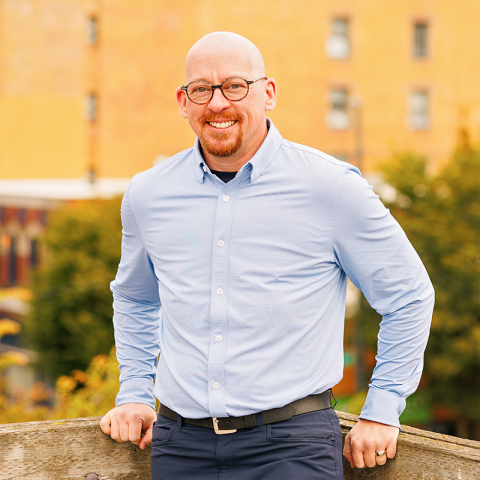
Seth Kirby
Seth Kirby is chief impact officer at Greater Tacoma Community Foundation (GTCF), where he helps design and catalyze lasting connections and investments in Pierce County. Seth guides GTCF’s impact work, fostering relationships to catalyze identification and removal of system barriers to generational wealth through discretionary investments, intermediary partnerships and aligned funder pathways. Seth loves to collaborate with funders and community experts to transform ideas into action for lasting impact.
Seth previously served as executive director of Oasis Youth Center in Tacoma. He also worked as legislative director for the Washington State Human Rights Commission, the state agency responsible for implementation and enforcement of civil rights protections. Seth led statewide implementation of public policy changes including disability access, veteran and service member non-discrimination and implementation of sexual orientation and gender identity as protected classes.
For ten years, Seth served on the board of directors for Pride Foundation and is a current board member with Inatai Foundation.
Seth holds an master's with concentrations in public policy and tribal governance from The Evergreen State College. He lives in Tacoma with his spouse and children. When he’s not working, he’s often birdwatching or listening to an audiobook.
Sharon Miracle
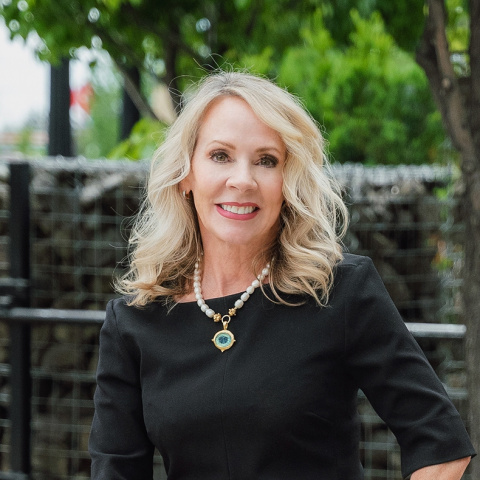
Sharon Miracle has 30+ years in nonprofit leadership as a CEO, executive director, vice president and director for healthcare, higher education and philanthropic organizations ranging in size from 2-4,500 employees and revenues from $350,000 to $4 billion annually. She also brought considerable experience working with the government and private sector when recruited in 2018 to her current role as president and CEO of Yakima Valley Community Foundation. Before the foundation, Sharon directed communications and social responsibility for a large agricultural cooperative with global distribution.
Earlier in her career, she was a licensed investment advisor and directly out of college wrote proposals, negotiated contracts and monitored and reported deliverables on research projects related to atmospheric sciences, technology and artificial intelligence for one of our nation’s national laboratories and was assigned to the Department of Energy. Sharon holds a bachelor's in business administration and marketing management from Central Washington University and completed extensive graduate work in communication and leadership while pursuing her master's from Gonzaga University. She currently serves as board chair for the first Washington Green Bank, is an active Rotarian and is proud of her community service as a volunteer board member for countless organizations in Wyoming, Colorado and Washington over her career.
Key Lessons & Insights
- The real risk of not investing in community
Seth and Sharon both reframed the idea of risk by questioning what happens when foundations don’t invest in their communities, and the implications of those decisions. Sharon asks what the risk is of not doing something, sharing that it means wasted investments; it means time and energy spent doing things that aren’t needed or wanted and that aren’t making a difference in community. Meanwhile, Mares reminds us that it is actually more risky not to invest in racial equity work or community.
- Relationship building as a strategy to mitigate risk
As Seth and Sharon emphasize that the biggest risk for our sector is the risk of not serving our communities, they uplift relationship-building as one of the most effective strategies to mitigate this risk. As an example, Seth shares a success story of how the Greater Tacoma Community Foundation took the time to speak with a broad spectrum of stakeholders including community partners, donors and professional advisors when refreshing their scholarship program. This ultimately resulted in a more student-centric fund designed to achieve greater equity.
- Funder role of taking on risk
Part of mitigating risk for communities may include funders taking on risks themselves. Funders can use their power and privilege to alleviate burdens for grantees. Sharon and Seth provide examples of how their organizations assumed additional administrative and financial responsibilities to enable small grassroots organizations to access public funds. Both share how the risk to their foundations pales in comparison to the risk that nonprofits and communities face when working with large public agencies.
- Responding to Today’s Challenges
Given the threats to DEI work, Sharon and Seth offered insights into how their foundations are not backing down from this work, and how they are showing up for their communities in different ways. They also highlight the silence from donors and funders in response to today’s threats to our communities, noting a complete 180-degree shift from how philanthropy stepped up during the pandemic. Sharon reminds us that there is an entire nation of community foundations and philanthropic organizations that others can connect with for support and collaboration, while Seth discusses the importance of working with internal teams and departments to address technical and adaptive challenges.
References & Resources
- Seth shares the Greater Tacoma Community Foundation’s Enterprise Risk Management Tracker as a tool they have used, which takes into account relationships, accountability and equity.
Starts & Stops
This season, we’re asking all guests what philanthropy ought to stop doing and what philanthropy needs to start doing. Here’s what Seth and Sharon shared:
Start:
- Seth: Use all the tools available as community funders. Start building relationships with the community and position the foundation to be flexible in support of the community.
- Sharon: Use data - but use different data to track impact. Ask yourself, not what was served but who was served. Prioritize giving the most to those with the least, and understand who in your community needs the most by evaluating different data.
Stop:
- Sharon: Stop letting fear dictate where you put your money. Being creative and leveraging relationships actually does bring in more resources. Don’t stop yourself from more by doing less.
Credits
This episode of Can we talk about…? was produced by Aya Tsuruta, Emily Daman, Mares Asfaha, and our audio engineer Josh Suhy, with editing support from Karalyn Jenkins. Special thanks to Asha Hossain (Graphic Design), Nancy Sanabria (Intro/Outro Host), Komiku (Music) and to our Building Community Philanthropy partners for their thought partnership and support.