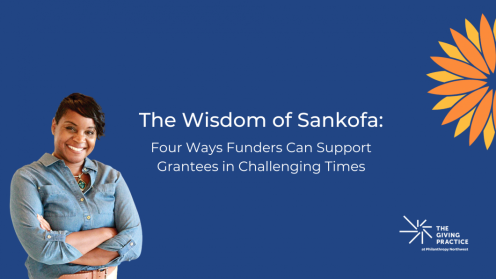
We’re thrilled to introduce you to Amy Saxton, our newest senior advisor with The Giving Practice!
With over two decades of social sector advising and operating experience, Amy brings a wealth of knowledge and expertise in creating high-impact strategies and cultures for a more just, equitable and joyful world. We sat down with Amy and asked a few questions to get to know her better….
1. What kind of work has been energizing you recently?
Coaching purpose-driven leaders – and especially witnessing leaders access their own wisdom so they can better achieve their dreams for themselves, their organizations and communities. I love that coaching can help people see and shift a limiting belief that no longer serves them.
One belief instilled in me early was the value of doing what I needed to do before doing what I wanted to do. It served me well enough until I became a parent and struggled to balance caring for an infant while being a CEO. Deeming myself a mediocre mom, I stopped allowing myself to exercise, see friends much or take beloved dance classes because I had not earned them. Addressing my limiting story allowed me to start investing in myself, which has increased my energy and my mood, making me a better coach, advisor and parent.
2. TGP is here to support organizations on their journeys of transformation towards equitable philanthropy. What have you learned about what this work takes?
Equity, especially racial equity, has been a focus of my work since my first job out of college to my most recent role at the James Irvine Foundation. Throughout my experience, I have learned that these three things are particularly important:
- The CEO with the board must clearly articulate why equity matters to the mission, and recruit staff who align with their vision for equity. Leaders naming equity as a top priority and resourcing it create the conditions for the work to take root.
- Leaders need to set concrete equity goals including program staff adjusting who, what and how they fund to advance toward the equity goals. Goals matter because staff need to know what success looks like and money needs to move to those who have been underinvested in.
- Staff and board members must learn about equity and apply what they learn to make their ways of working support their equity goals. Usually there are internal practices and processes that work against equity goals, whether inadvertent or intentional.
If this sounds nebulous, this piece I co-wrote in 2024 focused on racial equity is full of concrete examples from philanthropic sector leaders showing what these three look like in action.
3. Do you have a piece of wisdom that sticks with you?
Plan tight, play loose. I don’t know where I heard that but it has become a mantra. Plans are really, really useful because they align people on why we are doing something and what we intend to accomplish together. Plans done right also identify what we are not going to do – because not all good things we can do are equally worth doing. Plans also reduce uncertainty that can create unhelpful stress, so clear plans literally soothe the mind and body. Playing loose is key because plans never turn out exactly as written. I help clients identify the assumptions that underpin achieving their goals, and develop scenarios for how to respond if assumptions change. Also, I was a theater kid and I love a good improvisation exercise. The first rule of improv is, “Yes, and…” because the scene falls apart if your first response is “No.” So, when the context shifts or the world turns on its head completely, I’ve found it critical to stay curious, alert and ready to adjust. Holding an improv mindset and developing scenarios are two useful ways to prepare to play loose when life happens.
You can learn more about Amy’s background and experiences in her bio here.
Interested in working with Amy or learning more about what we do at The Giving Practice? Reach out to us at hello@thegivingpractice.org.