Together: Stories of South King County (#TogetherSKC) is a storytelling project that shares the nuances of South King County nonprofit leaders’ work, the beauty of their communities and their visions for the future of their region through a series of videos.
The project is community-designed, with stories coming directly from non-profit leaders themselves.
So, where does a regional community foundation fit into this work?
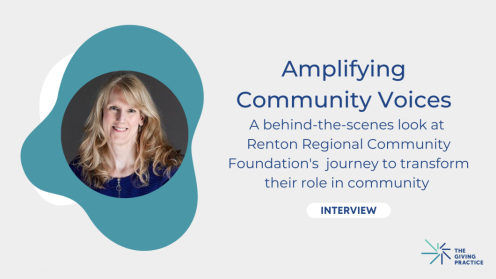
Renton Regional Community Foundation (RRCF) Executive Director LeAnne Moss has been working side-by-side with the community designers of #TogetherSKC – listening, taking their lead, and providing capacity, thought partnership and resources to help push the often-overlooked voices of this region forward.
“Smaller nonprofits in South King County have historically been overshadowed by larger Seattle-based groups – struggling for recognition and, most importantly, funding. One of our nonprofit partners shared in a recent meeting, ‘We are here. We have been here. We just need more resources to do our work.’ Through #TogetherSKC we’re shining a spotlight on these organizations and hoping to create pathways to more resources for them,” LeAnne shared.
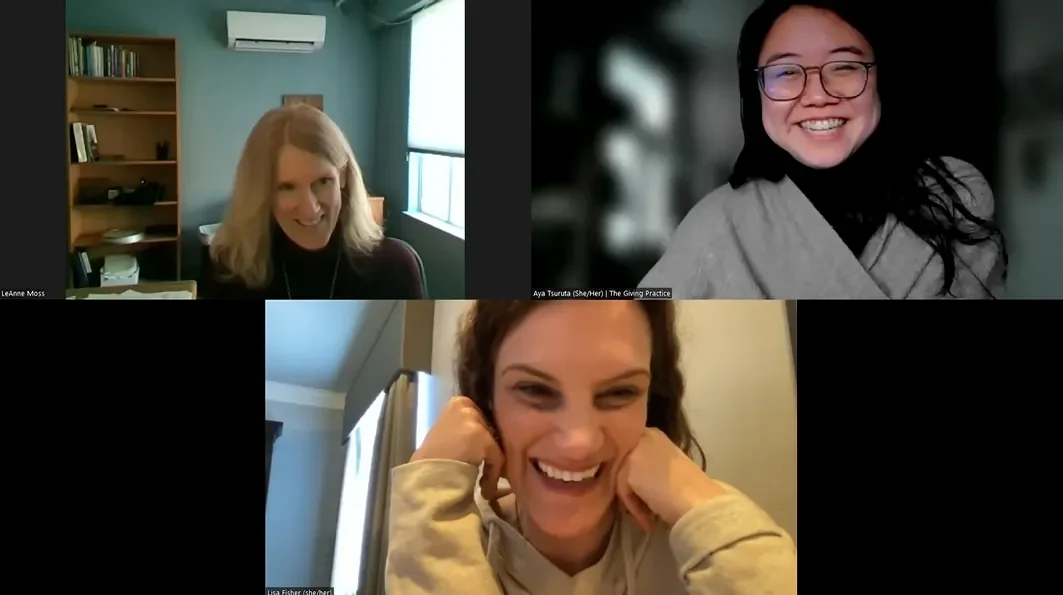
Five years earlier, RRCF’s work with community looked very different. “It was ‘money in money out’” LeAnne shared. “It very much felt like we were a transactional bank, and that’s what we had been doing for years.” As LeAnne and TGP Senior Advisor Lisa Fisher – who has been supporting the foundation’s work since 2018 with other TGP colleagues – can attest, this transformation from transactional donor-focused work to relational community-centered work did not happen overnight. Below they share a behind-the-scenes look at the foundation’s journey and explore what deepening partnership with and power shifting to community have looked like through #TogetherSKC.
How did RRCF's evolution from donor-focused to community-centered work begin?
2018 was really the start, and I want to give kudos to the board for jumping in and having these difficult conversations around our identity.
One of the first exercises we did was to ask all board members to share where they thought we were today and where they thought we should be in the future alone a spectrum of roles that ranged from "transactional bank" to "community catalyst." Together we acknowledged that we were very much in the transactional bank role and while some members were interested in staying, the majority wanted to do more. So that really planted the seed for us to explore our possibilities.
LeAnne
Can you share more about the experience of naming this evolution together with the board?
There was a lot of energy to re-imagine our role and there was also some fear of change, uncertainty around what something different would look like, and questions around capacity.
At the same time, the community in our region had been diversifying over the last 10 to 15 years and we were holding that alongside our primarily white leadership, so it was really a big identity process that we had to walk through together and with patience.
LeAnne
What was the process like to drive conversations around racial equity and bridge that gap between the board and community leaders?
It was challenging to figure out the best way to do this because we didn’t have the resources to do a dedicated, long-term engagement but we integrated it throughout our strategy process and were intentional about connecting the dots to highlight what was going on in our community. COVID was a big moment in this. In our region, Black and Brown people have been most affected by COVID and it really highlighted the disparities. We also have been trying to get board members out to more events and recruit new board members with deep awareness of community issues.
And you know, the process is bumpy. We’ve had some particularly tense conversations around racial equity, which is necessary to engage in true, long-lasting change. It’s uncomfortable, it’s messy, and it’s really been about meeting each person where they are while holding a vision of how we can evolve.
LeAnne
I’ve really admired how thoughtful LeAnne has been about addressing issues head-on, holding space and allowing for growth. My observation is that awareness of community and community issues amongst the board, and that willingness to sit in discomfort and explore where people are on their own equity journeys have really grown over time.
I also wanted to share an observation about working with LeAnne specifically, which is that Renton Regional Community Foundation is a foundation where community hasn’t felt separate from donors. It’s not like community is out there and the foundation and donors are over here. It’s been much more of a collective vision where donors are in and part of community, and that is so much about LeAnne’s leadership.

Lisa
Thank you, Lisa – I couldn’t have done this without your partnership, and thanks for bringing up the community piece too. I do want to get away from using the word ‘donor’ and towards ‘partners’ who are maybe not experiencing the day-to-day struggles of some people in our community but are still engaged and providing financial or other resources. I think of Representative Steve Bergquist on our board, as an example, who mobilized to drive the South King Food Fighters effort right when the pandemic started. There are many different types of people like him who fit that definition of working with neighbors and friends to help solve problems and create a sense of connection, belonging and joy.
LeAnne
How did #TogetherSKC surface alongside RRCF's conversations on role and community?
As we continued to listen to stories from the community, and as we worked with Lisa on creating our strategic framework, the idea of amplifying community voices became key. We also knew that many small organizations we were funding through our CARE Together Fund – which has been our COVID response fund – were not on the radar of donors and larger funders. We wanted to use our positionality to get those stories out, both for the benefit of the organizations and for donors who wanted to learn what’s happening in our region.
We also experimented with a little bit of storytelling at our 2021 Celebrate Event when we hosted a conversation between a 90-year-old white woman who is a founder of RRCF and young man of color who is a rising star in the region. They talked about their values around community and their common vision for this region. That was really powerful and we thought, we need to do more of this, so we asked nonprofit leaders in our community, hey, is this something you’d be interested in? and sparked the idea that way.
LeAnne
Can you talk about the process behind the videos and how it supported the goal of amplifying community voices?
We brought 12 nonprofit leaders together – a number of whom didn’t know each other – so even bringing voices together was part of the amplifying. This group met for 10 months and what emerged were the themes you see in the videos around dignity, belonging and transformation – as well as the idea itself to make it a video series.
I also give a lot of credit to our videographer Michael B. Maine who facilitated the project meetings and has such a way of slowing things down to get underneath layers; dropping in a question, letting it sit and having it bubble. I learned from him that part of amplifying voices is making room for the silence or the small ripples to breathe and see what emerges.
LeAnne
What roles did you personally play throughout the project?
I worked with our creative team (Michael, another videographer named Gavin Sullivan and a team at Pyramid Communications) in between meetings with the community leaders. During the meetings with leaders, I would ask questions and probe at times, but Michael really was the lead. He helped facilitate and then we just saw what emerged. A lot of my role was witnessing, listening, capturing their stories, and then working with our creative team and videographers to put something together to bring back to the group. As a foundation we also fundraised for the project and compensated the leaders for their time – I want to thank Satterberg Foundation who funded our efforts.
LeAnne
I touched on this before, but I think one of LeAnne’s wonderful gifts is this true intention and desire to listen, show up in a curious stance, go to community and ask, what would work for you? How can we be in relationship with you in a way that works for you? And it’s not an easy thing to do. I’ve often seen foundations go to community in a way that feels much more extractive.
It’s a great example of how a funder can show up differently in community in a way that is more dynamic and outside of the box of what one might traditionally think of a funder doing too.
Lisa
As you reflect on the project, what has been your biggest lesson learned?
I felt honored to be a witness to these SKC non-profit leaders’ stories and it comes back to the message that they share in the videos, which is, trust the community. We didn’t really know what shape this would take or how long it would take, we just needed to trust the flow of the project – and that’s always a big lesson for me because I try to control things. You know, my whiteness creeps out and I’m unlearning all the things that 30 years of fundraising did to me, so my lesson is to trust the community and something great will emerge. And make space for the silence so that things can emerge. It doesn’t have to happen on a specific timeline. Trust that.
LeAnne
What call-to-action do you have for other funders watching the videos and listening to these leaders' stories?
Let’s get more resources down here for these groups. There are over 100 organizations listed on the website and we’re more than happy to partner with anyone interested in connecting with them.
I would also love to hear from people as they watch the videos. Was there something that made you feel uncomfortable or challenged? Inspired? And what does that mean for you as a funder or individual in your own journey? Let’s come together as practitioners and have a conversation about that.
LeAnne
Learn more about #TogetherSKC and listen to the first installation of stories.
Storytellers include...
- Roxana Pardo Garcia (La Roxay Productions & Co-Founder and Executive Director, Alimentado al Pueblo)
- Linsay Hill (Community Healer)
- La Tanya Horace-DuBois (Founder and Executive Director, Silent Task Force)
- Diana Veronika Krishna (Program Coordinator, Swedish Hospital)
...with videography by Michael B. Maine and Gavin Sullivan.
A second installation will be shared in May with Efrem Fesaha (Founder and Co-owner, Boon Boona Coffee) and Felicia Hudson (Entrepreneur & non-profit leader)
Thank you to Satterberg Foundation whose support funded #TogetherSKC.
If you are looking for support in organizational transformation, please reach out to us.
Lisa Fisher is a Senior Advisor at The Giving Practice.