Mares
I think having purpose, clarity, intention, this is something that has to guide your values at all point. And so, where your values rest, is where your resources should be most available. It starts with values and not dollars.
Nancy
From Philanthropy Northwest. This is, Can we talk about...? A project to normalize the messiness of leading for racial equity and philanthropy. And reflect on what it takes to create lasting transformation. In season three, we're sharing stories inspired by our newest guide toward transformation. And how a cohort of 20 community philanthropy organizations, spend over a decade together, working to advance racial equity. We're asking guests to practice vulnerability, explore sticky topics, and look for learning. And what we ask of you, is to do the same.
Mares
Hello, everyone and welcome to episode five of our third season of, Can we talk about...? Philanthropy Northwest Podcast on leading for racial equity in philanthropy. I'm Mares, and I'm an Associate Director of Programs at Philanthropy Northwest. I'm really excited to be the host of this season, which is, all about community philanthropy and digging into the nuances of doing racial equity work in that context.
Season three's topics are based on our guide toward transformation. If you haven't checked it out yet, it is on our website, philanthropynw.org. And it has a ton of data and lessons learned to support other community philanthropy orgs in their work. And even if you are not a community foundation, identity fund United Way, if you are a different type of philanthropy, I think there's a lot of lessons learned that folks can apply to their work as well.
Today we are really excited to be joined by Esra, Senior Program Officer at Community Foundation for Southwest Washington, and Mauri, the President and CEO of Whatcom Community Foundation. Welcome to you both. Today we're digging into the theme of, resourcing internal equity work, not just with your budget, but with your time.
Before we go into intro-ing you all, I actually just want to do some framing for this. As we have been doing equity work with community philanthropy orgs, in our conversations with folks, there's almost no community philanthropy org that have said, when we started our organization, we started with racial equity at the center of our work. That doesn't mean that folks' work was bad or evil or anything, it just means that, there were a lot of years where, when people started their community foundations, they weren't thinking about equity, they weren't thinking about how to center equity. And so, folks have built practices, systems, policies, spent a lot of time and a lot of money building those things that ultimately, didn't move equity forward and ultimately, sometimes led to more inequities.
The same way we spent all that time and all that money building those systems, now, we want to use our time and our budget to unlearn those things, build new systems. That's really what this conversation is about. That's why we're really excited to have Mauri and Esra on the call today to talk about what that work has looked like for their orgs. Having said all of that, I'm going to pass it to you all to do quick intros. We'll start with you Mauri, and then Esra.
Mauri
Great, thanks Mares. As Mares said, I'm Mauri and I'm the CEO at the Whatcom Community Foundation. We're based in Bellingham, Washington. And I use she/her pronouns. And we serve a community of about 235,000 people. We are mostly rural, but we do have several cities and we're located between two big metro areas, Seattle and Vancouver, British Columbia.
Mares
Thanks Mauri.
Esra
Thanks, Mares. I'm excited to be here with you and Mauri today. I am Esra, I use she/her pronouns. I'm the Senior Program Officer at the Community Foundation for Southwest Washington. And I've had the privilege of being in this role since May of 2018. And when I think about the community we serve, I think about it as almost a microcosm of this country. We are a Tri-County region, Clark County, Cowlitz and Skamania. And we span from an urban center to a suburban bedroom community, also rural communities as well. The demographics of our community are shifting and changing and truly reflect that there are families, generations old, and new families coming in all the time. We're located in Southwest Washington across the river, from Portland, Metro, and south on I-5, from Seattle, King County.
Mares
Thank you both for sharing that. To get into the conversation today, we are going to start with the quote, as we always do with the season, and this is the quote, "Can community thrive if we don't do racial equity work?" No. For us to be successful as an organization, we need to tackle race and racism and the role it plays in everything. What reactions come up for you when thinking about that quote and in relation to how we resource racial equity in our organizations?
Mauri
I would say that, the thing that's a bit ironic for me is that, we like to talk about the root of the word philanthropy and that it is literally all about love, and love costs nothing. And yet what's so surprising is that, in philanthropy we so often start from a place of constraint and budget is often one of those constraints.
Mares
Oh, I love that. Mauri, wait, can you say a little bit more about that? Because I feel like that was a mic drop.
Mauri
Let's see. I think, when we start talking about our work, we talk about our visions for our community, and that's never rooted in our asset size or the amount money that we have to give. And yet we really start far too often by looking at the balance sheet, looking at the money we have available to spend, and we limit ourselves, even in our own thinking, based on those constraints and those current realities.
And as community foundations, we're partly here to grow those resources and get more dollars out over time. And so, when we think about even the rate of grant making that we do, how much of our asset base do we spend every year? We think about it from a static point of view. We don't think about how much we're going to grow over the next year or five or 10 or 15 years. And so, we have this paradoxical philosophy and practice disconnect, and I think that really gets us tripped up, especially around equity work.
Mares
Esra, what comes up for you?
Esra
Yeah. I'm going to kick it back and just really want to reaffirm this statement, because I feel it speaks to a truth that we can't ignore. If our goal is to create conditions where communities can thrive, then we must be willing to confront the systemic barriers that perpetuate the vast difference in privilege we see, and the barriers and inequalities and disparities in our communities.
We know that thriving doesn't happen by accident, it requires intention. It requires us to acknowledge the barriers that have been built into our institutions, and reforming them piece by piece. And so, centering racial equity, it's not just an add-on project, but it's a foundation for everything we hope to achieve.
Mares
I love what you just said about, thriving doesn't happen by accident. Because, I think it mirrors, one, because I think on the flip end, oppression doesn't happen by accident either. If we know we're working in systems where people are putting in effort to explicitly oppress the communities we're working for, we also have to be intentional in making sure that the thriving can happen. And it also makes me think about how racial equity work doesn't happen by accident either.
Can you all talk a little bit about, how do you all think about resourcing your racial equity work? A lot of times we're hearing folks say, "We don't have enough time, we don't have the staff capacity to do this work." Which is understandable in some ways, but what are ways that you're countering that narrative?
Esra
That is a really thoughtful question. Size is relative. We are a 12 person organization, so, not tiny, but not huge either. And we know a lot of smaller organizations continue to wrestle with this question. But what we have often as a value statement said, "Budgeting for racial equity doesn't have to be a huge line item, but it's about being intentional." And I think, having purpose, clarity, intention, this is something that has to guide your values at all point. And so, where your values rest, is where your resources should be most available. It starts with values and not dollars.
Mares
Oh. Mauri, it looks like you want to add on to that.
Mauri
Yeah. I think, I completely agree with that. And I think too, that it's important to remember that while there are definitely expenses that can be incurred for equity work, there are also resources out there that don't necessarily have to cost money, other than staff time and that kind of level of investment. But if we think about, we've got this wide range of communities, there's so much available virtually at a minimum, and granted that's often not ideal for equity work because being in person, and we talk a lot about the fact that all equity work is personal work. You can't do this work as an organization, until you do it as an individual. At least you can't move very far along the path without going that deep.
But we happen to be in a very education rich community, so we have four higher ed institutions here of all different flavors. We have Northwest Indian College, which serves a broader multi-state region. We've also got a community college, a technical college, and a four-year university in Western Washington. And so, one of the things that we look at is, how do we tap into those higher ed resources? They're here for communities and we've benefited from that significantly.
The other thing we often do is lean on colleagues and sometimes just borrow rubrics that they've used or curricula that they've developed. And so there's so much that you can do. I think, again, where we get stuck is we start with the budget or we start with the idea of limited resources. Instead, we need to be starting with the what and the why, and then getting creative. One of the things I think is really a core skill set for community foundations and community philanthropy is ingenuity. We are good at figuring things out. We're good at navigating towards solutions and seeing challenges and problems from really holistic multifaceted perspectives. And we need to treat this kind of internal work in exactly the same way.
Esra
I would love to just build on that, Mauri. I love what you said about prioritizing partnerships, and collaborating and having shared thought partners in the work. While this work is iterative and it does take that personal commitment, you also don't need to recreate the wheel. There are incredible thought partners. Oftentimes, we look to our community champions, who are on the front lines leading this work, and who have deep expertise and knowledge to share.
And so, sometimes it doesn't mean just bringing in the shiny national consultant to lead the work. Sometimes the knowledge you have is right here in community. And how you can share resources with others. I think about some of the greatest learnings we've had, is we've also invited in other organizations who are deeply rooted in their equity work and journey. And how do you create almost efficiencies by coming together in a shared learning space? I appreciate prioritizing partnerships and collaboration.
Mauri
I think another way that people can think about their resources is, how might you redirect existing budget items? For example, maybe there's a conference that you go to every single year, but maybe this year you look at a conference that's focused on racial equity. And just thinking about ways to reimagine application of funds.
Mares
You kind of read my mind there, because I was going to ask you all about, what this looks like concretely for you all in terms of reimagining your... That was a great example Mauri. Other examples of how you've reimagined using your funds or other examples of how you've prioritized equity within your budgets. Because, budgets I think are so hard, we have to do them every year, and it's very easy to just do the same thing you're doing year after year. And really focusing on the "bottom line." Do you have any advice or examples of how you are reimagining redirecting your funds or reimagining how you're doing your budgeting process actually to ensure that you are resourcing equity?
Mauri
Well, in our case, one of the things that we did as a leadership team was to reexamine the timing of some of the decision-making we were doing and the planning that we were doing. And so, we reorganized everything so that we made sure that we were doing our own both strategic and annual planning, on a timeline that allowed all of that information to weave into the budget.
And our controller is phenomenal and he's done an amazing job of really engaging the full team in budgeting. And so, everybody is starting from their own goals and their own work plans. And so, because equity is woven throughout that every aspect of that work, that means that the budget is driven by those forces as well. And it allows every individual team. And, like Southwest, we're not that large either. We have 15 people on staff, but it gives them the agency to at least put forward what they would like to see to actually make their goals possible of working toward the vision.
Esra
I like to think about what the heart of any organization is and what your largest budget item is, and that tends to be staffing. And when we think about staff as the core driver of organizations, professional development and supporting staff, retaining staff within the organization, should be a core value. And if racial equity is embedded in the DNA of your organization, then, part of your professional development staffing costs that are typically allocated each year, should reflect how to support staff on their racial equity journey. Viewing it through the lens of, this is ongoing work, this is ongoing professional development, and how do you interweave those too, as part of your organizational budget, supports the work continuing?
Mares
Again, I think when it comes to anything money-related or time-related, it goes back to Mauri's point around people think from a constraint point of view.
Esra
Yes.
Mares
When they're thinking about different ways to approach PD, people will still stay stuck in "This is how we've done PD and we're not sure how to adjust that or change that to account for racial equity and supporting our staff."
Esra
Again, I think the essential piece is, how do you embed it and weave it throughout all aspects and not have it be a standalone item? And so, if it's a core part of your DNA, it's not, how do we support professional development with racial equity? It's, how is racial equity showing up in all of your professional development? It's flipping the question. And so, how that shows up for the community foundation for Southwest Washington is, we hold ourselves accountable. How is each of us as individuals, but then, how is the leadership team as well, creating the space and time to engage in this? And then, not just hold it as an item to be checked in yearly, but woven throughout all the opportunities that we have access to throughout the year.
Mares
Thanks, Esra.
Mauri
One of the things that we did a few years ago when we started to evolve our strategic framework was to, draft a whole page that was a mix of existing and aspirational practices. Because, I think one of the challenges with equity is that it means different things to different people. And I think, while we weren't looking to create a checklist by any means, we wanted to create some handholds so that both our board and our staff had a sense of, if we're operating as an equitable organization, truly, what does that look like? What are the different dimensions of it? And so, again, it's not a checklist, but, it can also help inform budget items, but it can also inform things that are just in the budget that people wouldn't necessarily think intentionally about being connected to equity. What vendors are we using? Are we using BIPOC-owned and operated businesses for the services that we need? Are we making sure that our benefits packages are equitable across the entire team?
There's a whole host of things that we can do, and I think, there are so many, again, dimensions and layers to equity that we need to constantly be reminded of what it looks like. And because, again, if we keep getting stuck on this idea of, we don't have enough time or enough money, that itself becomes a distraction and a consumer of time and money. We have to find a way to set that aside and keep moving forward and stay rooted in our values, our organizational vision and mission, and then, remind ourselves how that shows up. And yes, budget and time allocation are a couple of those really critical ways.
Esra
Thanks, Mauri. What I also feel like I'm hearing from you is, how do you create the conditions in the organization for staff to be able to pursue it? And it does also feel that it's key and critical. I know you had a conversation earlier, Mares, with leadership, and so, how is leadership setting that steady jump beat of creating those conditions where staff are able to lead the way?
Mares
Thank you Esra, for bringing in that point. That was masterfully done. But that's such an important point because, and this is where I want to also move into the time aspect, how our staff spending their time and how much are leaders and CEOs authorizing in a way or giving permission people to feel empowered to spend their time on equity work? It's such an important point. But the next question I want to talk about or next topic is the time piece.
Given that, when I think about the last, I'll say the last 10 years, 2015 to 2025, it has felt like there's been crisis after crisis. I don't know that there was ever a, "right time." or even at any point in the last 10 years when anyone-
Esra
From 2008.
Mares
I said last 10 years, Esra, which is 2015, not 2008.
Esra
Got you girl.
Mares
But I feel like it should be 2008. But exactly. It's been emergency after emergency. No one would've said, "Oh, yeah, we had plenty of time to do our racial equity work." The question I want to ask is more around, how do you go about shifting your staff capacity and your time to do racial equity work? And I think part of it is what both of you have said, which is, embedding racial equity work in all of your work, and not just an add-on. But what advice would you have for people who are newer to racial equity work and just getting started?
Mauri
In almost every example of a crisis that you listed, Mares, relationships are, or lack thereof are at the center of it. And equity in one way or another, all boils down to relationships. How do we see ourselves in relation to others? And so, for us, and I remember years ago seeing a post on LinkedIn from Richard Wu, the former CEO at the Russell Family Foundation, and he had crossed out... It was a photo of his business card, and he crossed out executive and chief executive officer and put relationship. And it was so perfect, because it was such a good reminder, that is not just my job as the CEO, but it's the job of everybody in our organization, including the board. And so, when I think to myself, because I'm very guilty of this, as somebody who's pretty type A of thinking that I don't have enough time to do X, Y, or Z, that, if I can't prioritize relationships, then I'm really not doing my job.
And a part of prioritizing relationships, especially in community philanthropy, is about figuring out how you can show up with the respect for everybody in your community. And sometimes that means allowing for extra time or showing up in a different way or sharing power or ceding power or decision-making authority, whatever it might be. And so, I think, it goes back to the quote that you shared at the beginning, it's something that's just inescapable. And so, rather than hand-wringing over it and feeling like we don't have enough, we need to go, number one, find more and fuel all of this stuff, because, community philanthropy is the best thing since sliced bread.
And in addition to that, how do we make sure that we both by example, and also through the ways we design and support and lead our organizations, how do we create this environment where people understand that it is the priority and it is a non-negotiable?
Esra
I think it, again, goes back to clarity and purpose and always being clear-eyed on what your purpose and your values are. And if your why is love for community, then you have to commit to the work, because that's how we create thriving, connected communities. And that's why the work, as Mauri said, it's not optional, it has to be essential. And so, you create time for what you prioritize. And if you are prioritizing the heart of philanthropy, which is community-driven, community love, then you find the time, you prioritize the work. And the internal work, the organizational work, and the external community building work.
Mares
I love that you just said that because, a lot of times this does come down to priorities, and that's not something folks can learn or be taught by someone else necessarily. And unfortunately there's not a checklist around prioritization. You have to do that work as an organization and as a leader.
I do have a question too around, which is something else that we've talked to folks about, which is, as they've been doing racial equity work and incorporating more equitable practices, it also has meant, letting go of old things that they were doing, so that they could make time for being really thoughtful about building relationships. I want to ask a question and I don't think I brought this up on the prep call, so, hopefully this isn't a disaster. But, what are things that you all have let go of, so that you could allow for more time to devote to your racial equity work? And that can be let go of in terms of like, tangible work or practices, or that could be mindset shifts like, you used to think one thing about this work and now you've let go of that line of thinking.
Esra
Can I just jump in real quick? This is just the first thing that popped in my head when you said a mindset shift. Not everything has to be a zero-sum game, and I understand there is constraints around time and that's a reality. But when you're talking about mindsets, that's a pure abundance, that there is no time constraints on having curiosity open mindset, and that is a value statement. And so, I do think reframing it from a question of what we need to let go, what you need to let go is a fixed mindset. And what you need to be open to is just a mentality of abundance. Because, I think if you lead with that, then you have less concern of what we're letting go of, what we're not, we're not doing. And you have just that true abundance mindset of how I can stay open and move this work forward.
Mares
I love that.
Mauri
I completely agree with that. And I think too, that, part of what comes with that, interestingly enough, at least in our experience, is that, when you embrace the abundance, it makes it easier to let certain things go, and not just mindset. Sometimes it makes it easier to let program or project work go, because you're not trying to hold it all yourself. You're not trying to say, "The community foundation has to do all of these things." It's easier to step back and say, "Maybe we don't need to play any role in that thing, or maybe we need to play a lesser role." And that allows for so much more.
And even taking a break from things. We had an executive director roundtable that we were hosting for a number of years, and we knew that the participants were finding it valuable. And yet post all of the things of the last few years, people weren't able to prioritize their own time. And so, we decided to take a pause and shift some of that work. And I think, it's not to say that there aren't some folks that are disappointed that we're not doing it in exactly the same way anymore, but it's given us some space to move into some different areas and still find ways to support that group with a little bit lighter touch. I think there are so many positive outcomes to that abundance mindset, which I know for some people can sound a little woo-woo, but, it is very proven.
Esra
I love that idea that, I feel in, how do I say this? In the old ways of doing business, there was this mentality of, we've always had that event, and so we need to have that event. Even if that event happens to take up almost three months of our top leadership and communications time to curate. And without much intentionality or purpose. And so, it seems like the other opportunity is, we pour our time into things that we prioritize, but we don't necessarily need to prioritize what has always been done. And just to rethink and to set, again, that North Star with clarity and purpose. And what it is we're trying to achieve, why are we doing this? And if you can answer that why, then you can answer the time constraint.
Mares
And this is reminding me, in the guide, we reference the Eco-Cycle exercise from liberating structures, and I always say it's, I love this exercise because it allows you to take a step back and map out where all your projects are, and also gives you an opportunity to answer that question around like, why are we doing some of these projects? And within that, my favorite stage is creative destruction. Instead of the idea that you're killing something off, it's actually an opportunity to be creative about projects. And destruction can look like, we're actually going to change completely how we're doing this, or maybe stop doing this. But there's also stages around birth, and what are new things that you want to do? It feels very aligned with the abundance mindset that you all are speaking to. If people are less woo than we are and need something concrete to look back at, I think, that is a good solid practice along what you've both shared.
Mauri
And Mares, you talked about earlier the notion that, leaders really need to be the ones to set the priorities, and absolutely there's got to be decision-making around that. And I think there are opportunities to enlist staff and board in exploring that prioritization. Because, I think this question of, can we afford, in all the ways, financial and time, to continue to do or to start doing equity work? I think inviting everybody into the exploration of that question, is really valuable. Because, I think it allows people to work through, and I think I believe ultimately come to that place that says, if you're going to be doing community work, and Esra noted, we want our communities to thrive, then, I don't see a way out of it. And I don't want to just tell people that I want people to explore their own journey to get there.
Mares
Thanks for a point, Mauri, because, I think that's another way that traditionally folks have done their budgeting, it's been very top down, and you both have shared that it's a more collaborative process within your orgs around the budgeting process.
I want to completely, not completely, switch gears to talk about board. Because when we talk about constraints, that usually comes up a lot when it comes to board. Because usually we hear, we only meet with our boards a few times a year. This isn't their work day-to-day. We only have a small amount of time so that we can talk about the business. It's always the business. Folks really, I think, have questions around, how do you incorporate equity into your board meetings, so that you can continue to, not only just bring your boards along, but have your boards be strategic thought partners around your equity work?
And interestingly, both your orgs don't have a ton of board meetings. I think, Mauri, you said you all have reduced. Esra, you have four board meetings a year. Mauri, I think you said you reduced to six board meetings a year, which I think, is pretty similar to some other community philanthropy orgs, and might even be less meetings than some community philanthropy orgs. Would love to hear what you all have changed or adjusted or maybe practices you've always done to make sure that you're incorporating equity into your work with your board.
Mauri
Well, equity work requires energy. And so, one of the things that we-
Mares
Yes. Oh my gosh. Can you say that again, more energetically? I'm kidding. You can say it the exact same way.
Mauri
I should have said it more energetically. Energy work requires energy, and positive energy ideally. And so, I think, one of the big shifts that we made, and it wasn't driven by our equity work, it predated our conscious undertaking of that work. But what we were finding was, we would put all the business up at the front, and leave all of the generative conversation and the learning until the end of the meeting. And by that time, we happened to meet at the end of the day, and people were just tired. And so, we flipped things around and we need people to be good stewards of the organization. And the most juice that we get out of board relationships and board input is, their generative thinking, and the insights that they bring from who they are, whether it's just as a person who lives here, or in a professional capacity. And so, we moved all that up to the front of the meeting, it's made a huge difference.
Esra
I don't believe there's video to this, but I was vigorously nodding as Mauri was talking. Because I think one of the pieces we learned too is, you need to create your board meetings and agendas to be iterative and responsive to what is working, and what is not working. And what is not working is not the way it always has to be, and so, shift it up, change it around. They're not going to lose their heads. They're not going to say, "Wait a second, this was always at 3:15. Why are we doing this at 2:15?" Because we had the same flow to our meetings. We have a board that meets four times a year.
And I think the other piece is, we added equity as a natural rhythm throughout the board meeting. And so, we're reforming or reframing as learnings at the top end of the meeting. And as folks, we hear on this call, live, eat, breathe, sleep, dream, about the work, our board members, while they're incredibly engaged and committed, they come from varied backgrounds. And so, what we have found also that taking it out of the theoretical learning space, and putting it through practical application, really helps ground the learnings for them. And so, part of that rhythm that we've built in is, how do you operationalize the theory through actual examples of what we're seeing in community?
Sometimes we've started with a local issue that maybe came through the paper, and then we have a deeper conversation around, what it means for the community, what the complex issue is, what it means for us as a board to either lean in or lean on other expertise and have an engaged dialogue. We've also found shifting around the meetings has helped. And when you weave equity throughout all of the business as usual updates, where you have a thread that ties it together, it helps the board think about their quarterly meetings, as a yearly cycle. And so, it's not just a one-off at the January meeting, a one-off at the March meeting, but how do you take the conversation through the year, through the cycle, and continue to go deeper and deeper, so it doesn't feel like every time we meet every quarter, that we're starting from the same place?
Mauri
And I think, part of what I think you're saying Esra too, is that, it's both implicit and explicit. One of the scary ahas I had at one point was we were in a meeting and the team was really excited about all the things we were sharing, and one of the board members asked, "How is equity showing up in these things?" And I thought, "Oh my gosh, what an epic staff fail on my part to have not really made it crystal clear, how equity shows up in all of these things that we just described to them." And so, we've talked about just that and explained, we're going to do a better job of being explicit, and it's going to continue to show up in all kinds of ways that may or may not be noticeable. So we're going to do both, and I think that's been really helpful for the team.
A couple of other things that we've done are to shift our board meetings so that occasionally we'll do a little icebreaker. We don't always have time for those, but when we do them, they're helpful. And we usually do them in ways that people do little pair shares, instead of necessarily the full group. It makes it a lot easier for some folks to just relax and engage and not feel like they have to walk into a large meeting and then start talking to a whole group.
And then, one of the other things that I think we try to remind people a lot is that, especially right now, just the word equity can be so polarizing. And so, we're fortunate that we've got some diverse perspectives and experiences on our board, and a lot of feelings from all different perspectives about what's going on. And so, while we are able to use our philanthropy jargon, we also make sure that we're talking to people about, reminding them that this is really rooted in our core values, which, relate to core community values.
And so, no matter who they talk to out on or at the grocery store, they can rest assured that whatever they share about what we're doing at the community foundation, ties back to those values. And especially when there's a lot of fear being engendered right now that, I think we all know equity is not about taking anything away from anybody. Equity is about, it goes back to that abundance mindset. We know that everybody who's here in our community adds value. And so, we just are trying to focus on that and help the board really have some of those conversations outside. Because, I know we're focused internally, but we're not operating in a bubble.
Esra
Thinking about the piece that you're talking about that, using buzzwords, sometimes as community foundations, we truly try to have a board that is reflective of community, but we also want to ensure we have a board that is committed to our values. And it does sometimes mean that you have folks who are coming in from a very different perspective, who do hold a love of community, but through their own experiences, might have different understanding of some of these words like racial equity. And I think back on one particular board member who really was thoughtfully engaged in the work, but continued to question, he just continued to question, "What does that mean? How does that show up for us? How is that? This is not how we've been doing work at the community foundation."
And we were talking about the theory of John Powell's targeted universalism, and he can illustrate it beautifully through his own words, but it still wasn't landing with our board member. And I just remember having a moment where we talked about a shared organization we had invested in, and their strategy to target students who historically have had lower rates of graduation and continue on to college. And how they specifically targeted their program to first generation college students. And you could see this board member just having this aha moment of taking something that was theoretical, but through this shared understanding of the work an organization was doing, came through the other side and is now an incredible champion of the work and of the concept of targeted universalism. And so, I just wanted to share that piece alongside what you were saying, Mauri, it's about creating these places of, just care for each other and, how do you create a sense of belonging that doesn't shut anyone out, but brings everyone along from where they're starting at?
Mares
Right. Creating a sense of belonging with folks who have committed to your values as an organization and committed to the mission of your organization as well, not just any random person that decides to show up.
Mauri
We want diverse perspectives and backgrounds. And the things that everybody has to buy into our values, and our vision, and our mission. And if you can check all those boxes, then, we can get through anything.
Mares
We are going to move to the Soapbox Snack Break. And Esra and Mauri, you are free to join or just chill for a minute. This season I'm hosting Mares's Soapbox Snack Break, and I get to talk about nonsense. And thank you to Aya and Emily for this idea and for giving me a mic.
GROUP:
Ah.
Mares
Oh, God. The topic that I want to talk about is comfort shows, because, I'm scared about where we are headed as a society. I keep seeing Grey's Anatomy on people's list of comfort shows. Are you all okay? I have several friends who keep Grey's Anatomy on in the background as comfort.
Esra
I think that's a sign of how broken our feelings are. But maybe sometimes people just need an outlet for a good cry just to get out-
Mares
Which get it, but Grey's Anatomy every season's 25 episodes, so I'm like, "You're crying every day. You're crying every day, every hour." There's one episode of Grey's Anatomy that aired, what, 20 years ago, literally, 20 years ago, that still is in my brain causing me grief. I'm like, "Why are y'all... This came up for me because I was on TikTok and someone made a post talking about, "Oh, here's some other comfort shows that you can add to your list." And I'm thinking, "Oh great." Because, I love Great British Baking Show, I love Happy Endings, The office. I said, "Let me click and see." They said, Grey's Anatomy, CSI, NCIS. Other people always talk about Law & order SVU as a comfort. You guys, first of all, that's the most traumatic Law & Order. I would've maybe accepted it if it was any of the other Law & Orders. That's the most traumatic one. What is going on here?
And then, the other thing I wanted to say was that, so I told Aya earlier that Soapbox today is going to be about comfort shows and people picking these crazy shows as their comfort shows. And Aya was like, "I guess, people are skipping therapy." And I'm like, "You know what? No. These are the people who go to therapy, have a hard session and then say, I want to watch Criminal Minds?" I'm getting hot just thinking about this. But yeah. My idea of a comfort show is like Schitt's Creek.
Mauri
100%.
Mares
Immediately. Rich people losing everything they have, because of their own actions, karma. Catherine O'Hara being the mom.
Mauri
There you go.
Mares
I don't know. Is there anything y'all want to add to this? Maybe not.
Esra
I want to hear the rest of your list. Do you have a top five? You got Schitt's Creek.
Mares
Schitt's Creek, Great British Baking Show, Golden Girls. I would've added Designing Women, but-
Esra
Have you rewatched some of those?
Mares
Actually, now that I'm rewatching them, yeah, two things. One, the speeches that she gives are 100% accurate today, and then two, they took off My favorite character is Suzanne Sugarbaker, and I'm heartbroken, so, I need a new comfort show. But yeah, those are mine. I would say Schitt's Creek, and Great British Baking Show are probably my top two, and Golden Girls, top three.
Mauri
Well, I would throw Fisk in the mix. It's an Australian sitcom on Netflix.
Mares
Oh, you did mention that.
Esra
I feel like anything from the nineties is a good way to massage the brain. I'm a big fan of Old Seinfeld’s. Those don't get old.
Mauri
Charoset is timeless.
Mares
Oh, the show about nothing.
Esra
That's its tagline.
Mares
Not shows about crimes. Not shows about dying. People, God.
Esra
Small crimes like cutting in line.
Mares
Yes, exactly. We're going to move back into the convo. One thing that we also wanted to make time for in the conversation today is, the topic of working with consultants because, I think everything you all have said is very applicable for folks. And at the same time that you're resourcing this work internally, the fact is, you are not going to be able to avoid completely working with consultants. And I think sometimes organizations think, we're just going to do this on our own and see how far we can get, but it really is helpful to get outside support.
Consultants is a topic that has been talked about so much but, the three things that I wanted to hear from you all is, one, the idea around the readiness required, before you work with a consultant. This thing that we see sometimes where there's also an over-reliance on consultants where, people are outsourcing the work to the consultant, and then once they're done working with the consultant, the work just ends. It just stops.
And I think, again, the theme of, this is not a one and done, because I think both of you have done really deep, long-term work with outside consultants, not just, one or two trainings but, working with your boards, working with your staff over six months, a year, coming in however, multiple times. Those are some of the themes I thought we could dig into. And Esra, Mauri, you are free to chime in on any of those, because I know you could speak to all of them.
Esra
I think that the way to address that first is, you start with the leadership, right? You create those conditions for commitment and change. And key to that is recognizing that this is, when you think about a consultant, you might think there is a time-limited frame in which the work gets done and then you can check that box and say that work is done. And so, what I think about the Community Foundation for Southwest Washington's journey is, first you had leadership who was committed to understanding that this is the life's work of the foundation to continue to address this. The consultants came in to create the container for the foundation, maybe, let's say, throw up the scaffolding. But once the scaffolding was in place, it is the responsibility of the organization to maintain it over time. And it is really important work to have that consultant come in, because in the early days, having that backbone, because a lot of the front-end work does take a lot of time and capacity.
We often use words like, have an abundance mentality, but then, when you have a 40-hour work week that you're trying to maintain, plus all the daily duties, it's really hard sometimes to say like, "Oh, and, we're going to do this because that's what it typically is. All of your work and, the next." And so, consultants can come in, hold organizations accountable to creating that space, to creating that time, to creating the sense of commitment. They can put in the scaffolding and then it's up to leadership to ensure that this is the work of, going forward. And I will say that there are a ton of consultants out there. And to think about what is the right fit for your organization? What is the right fit for where you're at? And it has to be in relationship.
Mauri
The first thing I would want to say about consultants is that there is a difference between, lived experience and consulting and training expertise. And I think that, we know that the impacts of racism, intentional and otherwise are pervasive. And I think it's really important to recognize. And this isn't just true around racial equity work. A lot of people think, "Hey, I've been doing this particular thing for years, and now, am qualified to be a consultant." So I just think, vetting is really important on all fronts.
And as I mentioned earlier, I think looking to resources, again, we used somebody from Western Washington University to do one of the early trainings, which was very cost-effective, and we were fortunate to have that resource. And I think people just exploring and reaching out to other folks in your community and different organizations who might've already done work with other consultants might be really helpful.
We've also taken advantage of group settings, and not necessarily conferences, but cohorts, that we might've been a part of. Building community philanthropy was a great example of that. It was a great opportunity for us not only to have some staff participate, but also have board members, and have time carved out where we could be working together. And, again, that's a luxury for many. Not everybody gets the opportunity to be a part of a cohort, if that's your gig, but they can be incredibly valuable.
I think with readiness, having the right conversations with board and staff and acknowledging right out of the gate, that this is ongoing work. It doesn't mean you're going to have to have a consultant on retainer forever, but it goes back to the conversation earlier about, "Hey, why are we still funding this equity work? Shouldn't we scale back on that?" Just figuring out, how do you right-size your financial and time investment in the work so that it is maintained over time and it stays healthy and relevant? Because, we all change and our organizations change within and around us.
Esra
Can I just add on one thing?
Mares
Mm-hmm.
Esra
Because I also think about, in the room where the equity learning takes place, it's really important to flatten the organizational hierarchy, and really we're all coming into this in one space. And then think about how, as the consultant maybe passes the baton, because it isn't going to be forever work the consultant leading it. As they're passing the baton into your organization, how do you think about the individuals who can use that as a ladder for professional development, who take on the work? And so, I think, one of the lessons we learned working with the consultant, is you need to create that transition. It's almost like succession planning. When the consultant is on their way out and the organization is taking over the work, what is your plan in place to ensure it continues?
Mares
What do you think community philanthropy should start or stop doing, as it relates to resourcing equity in our organizations?
Mauri
I think I want to add keep doing, because, I don't want to assume people are needing to start or stop, but, to throw a few things out there. I think, just keep doing what community philanthropy does best, which is, being creative, finding ways to be in relationship with your community so that you get help seeing around corners and avoiding potholes. And as I said at the top, making sure that we're putting the love back in philanthropy. That's where we're starting from, and then figuring out how we can identify it, whatever it is we need. Because sometimes just putting it out there and stating what you're looking for will make it a lot easier to get from A to B.
Esra
I appreciate using the lens of what we should keep doing. I wish I could remember who said this, I think it was actually at my son's back to school night. The teacher said, "Always think about if you had a pre-care next to your side, and ask why. After you make each movement forward, why did we do that?" And so, I think, foundations, folks in this work, need to keep their why centered with clarity and purpose. And I think the framework for this conversation is, you resource what you value and you prioritize what you resource. And so, we need to keep resourcing this work.
We have talked about how do you codify it? How do you embed it in your organization? And all of those are incredibly important, but we also need to continue to resource it, because if we are prioritizing it, then we have to have it show up in our budget. And I think it was Heather McGee who stated that, "History shows up in your wallet," and so, how we are continuing to resource this work and to keep doing it is critical.
Mauri
And I know that's supposed to be a clean break Mares, but I want to add a couple things. One, I think we need to stop giving up our agency to constraints that we have some influence over. And then the last thing I would say, and this is also education-related. I was meeting with a local superintendent yesterday and she said, and I think this applies if you adapt it a little bit, she said, "We always say don't let your income affect your outcomes."
Mares
Oh. I mean, you all had 10 different quotes. I feel like [inaudible 00:51:32] on.
Esra
Maybe that could be your next snack break.
Mares
Just the quotes. But I think the point around, reclaiming our power over things, we have a lot more power over this stuff than what we feel. Anyway, this was great. Thank you so much for sharing all your wisdom. I think I'll also acknowledge right now it's easy to feel like we're in a state of constraints because of everything happening politically, but everything happening politically makes it even more important about why this work is so necessary. It makes it even more important why we have to hold onto our abundance mindset, so that we can get on the other side of this. I really appreciate everything you all share today.
Esra
And I'm sorry we didn't even really bring air into the reality of these times. I hope this was practical and it feels like you got what you needed, and we didn't keep it too pollyannaish, but, that's a really important reflection.
Mares
I think, the thing is, like I said earlier, there is always a crisis so it's always going to feel, maybe to a certain extent, pollyannaish. But I don't think it feels pollyannaish because, I feel like if we can stay clear-eyed around exactly what the challenges are that we're facing, that helps us create more effective solutions for how to go forward. And I think everything you all shared today, whether it was 10, 15, 20 years ago, last week, it all still feels relevant.
Mauri
I really appreciate this. It was great fun to be with all of you. And I think, the other thing I would end on, and which will sound pollyannaish, but I'm okay with that. Is that, while we're in these incredibly unprecedented, turbulent, and for most people, highly stressful times, and a lot of trauma is just in full bloom, I think one of the optimistic things is that, we are community philanthropy and we derive our resources largely from donors in our communities. And there is at the same time, a growing amount of discretionary wealth that is growing in our communities.
And so, the better job we do at fulfilling our vision, mission, and values, the more attractive those investments are going to be to the people in our community. Because, I think, we all know that the vast majority of people, whatever your political stripes or viewpoints, want good things for their neighbors and their communities. When you can strip away the fear and misinformation and all those kinds of things, we want the same thing and we need more resource behind it. And so, that's the opportunity in the moment.
Mares
Thank you, Mauri.
Esra
I hope you got that on record or record, because that was-
Mares
We're still recording.
Esra
There you have it. I feel like that's the whole podcast. Thank you for adding that.
Mares
Well, thank you both.
Nancy
Can we talk about...? Is a podcast by Philanthropy Northwest. Written and produced by Aya Tsuruta and Emily Daman, with production support by Podfly and Graphic Design by Asha Hossain. Our episodes this season are hosted by Philanthropy Northwest's Associate Director of Programs, Mares. You can find more information on this episode, including guest bios and show notes, at philanthropynw.org. A special thank you to Philanthropy Northwest's Building Community Philanthropy Cohort for their partnership on this project. I'm Nancy, and we'll see you next time.
Overview
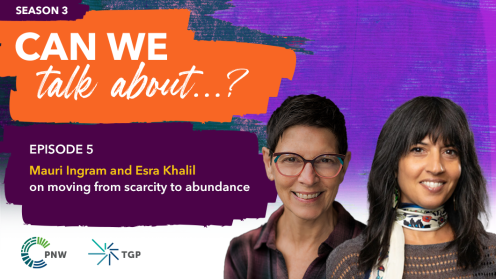
Mauri Ingram (CEO, Whatcom Community Foundation) and Esra Khalil (Senior Program Officer, Community Foundation of Southwest Washington) join our podcast to counter a narrative we hear too often: “we don’t have the budget and time to do equity work.”
In this episode, they explore what it means to truly resource equity — not just with dollars, but with time, energy, creativity and intention. Both leaders share how their organizations have embedded equity into budgets, professional development, board governance and daily practices, reminding us that a budget is a values statement and that thriving communities don’t happen by accident.
They share practical examples on redirecting existing funds, shifting board agendas, leaning on partnerships instead of recreating the wheel and big mindset shifts, like moving from scarcity to abundance. As Mauri and Esra remind us, equity work requires a willingness to let go of business as usual in order to prioritize what truly matters: relationships, values and community love.
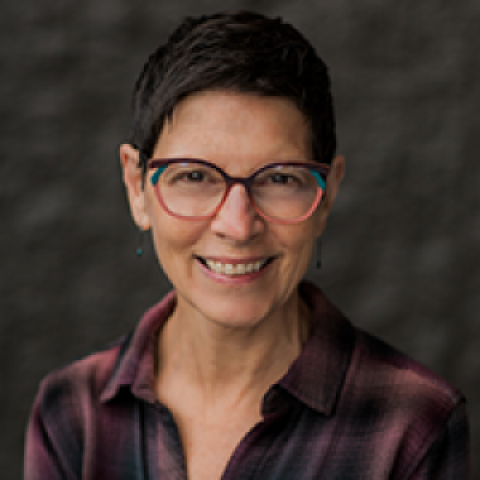
Mauri Ingram
Since 2008, Mauri has been responsible for delivering on Whatcom Community Foundation’s mission, creating an environment for a stellar team of people to excel, listening deeply to communities, maintaining trusting, durable relationships, marshaling resources and implementing strategy.
Mauri has an master's and has worked in public health, downtown revitalization and real estate development. She was a restaurant owner for almost 20 years and worked as a consultant with private and public sector clients. Mauri’s varied background helps her bridge differences in discipline, context and experience. Mauri has served on regional and local nonprofit boards and actively participates in philanthropic networks.
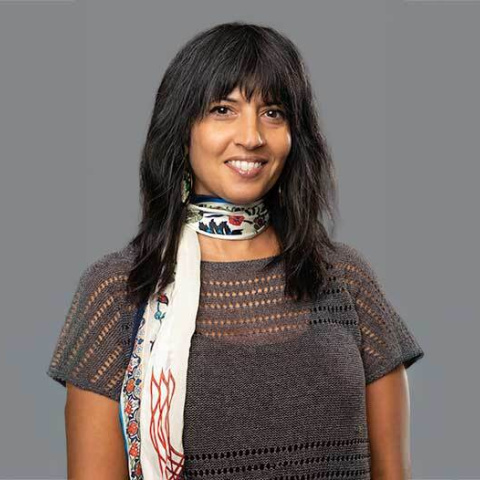
Esra Khalil
Esra joined the Community Foundation of Southwest Washington in 2018 after working in the nonprofit sector for more than 15 years. During that time, she worked at the intersection of development, program and policy, with direct experience in culturally specific service delivery, program development, grant writing and front-line fundraising for major and special gifts. Esra holds a bachelor's from Columbia College and a master's in public policy from the University of Chicago. In her spare time, Esra is an avid reader, loves a good film, travels when she can and relishes the moments of calm with her husband between all the joyful chaos created by her two kids.
Key Lessons & Insights
- Starting with values, not dollars
Both Mauri and Esra remind us that budgets are values statements. Equity work isn’t about having a large line item; it’s about being intentional. As Esra put it: “Where your values rest is where your resources should be most available. So it starts with values, not dollars.”
- Increasing capacity through partnership
Resourcing equity doesn’t always mean spending more. Both leaders emphasize learning in community, borrowing tools and frameworks, and collaborating with peers. As Mauri noted, “Ingenuity is a core skillset in community philanthropy. We’re good at figuring things out.”
- Disrupting business as usual
Resourcing equity often requires changing long-standing habits. Mauri and Esra shared examples like reorganizing decision-making timelines so equity informs budgets, weaving racial equity into professional development and rethinking vendor choices to ensure BIPOC-owned businesses are included.
- Starting with leadership investment
Leaders set the tone. Both guests emphasized that CEOs and leadership teams must authorize and model prioritization of equity, giving staff the permission and support to integrate it into their daily work.
- Letting go to make space
Equity work takes time and energy. Sometimes that means letting go of old programs, habits or mindsets that no longer serve the mission. As Esra shared, moving from a fixed mindset to an abundance mindset opens up new possibilities: “You create time for what you prioritize.”
References & Resources
- Mauri describes developing a whole page that was a mix of existing and aspirational practices within their strategic framework to clarify what equity looks like in practice.
- Mares references the Eco-Cycle exercise from Liberating Structures as a tool to map projects across their life stages (birth, maturity, creative destruction, renewal). This helps organizations evaluate where to let go, adapt or invest energy in alignment with equity goals.
- Esra highlights john a. powell’s framework of targeted universalism, which emphasizes setting universal goals pursued through targeted strategies. This approach helps organizations focus on equity by addressing barriers that affect specific groups while benefiting the whole community.
- Both guests refer to Philanthropy Northwest’s Building Community Philanthropy cohort, a program that provided shared learning opportunities for staff and board members across multiple community foundations, deepening their equity practice through collective reflection and action.
- Before engaging consultants or launching equity-centered strategy work, organizations must first build readiness. Readiness means strengthening the skills, knowledge, relationships, leadership and mindsets needed to authentically advance equity. As The Giving Practice notes in Part 2 of our Equity-Centered Strategy blog series, strategy development doesn’t begin when the planning process starts, it begins much earlier with intentional preparation.
- Esra references Heather McGhee’s idea that “history shows up in your wallet” to underscore the material impacts of systemic inequities and the importance of resourcing equity intentionally in organizational budgets.
Starts & Stops
This season, we’re asking all guests what philanthropy ought to stop doing and what philanthropy needs to start doing. Here’s what Esra and Mauri shared:
- Esra: Keep the “why” centered, ensuring clarity of purpose and grounding every action in the values that drive equity work.
- Mauri: Keep love at the center of philanthropy, remembering that at its root, philanthropy is about love for community, and resourcing equity is an expression of that love.
Credits
This episode of Can we talk about…? was produced by Aya Tsuruta, Emily Daman, Mares Asfaha, and our audio engineer Josh Suhy, with editing support from Karalyn Jenkins. Special thanks to Asha Hossain (Graphic Design), Nancy Sanabria (Intro/Outro Host), Komiku (Music) and to our Building Community Philanthropy partners for their thought partnership and support.